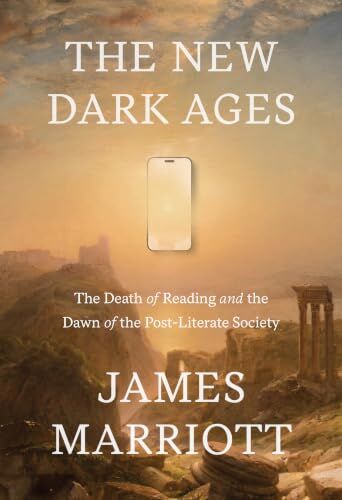
A Times (London) columnist argues that the collapse of reading is the most important cultural shift of our time. Rising literacy built the modern world: revolutions, arguments about individual rights and the purpose of government, scientific truth. Now the number of people who read is in free fall, university students can't get through their assigned books, and the chain of knowledge linking reader to reader is breaking for the first time since the fall of the Western Roman Empire. A defense of the written word and long-form argument against the culture of the screen. Already a Sunday Times bestseller in the UK.
- You've noticed your own attention span shrinking and want to understand why
- You care about what we lose when a culture stops reading
- You want a short, urgent book that makes the case for the thing you already do
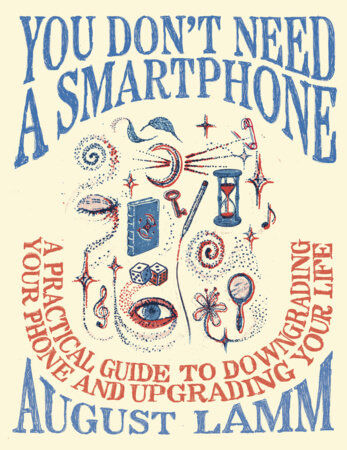
August Lamm wasted her youth on the internet. In her late twenties, burnt out as a social media influencer, she sold her smartphone and switched to a dumb phone. Her mental health improved, her attention span came back, her curiosity returned. Now she's written a manifesto to help you do the same. Short, cheap, and unapologetically prescriptive - the practical counterpart to Marriott's diagnosis at #1.
- You've thought about downgrading your phone but haven't pulled the trigger
- You want a short, practical book, not another 400-page treatise
- You read Marriott at #1 and want the prescription after the diagnosis
The story of the twenty-first century's Manhattan Project. Drawing on more than 150 interviews with insiders at OpenAI, Anthropic, and Google DeepMind, plus unpublished company documents and research memos, Roose reconstructs the decade-long sprint to build artificial general intelligence. New detail on the disagreements that led Anthropic's founders to leave OpenAI, fresh reporting on Sam Altman's firing and reinstatement, Google's scramble to catch up, and the White House officials trying to regulate a technology improving faster than they can understand it. Blurbed by Walter Isaacson and Ray Kurzweil. 448 pages.
- You want the inside story of the AGI race from someone who was in the room
- You want the drama behind the headlines: the defections, the firing, the rivalries
- You followed September's Socher-vs-Turkle AI debate and want the behind-the-curtain sequel
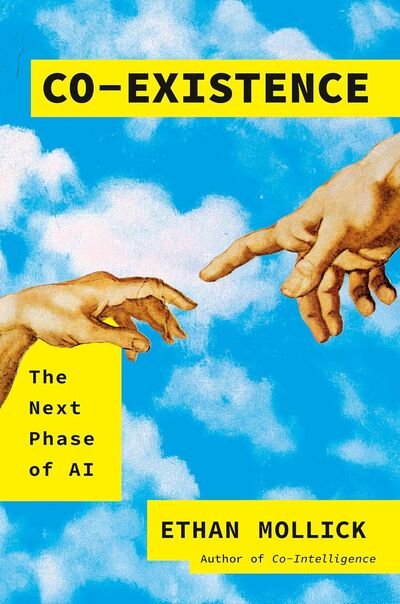
How do you live alongside machines that are sometimes smarter than you? Wharton professor Ethan Mollick - author of the bestseller Co-Intelligence and the One Useful Thing newsletter - argues that the future of AI will be defined by interaction, not replacement. Drawing on years of research and hands-on experimentation, he shows how to work productively with AI while keeping your own judgment, where human insight still matters most, and how to avoid becoming dependent on systems built to persuade and imitate. Blurbed by Angela Duckworth and Tyler Cowen.
Roose tells you how we got here. Mollick tells you what to do on Monday morning.
- You use AI every day and want to use it without outsourcing your thinking
- You read Co-Intelligence and want to know what's changed since
- You want the practical AI book of the month, not the dramatic one
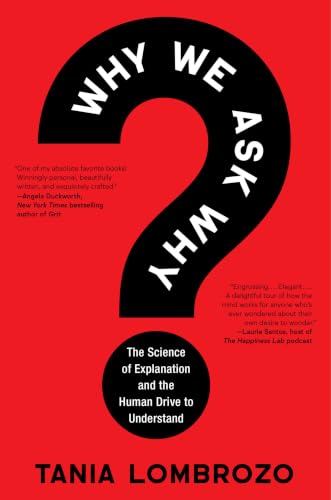
Humans are explanation-seeking creatures. We wonder why there's traffic, why a friend behaved a certain way, why the sky is blue, and - in our more existential moments - why we're here at all. Princeton psychologist Tania Lombrozo has spent twenty-five years turning that instinct back on itself. What does explanation actually do for us? Why do some explanations feel more satisfying than others? Why do we prefer simple ones, and should we? A book about the cognitive habit underneath science, learning, and making sense of your own life. 288 pages.
- You liked Thinking, Fast and Slow and want the next layer down
- You want to know why bad explanations can feel so convincing
- You're building a philosophy-of-mind shelf, not a productivity shelf
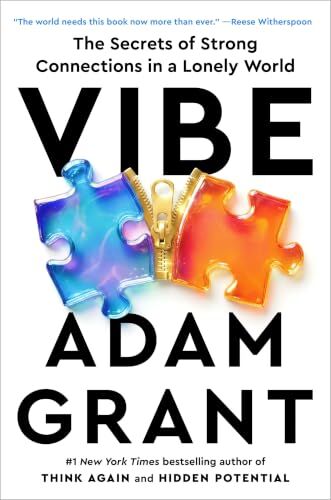
When we vibe with other people, it fuels our happiness and our success. Yet building meaningful ties has become one of the most pressing problems of our time, as face-to-face interaction moves behind screens, communication gets outsourced to AI, and the world grows more polarized. Grant digs into the surprising science of chemistry and closeness to show how to forge faster, stronger, longer-lasting bonds.
- You've felt the pull of screens replacing real conversation
- You want the science behind why some people click and others don't
- You're interested in the loneliness epidemic beyond the headlines
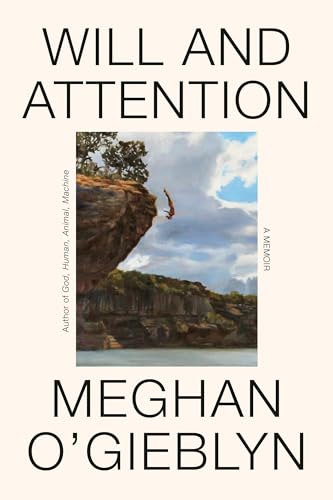
After leaving evangelical Christianity, kicking an addiction, and building a life as a writer, Meghan O'Gieblyn was admired by her friends for having a strong will. Then, in her late thirties, she started secretly attending Catholic mass - and, after eleven years of sobriety, began drinking again. Knowledge and determination had failed her. So she turned to a line from the philosopher Simone Weil: "We have to try to cure our faults by attention and not by will." From the author of God, Human, Animal, Machine. Starred Kirkus review. 288 pages.
Read it next to the Daily Stoic at #8. Same release day, opposite answers to the same question: how do you actually change?
- You read God, Human, Animal, Machine and want more of that mind
- You're quietly suspicious of willpower culture
- You want the philosophical memoir of the month, not the celebrity one
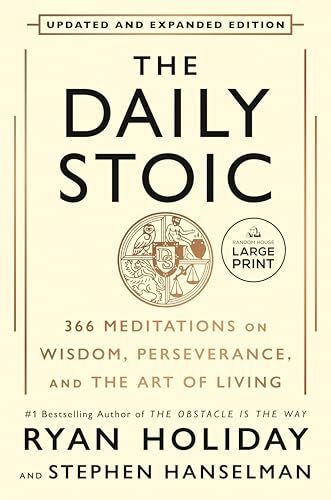
Ten years and more than three million copies on, the book that launched the modern Stoic revival returns updated and expanded: a new introduction, more than sixty new translations, two bonus chapters, and new illustrations. 366 daily meditations drawing on Marcus Aurelius, Seneca, Epictetus, and lesser-known Stoics like Zeno and Musonius Rufus. 464 pages.
- You want a daily Stoic practice without reading Marcus Aurelius in the original
- You've read the original and want to see what a decade of reflection adds
- You read O'Gieblyn at #7 and want the case for the will
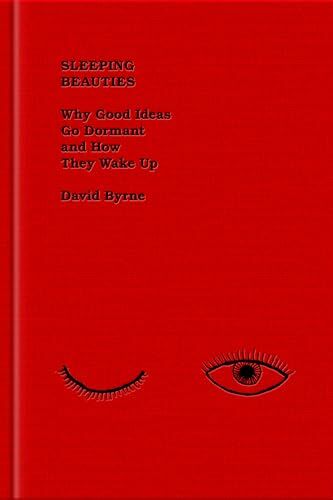
It's nice to believe in a meritocracy of ideas, where genius is always recognized and innovation always rewarded. In reality, many of the world's great creators got little traction at first, and their work only came roaring back later. Dark matter, lichen, and continental drift. Solar panels and the steam engine. Bach, Bruegel, Vermeer, and Melville. All were sleeping beauties. Across 35 short histories, the Talking Heads founder asks why good ideas fall asleep and what wakes them up.
- You're fascinated by why some ideas succeed and others vanish
- You want a creative polymath's take on the history of breakthroughs
- You liked How Music Works and want Byrne thinking about everything else
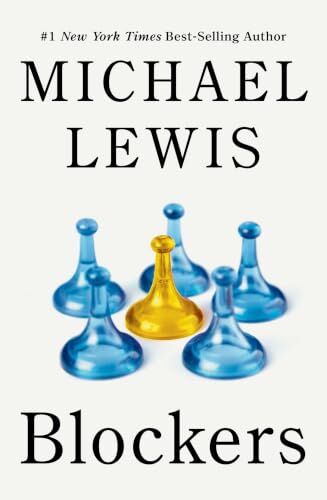
In the new Washington, being a "Blocker" was the worst thing you could be: a holdover, an impediment, someone who didn't belong. Michael Lewis found a handful of federal employees targeted by DOGE - people who believed they had a calling, and then discovered they were no longer wanted. One kept Americans' most sensitive tax data out of the wrong hands. Another made sure politicians and civil servants played by the rules. One figured out how to stop wildfires from destroying suburbs; another helped uncover the mysteries of cystic fibrosis. There was also a security guard. The question Lewis leaves you with: if these people can't survive in government, what does that say about us? 256 pages.
- You want the DOGE story told by a storyteller, not a pundit
- You liked The Big Short, The Fifth Risk, or Going Infinite
- You're interested in what happens when institutions face a wrecking ball
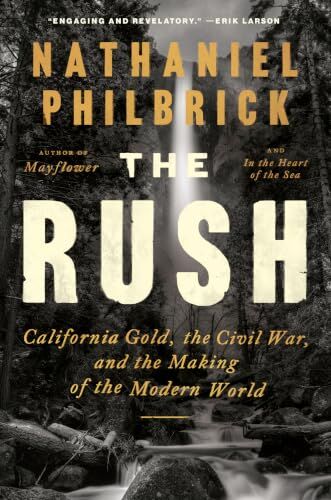
In January 1848, a carpenter spotted flecks of gold in a stream at Sutter's Mill, triggering the greatest voluntary migration in U.S. history. Philbrick turns the Gold Rush from a tale of sudden riches into the origin story of America's modern contradictions: capital consolidated at dizzying speed, democracy in thrall to private power, xenophobia weaponized in the name of liberty. Following the gold from riverbed to countinghouse to the halls of power, he shows how vigilantism hardened into law and how the fight over slavery in the West helped push the nation toward civil war. From the author of In the Heart of the Sea and Mayflower. 464 pages.
Pairs with Lewis at #10: institutions under strain, 1848 and now.
- You want history that reads like an adventure novel
- You liked In the Heart of the Sea, Empire of the Summer Moon, or Killers of the Flower Moon
- You're interested in the moments that made (or broke) America