Ego Is the Enemy
Your biggest obstacle isn't out there — it's the voice inside that thinks it already knows enough.
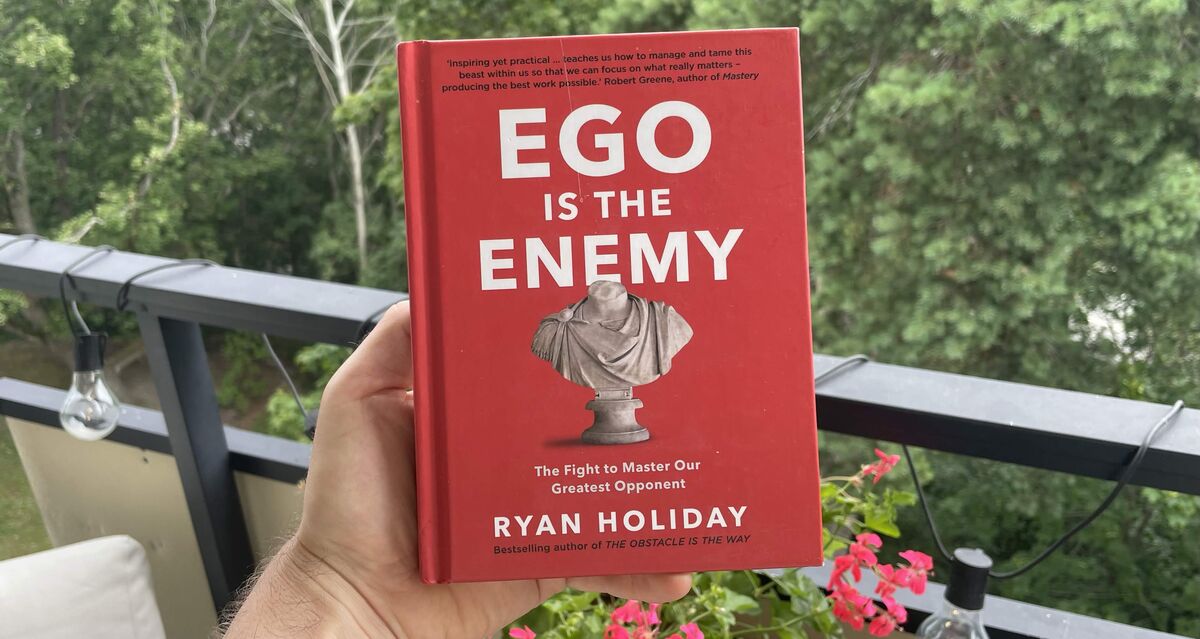
You Are Your Own Worst Enemy
Deeply inspired by Stoic philosophy and the lives of historical figures, Ryan Holiday makes a case that most of us already suspect but hate to admit: your biggest enemy isn't circumstance, competition, or bad luck — it's your own ego. That inner voice that craves attention, easy money, quick promotions, flattery, and recognition. The one that stops you from taking feedback, learning from mistakes, or admitting that someone else might be better than you.
This was one of the first Ryan Holiday books I read, and it hit hard. I've since gone on to read many more of his works — from Stillness Is the Key to Discipline Is Destiny to Courage Is Calling — and Ego Is the Enemy remains one of the best entry points into his world. If you want the full list, I've put together a guide to the best books on Stoicism.
The Inner Scorecard
One idea from the book that really stuck with me is the concept of the inner scorecard versus the outer scorecard. Most of us — myself included — default to measuring our lives by external metrics: what others can see, what gets likes, what earns recognition. If it's not visible, it doesn't count. Right?
Wrong. Holiday argues, drawing on Warren Buffett's thinking, that having an inner scorecard — one where you measure your own progress by your own standards, independent of other people's judgment — sets your standards higher and makes you more resilient. Nobody can take it away from you because nobody else even knows the score.
"Your potential, the absolute best you're capable of — that's the metric to measure yourself against."
Ego in the Age of Social Media
Reading this book while building an online presence was a wake-up call. When you're on Instagram or YouTube, it's easy to fall into the endless chase of followers and likes. The ego loves those numbers. But Holiday forces you to ask: why did you start? For me, it was to connect with like-minded people and share the quest for wisdom and worldly knowledge. Not to watch a follower count tick up.
The ego wants you to confuse the scoreboard with the game. Holiday's reminder to stay grounded in purpose — to remember why you started — is worth revisiting regularly.
Purpose Over Ego
Being free from ego enables you to work with purpose and focus on whatever you set out to achieve. Holiday structures the book around three phases of life — aspiring, succeeding, and failing — showing how ego sabotages you at every stage. When you're aspiring, ego tells you you're already great. When you're succeeding, ego tells you you deserve it all. When you're failing, ego prevents you from learning the lesson.
In the end, all that matters is that you know you gave your best and made the most of the short time you had here on earth. That's the inner scorecard at work.
💡 Key Takeaway
The ego wants attention, validation, and shortcuts. Getting free of it means you can actually focus on the work that matters. Keep an inner scorecard — measure yourself against your own potential, not other people's applause.
⚖️ Verdict
Short, punchy, and packed with ancient wisdom made practical for modern life. This is a great book to reread once a year when it's time to refocus. I listened to it as an audiobook and would highly recommend it on Audible — Holiday's writing lends itself well to audio, and it's the kind of book that benefits from hearing the rhythm of the prose.
Read it. Especially if you suspect you might be getting in your own way.