Flow: The Psychology of Optimal Experience
The state where time vanishes and performance peaks — and how to engineer it.
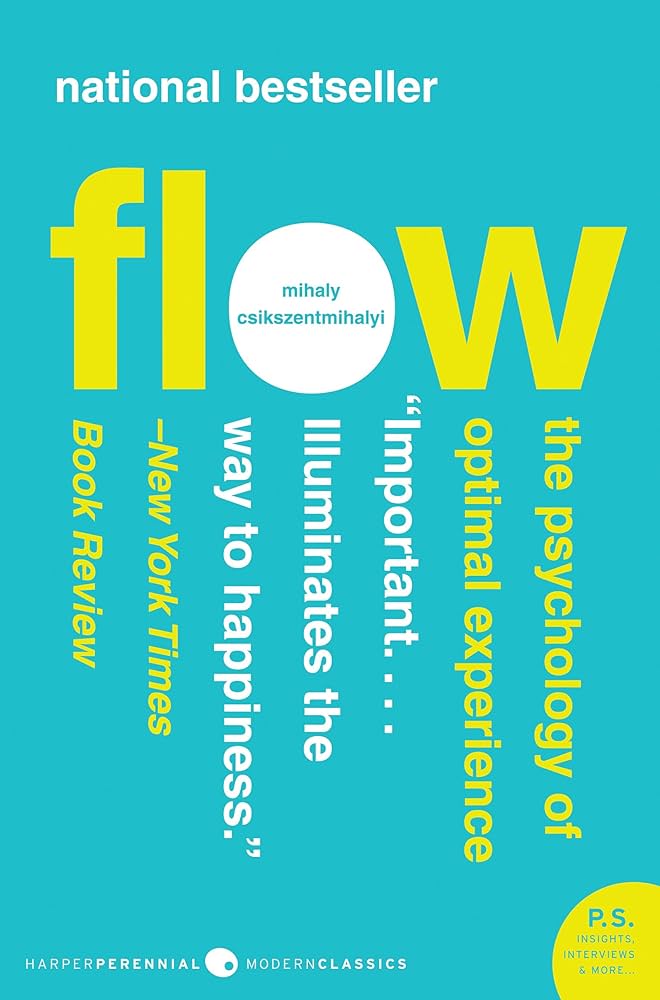
About the Book
Mihaly Csikszentmihalyi spent most of his life studying what makes people enjoy what they are doing and concluded that the overall fulfillment people experience in life correlates with how much time they spend in activities that produce what he called "flow".
Flow is a state of complete involvement with what you are doing; you are one with the task at hand. There is no ego, you are totally focused and present. Hours might pass without you noticing it.
In this book you will learn what components make up flow, how to create more of it in your own life, and how to handle stress and other inhibitors of flow states.
Csikszentmihalyi mixes research, anecdotes and practical advice in what turned out to be one of my favorite reading experiences.
8 Components of Flow
- A clear objective
- Immediate feedback — e.g. when you play the wrong note on the piano
- What you do is in balance with what you can do — challenged but not overwhelming
- Concentration and focus
- Presence — not thinking about anything else
- You are in control
- A loss of ego / not worrying about yourself — a feeling of transcendence
- Time is warped — time adapts to your experience instead of the other way around
Notes
We need to stop thinking about the brain as a tool for problem-solving and instead think of it as an organ of enjoyment. If we do this we will uncover a world full of opportunity for flow.
"One of the most generally reported flow experiences around the world is simply reading. Reading good books."
"It's not what you do but how you do it."
Flow and Creative Routine
Rousseau's Creative Warm-up
Rousseau went out to his courtyard, took off his wig and let the sun heat his head. He sat there until his brain was warmed up (literally) and his thoughts started to flow. Then he returned to his study to write.
Kant's Creative Warm-up
Philosopher Emanuel Kant used to sit in his study and stare at the sun reflecting off the spherical shapes of a church spire a few blocks down the road until his mind was totally blank from this hypnotic activity. This routine was a prerequisite for him to hatch his revolutionary ideas.
My Review Writing Process
The night before writing a book review I read through my notes. This allows relevant information about the book to marinate in my unconscious mind before it's time to write. The morning after, I set a timer for 30–40 minutes and tell myself that I need to have a full first draft ready by the time the alarm goes off. It can be horrible quality, but it has to be done. This process prevents overthinking. When I'm done with the first draft I spend some time moving things around, trimming some fat, and polishing the text.
Video Review
⭐️ Takeaway
Turn everything into a game!
If you want to enjoy mundane activities more, turn them into a game. If the task isn't challenging enough, make it so by adding rules or obstacles. If the activity has a fussy goal, define your own.
Once you look at life as a vast role-playing game — with missions, character specs and skill points to be gained — you might enjoy it more! (And maybe lose interest in video games as a bleak imitation of the game of life.)
⚖️ Verdict
I thought I wouldn't get much out of this book as I've seen Csikszentmihalyi's work referenced in so many other books, but I was wrong. I was also wrong about the nature of this book: I thought it would be very technical and theoretical, but it was accessible and practical. One of the foundational books for anyone seeking out The Good Life. It made it into my hall of fame: The Great Books List!