Lost Connections: Uncovering the Real Causes of Depression
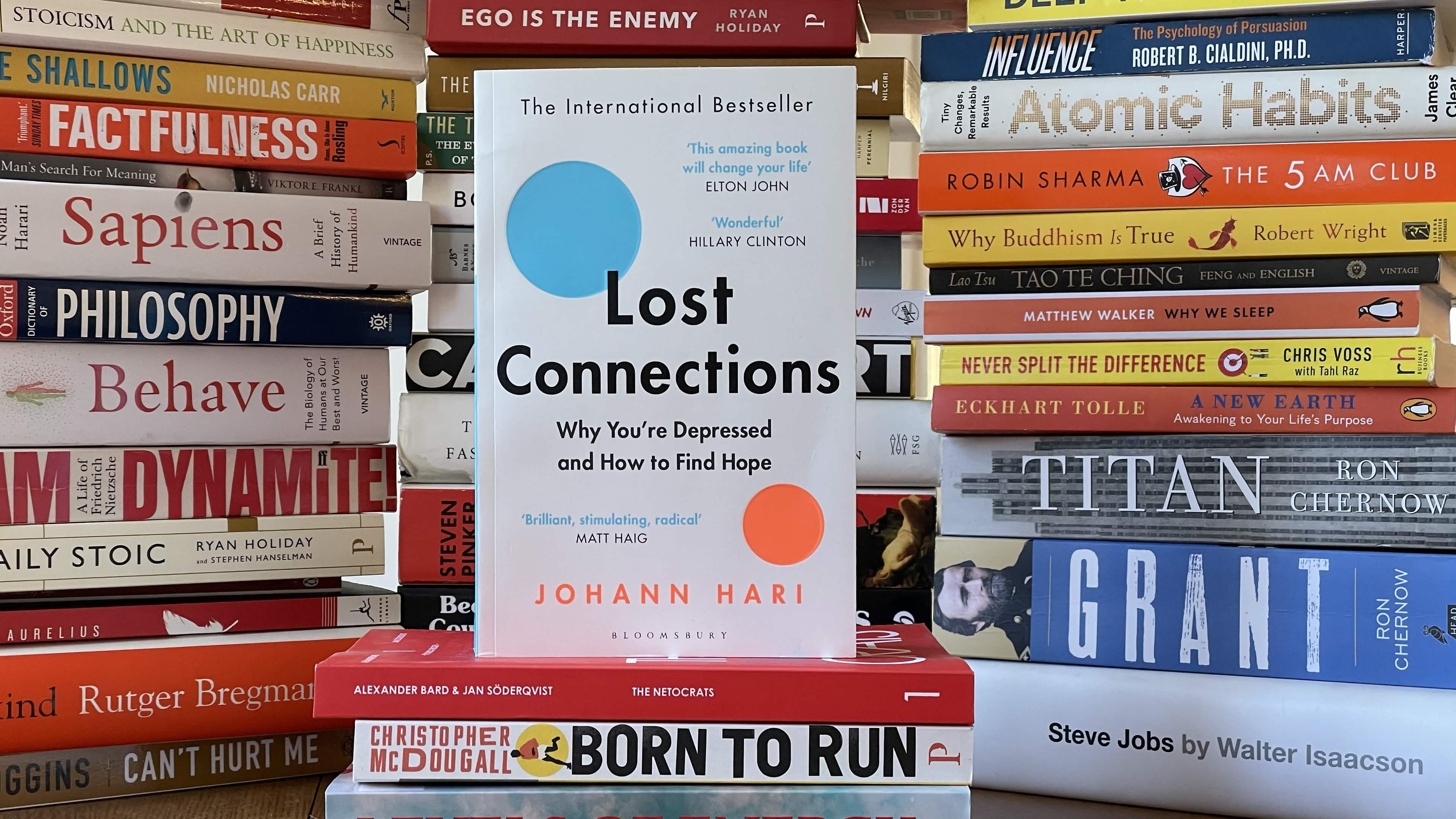
Introduction
For decades, we've been told that depression and anxiety are caused by a chemical imbalance in the brain — a broken machine that needs pharmaceutical fixing. Johann Hari challenges this narrative head-on, and what he uncovers is both unsettling and profoundly hopeful.
The 9 Causes of Depression
At the heart of this book are nine causes of depression that go far beyond brain chemistry. Hari identifies disconnection from:
- Meaningful work
- Other people
- Meaningful values
- Status and respect
- The natural world
- A hopeful or secure future
- Childhood trauma
- Genes and brain changes (real, but overstated)
- The role of the brain adapting to environment
"You are not a machine with broken parts. You are an animal whose needs have not been met."
The Modern Disconnection
Some of the statistics Hari presents are staggering. When people were asked how many close friends they have — someone they could call in a crisis — the most common answer was zero. Zero friends. Think about that for a moment.
Hari draws fascinating connections between seemingly unrelated phenomena. Gaming addiction isn't about games — it's about the community and sense of purpose they provide that's missing elsewhere. The link between materialism and depression is well-documented but rarely discussed. And here's one that stuck with me: obesity and loneliness are equally deadly.
The Antidepressant Problem
Hari doesn't dismiss antidepressants entirely, but he exposes the significant bias in the research. Pharmaceutical companies fund most studies, and the ones that don't show favorable results often disappear. The chemical imbalance theory was always more marketing than science.
Video Review
💡 Key Takeaway
After reading this book, I reconnected to the nine areas Hari describes — running, meditation, reading, working on my channel. The solutions aren't complicated, but they're hard to commercialize. "Reconnection" isn't something you can package and sell the way pharmaceutical companies sell antidepressants. That's precisely why it gets so little airtime.
⚖️ Verdict
Lost Connections helps you understand why modern society breeds mental disorders at unprecedented rates. It reframes depression not as a personal failing or a chemical glitch, but as a rational response to an irrational environment.
This is a serious contender for Book of the Year. If you or someone you know struggles with depression or anxiety, this book offers something no prescription can — genuine understanding of why.