Discipline Is Destiny
Freedom isn't the absence of rules — it's the mastery of self-control.
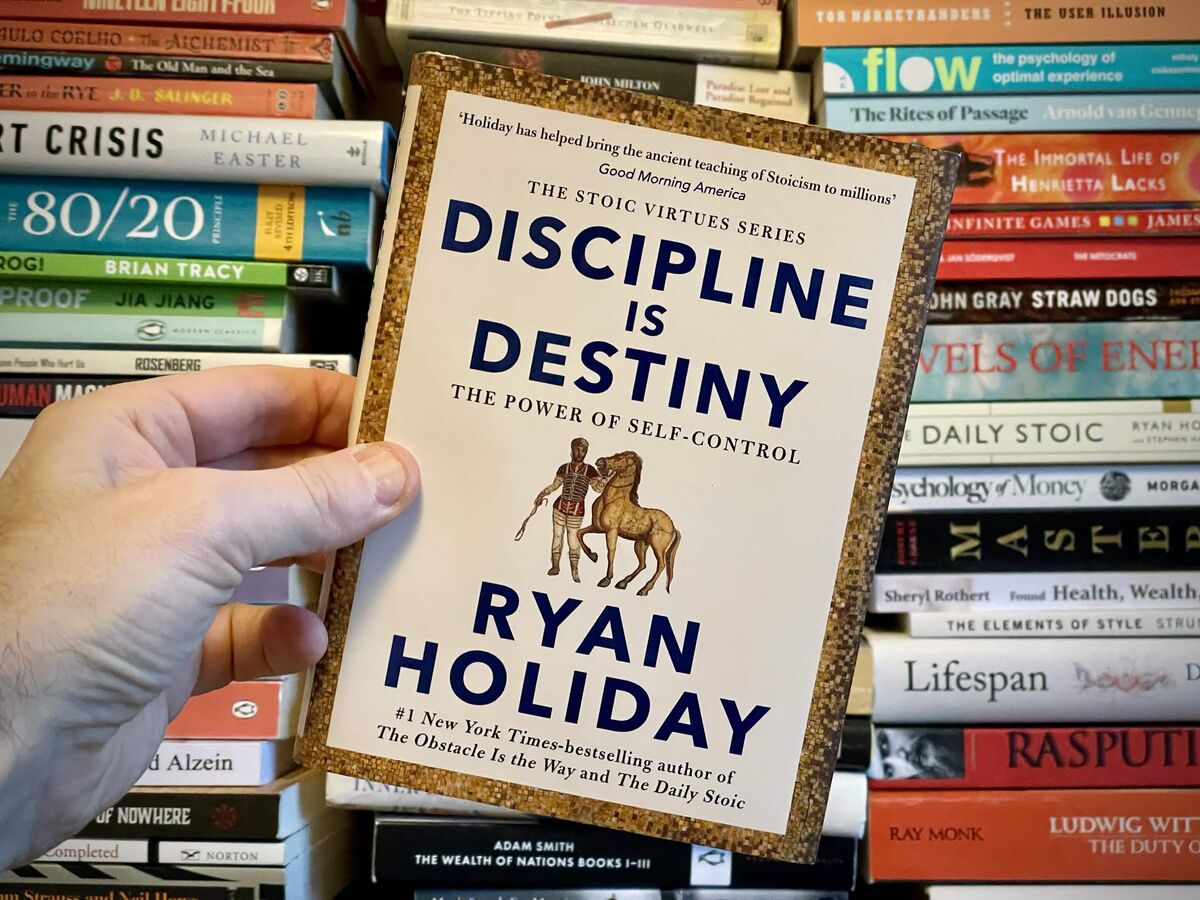
The Best of the Virtue Series
Ryan Holiday's Stoic Virtues series has been a mixed bag. Courage Is Calling felt formulaic and impersonal — a string of quotes and historical anecdotes that never quite connected. But Discipline Is Destiny is a different beast. It's the strongest entry in the series, and it might be one of Holiday's best books, period.
The premise is simple: the Stoic virtue of temperance — self-discipline, moderation, self-control — is the foundation of a good life. Not the sexiest virtue, sure. But Holiday makes the case that discipline is what makes everything else possible. Courage without discipline is recklessness. Justice without discipline is chaos. Wisdom without discipline is just talk.
Stories That Actually Land
Holiday's formula hasn't changed — he opens each chapter with a historical figure, weaves in philosophical quotes, and ends on an emotional beat. But here, unlike in Courage Is Calling, the stories actually land. Queen Elizabeth II's decades of quiet duty. Lou Gehrig playing through unbearable pain. Eisenhower's relentless preparation that made D-Day possible. Angela Merkel's methodical rise through patience and restraint.
These aren't just name-drops. Holiday takes the time to show how discipline shaped these people's lives in specific, concrete ways. The stories feel chosen with care rather than pulled from a quote database.
📺 Video Review
Freedom Through Restraint
The book's central paradox is compelling: real freedom comes through restraint, not through indulgence. We live in a culture that tells us to follow every impulse, optimize every pleasure, remove every friction. Holiday argues that this path leads to slavery — slavery to appetite, to distraction, to the tyranny of the moment.
The Stoics understood this. Temperance wasn't about deprivation — it was about being in control of yourself so that external forces couldn't control you. Holiday translates this ancient insight into modern terms without dumbing it down, which is his superpower as a writer.
"The more things we desire and the more we have to do to earn or attain those achievements, the less we actually enjoy any of them."
Where It Falls Short
It's not perfect. Holiday still leans too heavily on biographical sketches at times — there are stretches where you feel like you're reading a series of Wikipedia entries rather than a cohesive argument. And the book could use more of Holiday's own voice, his own struggles with discipline. The afterword in Courage Is Calling — where he finally got personal — was the best part of that book, and I wish he'd brought more of that energy here.
Some chapters feel thin. A few pages on a historical figure, a Stoic quote, a motivational kicker — and on to the next. When it works, it's punchy. When it doesn't, it feels like a highlights reel rather than a deep conversation.
💡 Key Takeaway
Discipline isn't punishment — it's freedom. The person who masters their impulses, habits, and appetites isn't missing out on life. They're the only one truly living it. Every great achievement, every lasting relationship, every meaningful contribution requires the quiet, unglamorous work of self-control.
⚖️ Verdict
This is Holiday doing what Holiday does best: making ancient philosophy feel urgent and practical. It's a genuine step up from Courage Is Calling, with tighter writing, better-chosen stories, and a subject that lends itself well to his storytelling style. Not quite at the level of The Obstacle Is the Way or Ego Is the Enemy, but it earns its place on the shelf.
Read it. Especially if you need a philosophical kick in the ass about self-discipline.