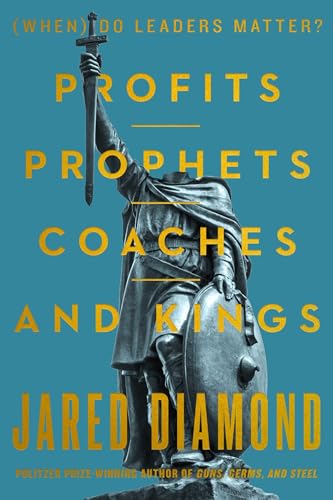
From the author of Guns, Germs, and Steel and Collapse — a Pulitzer winner who spent his career arguing that geography and technology shape civilizations more than individuals do — comes a book that turns the question on its head. Do leaders actually bend history, or would someone else have done roughly the same thing anyway? Diamond opens with a near-miss traffic accident in 1930 Munich that came close to killing Hitler, then works through cases where the answer swings both ways: Seretse Khama in Botswana, Rachel Carson, John Wooden at UCLA. 288 pages.
- You've read Guns, Germs, and Steel and want to see Diamond argue against his own reputation
- You're interested in whether founders, CEOs, and leaders actually cause outcomes
- You want big-picture history that doesn't flatter anyone
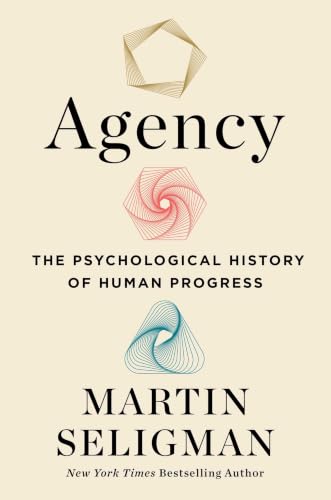
Seligman founded positive psychology and wrote Learned Optimism and Flourish. His argument here is that agency — the combination of believing you can act, expecting it to work, and being able to imagine something different — is the hidden engine behind civilizational leaps. He traces it from Periclean Athens and the Hebrew Bible through the Renaissance and the Enlightenment to the civil rights movement and the AI era, and argues that when a society's sense of agency collapses, so does its progress.
- You believe your choices matter more than your circumstances — or want that belief tested
- You liked Man's Search for Meaning, Learned Optimism, or Flow
- You want psychology that operates at the scale of civilizations, not life hacks
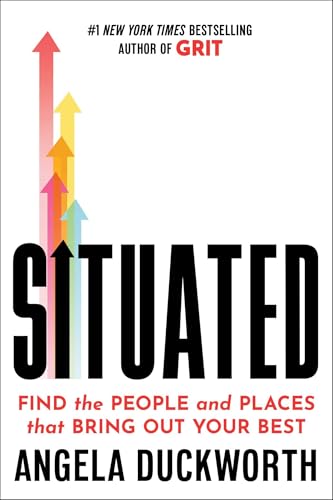
Ten years after Grit sold five million copies, Duckworth has written the book that complicates it. Her position now is that grit is necessary but frequently not enough — that the people, places, and objects around you do more work than willpower does, and that the productive question is not "what's wrong with me" but "where, and with whom, am I better?" She writes candidly about her own burnout and marriage. 352 pages.
- You read Grit and found it didn't fully explain why some efforts stick and others don't
- You've blamed yourself for failures that might have been environmental
- You liked Atomic Habits, Nudge, or The Power of Habit
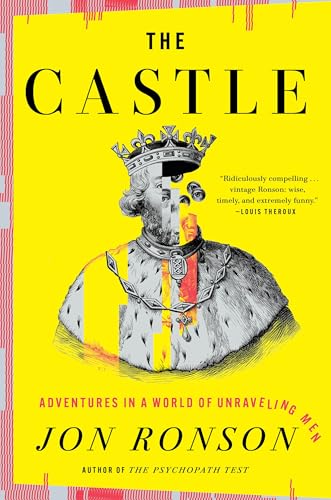
Ronson's first book in eleven years, and it started with texts from his son, who had been lured to a castle in the New England woods late one night. What begins as a father's alarm opens outward into the masculinity crisis — men building private worlds of ideology and disinhibition, a lawn-care influencer's career-ending stunt, two recently released murderers heading for Ronson's door. Told in the shape of a true-crime story, with the humour that made The Psychopath Test and So You've Been Publicly Shamed work. 336 pages.
- You want to understand the manosphere from someone who actually went and looked
- You liked The Psychopath Test, Going Clear, or Say Nothing
- You want nonfiction that reads like a thriller and still leaves you thinking
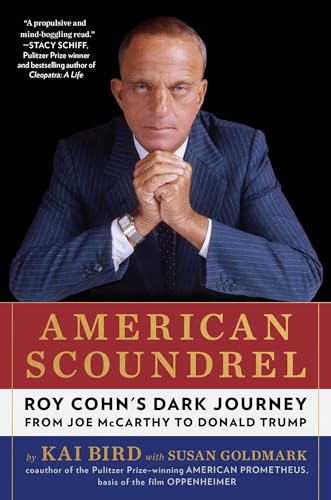
Kai Bird co-wrote American Prometheus, the Oppenheimer biography that won a Pulitzer and became a Christopher Nolan film. Here he turns to Roy Cohn — McCarthy's chief counsel at 24, later a fixer for the New York mob and a mentor to the young Donald Trump, indicted three times and acquitted three times, dead of AIDS in 1986 while denying he was gay. Kirkus describes the portrait as a narcissistic con artist and an avatar of the politics of resentment. Researched by Susan Goldmark, Bird's wife. 448 pages.
- You want to understand how one lawyer shaped forty years of American power
- You liked American Prometheus, The Power Broker, or Empire of Pain
- You're interested in the psychology of people who never face consequences
Socher founded You.com, was chief scientist at Salesforce, and is one of the most-cited researchers in natural language processing. His claim is that AI will compress roughly a century of scientific progress into a decade — not by replacing scientists but by transforming every stage of how science gets done, from hypothesis to experiment to replication. Covers medicine, cell biology, neuroscience, economics, and astronomy.
- You want the optimistic case for AI made by someone who actually builds it
- You liked The Structure of Scientific Revolutions, The Beginning of Infinity, or The Genesis Machine
- You're curious whether the discovery bottleneck is really about compute
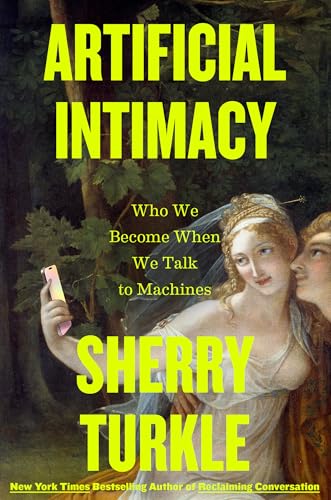
Turkle has spent forty years at MIT studying what happens to people when they live alongside machines — Alone Together, Reclaiming Conversation. Her argument now is that if social media came for our attention, AI is coming for our capacity for attachment. She cites over 70% of teens and nearly a third of US adults using AI for companionship, many preferring it to human contact, and argues the real damage is that we start accepting the performance of empathy as empathy itself. Structured across the whole lifecycle, from a child's first attachments to how we face death. 288 pages.
- You've noticed yourself talking to a chatbot the way you'd talk to a person
- You liked Attached, The Shallows, or The Anxious Generation
- You want a critique of AI written by someone who's studied it since before it worked