HomeMonthly Releases → November 2026
⚠️ Early Preview

📅 November 2026

The most interesting nonfiction books coming out this month

📅 November 2026 · 7 Books

November is about instruments and the minds that use them. Robert Greene returns after seven years — not with another power manual, but with a book about awe and perception. Raoul Pal argues the economic operating system is ending. James Gleick tells the story of the telephone as a civilisational break, not a gadget. Andrew Roberts uses Napoleon's twenty-six marshals as a study of what victory does to the people who win it.

And three books go at the mind from three directions: how AI is quietly reshaping what counts as knowledge, the small set of maths actually running the machines, and the lab floor where neuroscientists open the head up. Seven books. No filler.

Last updated: September 3, 2026 · This is an early preview — the final list, Pick of the Month, and video will be published as we get closer to November. Books may be added or swapped.

I'm Bjorn — I've reviewed 300+ nonfiction books over the last 10 years on YouTube (17k subscribers) and X (45k followers). Every month I dig through the new releases so you don't have to. These are my honest picks. Seven this month, zero filler.

📺 Video coming soon

The full breakdown will drop closer to November.

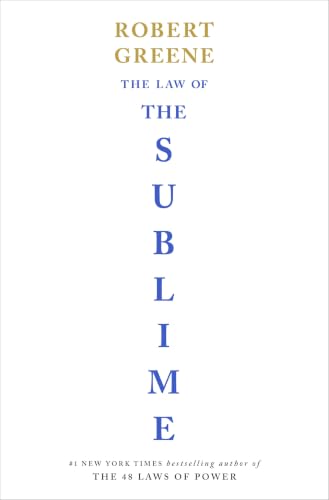
The Law of the Sublime by Robert Greene
01
The Law of the Sublime
Robert Greene
Human Nature / Philosophy / Self-Mastery November 10

From the author of The 48 Laws of Power and The Laws of Human Nature. After seven years, Greene turns from power and social strategy to awe — reconnecting with nature, art, science, childhood perception, and the fringes of consciousness. Stories, exercises, and meditations. The same move Duckworth made with Situated: an author complicating his own reputation. 496 pages. Published by Viking.

🎙️ Bjorn's take: "The Laws of Human Nature is a top-three book for me. I've waited years for this one. What's interesting is the shift — Greene built his career on strategy, power, and reading people. Now he's writing about awe and perception. That's the move I respect most in any author: going where you haven't been. If you've read The Denial of Death or Four Thousand Weeks, this is the same territory — the inner life, not another playbook."
Read if:
  • You finished The Laws of Human Nature and wanted the inner life, not another strategy manual
  • You liked Mastery, Four Thousand Weeks, or The Denial of Death
  • You want a long book that tries to change how you see, not how you win
Buy on Amazon → Read Laws of Human Nature Review → Human Nature Books →
The Everything Code by Raoul Pal
02
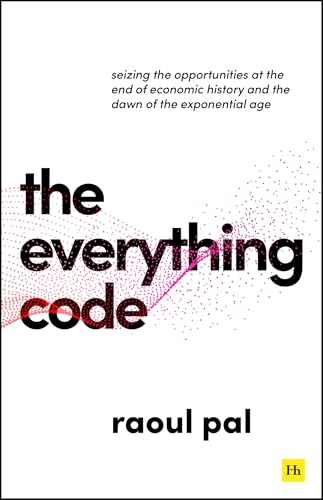
The Everything Code
Raoul Pal
Money / Economics / Exponential Age November 3

First book from the Real Vision founder. The framework: demographics force debt-driven liquidity; that liquidity is the hidden chart under almost every major asset; technology and crypto are the life rafts. Thirty years of macro compressed into one thesis. Sits alongside The Bitcoin Standard and The Sovereign Individual — a builder's map of a broken monetary system, actionable without being a get-rich pamphlet. Published by Harriman House.

🎙️ Bjorn's take: "If you've watched Real Vision, you know Pal — he's the macro guy who sees one chart under everything. Demographics plus debt plus liquidity equals the story nobody in mainstream finance wants to tell. I've reviewed The Bitcoin Standard and The Sovereign Individual, and this sounds like the operational layer between those two — less ideology, more mechanics. Worth noting: Pal was transparent that the book was built from his own archive of talks and frameworks using an AI writing tool. His ideas, machine-assisted structure. I respect the honesty."
Read if:
  • You want the macro chart that supposedly explains why every asset rhymes
  • You liked The Bitcoin Standard or The Sovereign Individual
  • You think demographics-plus-debt is the story under the noise

Buy on Amazon → Money & Freedom Books →
The Telephone: A New History by James Gleick
03
The Telephone: A New History
James Gleick
Technology / History of Ideas / Human Nature November 10

Gleick wrote Chaos and The Information. Here the telephone becomes the instrument that remade intimacy, monopoly, Bell Labs, and the information age — speech at a distance as a civilisational break, not a gadget history. If October's The New Dark Ages diagnosed what screens are doing to us, this is the prequel: what the wire did before the screen existed. Published by Farrar, Straus and Giroux.

🎙️ Bjorn's take: "Gleick is one of those writers who takes a subject you think you understand and shows you you've never thought about it at all. The Information did that with data, Chaos did it with disorder. Now it's the telephone — which sounds boring until you realise it's the moment humans started communicating without being in the same room. That changes everything: relationships, politics, commerce, war. If you read Marriott's New Dark Ages from the October list, this is the origin story. The wire came first. The screen just finished the job."
Read if:
  • You liked The Information, Chaos, or The Shallows
  • You want a technology understood as a change in human nature
  • You want the prequel to October's New Dark Ages — what the wire did before the screen

Buy on Amazon →
Napoleon and His Marshals by Andrew Roberts
04
Napoleon and His Marshals: Victory, Rivalry, Betrayal
Andrew Roberts
History / Leadership / Biography November 10

Not another Napoleon biography — the twenty-six marshals as a study of loyalty, rivalry, and self-delusion. A team of rivals that becomes a nest of vipers. Roberts at full narrative power. Already published in the UK (Allen Lane, October 8). US edition from Avid Reader Press / Simon & Schuster.

🎙️ Bjorn's take: "Roberts wrote the definitive Napoleon biography, and this is the companion piece — the people around the great man, not the great man himself. That's always the more interesting story. Who stays loyal when the empire starts cracking? Who betrays first? It's the same question that runs through every leadership study worth reading: power doesn't just corrupt the person at the top, it corrodes everyone in the orbit. If you liked Team of Rivals or the Best Biographies list, this is your November read."
Read if:
  • You want leadership as a human problem, not a business-book abstraction
  • You liked Napoleon the Great, Team of Rivals, or The Pursuit of Power
  • You're interested in what victory does to the people who win it

Buy on Amazon → Best Biographies →
Beautiful Particulars by David Weinberger
05
Beautiful Particulars
David Weinberger
AI / Philosophy of Mind November 3

Harvard researcher and former philosophy professor. The claim isn't "AI will take your job" — it's that machine learning's attention to particulars over universal laws is already changing what we think knowledge, evidence, and a self are. Short and essayistic, at the same altitude as Turkle and Socher. AI as a change in the human mind, not a change in the job market. 184 pages. Published by MIT Press.

🎙️ Bjorn's take: "I'm tired of AI books that only do utopia or doom. This one asks a different question: what happens to the concept of knowledge itself when the machine doesn't think in laws and categories the way we do? That's the philosophical layer under all the hype — and it connects to The Shallows, which asked the same question about the internet twenty years ago. If October's AGI Chronicles was the war correspondent's report, this is the philosopher sitting in the corner asking whether we even know what we're building."
Read if:
  • You're tired of AI books that only do utopia or doom
  • You liked The Shallows or Everything Is Miscellaneous
  • You want the philosophical version of how the model actually sees
Buy on Amazon → AI Founders Reading List →
Big Math by Steven Strogatz and Alex Townsend
06
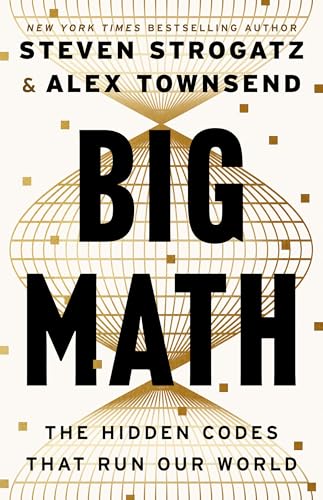
Big Math: The Hidden Codes That Run Our World
Steven Strogatz & Alex Townsend
Science / Mathematics / AI November 10

Strogatz (Infinite Powers, The Joy of X, Cornell) and Townsend on the small set of ideas — mostly linear algebra — underneath Netflix recommendations, medical imaging, GPS, and AI. The sting: the maths is drifting beyond the grasp of the people who built it, and quantum makes it worse. The layer underneath the hype, for anyone who wants to know what "the model" actually is. 304 pages. Published by Little, Brown.

🎙️ Bjorn's take: "Everyone talks about AI like it's magic. This is the book that shows you the actual trick — and it turns out the trick is linear algebra. Strogatz is one of those rare mathematicians who can write for humans without dumbing it down. The part that interests me most is the claim that the maths is outrunning the mathematicians. We built tools we can't fully understand. That connects to Weinberger at #5 — he asks what AI does to knowledge, this asks what the substrate of AI actually is. Read them together."
Read if:
  • You want to know what "the model" actually is, underneath the hype
  • You liked Infinite Powers or The Structure of Scientific Revolutions
  • You suspect the discovery bottleneck is linear algebra, not magic
Buy on Amazon → AI Founders Reading List →
Circuit Breakers by Anna Chambers
07
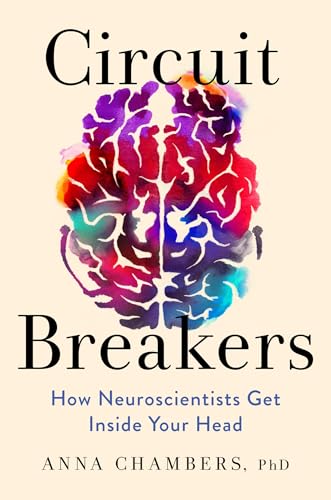
Circuit Breakers: How Neuroscientists Get Inside Your Head
Anna Chambers
Psychology / Neuroscience November 3

Harvard neuroscientist walks into the lab and shows the tools — implants, laser-controlled neurons — plus the grind of the actual work. How we know what we claim to know about the brain. Not another "your brain on X" airport book — the methods book underneath BookLab's usual ideas-first psychology lane. 288 pages. Published by Abrams Press.

🎙️ Bjorn's take: "I've reviewed a lot of neuroscience — Behave and Determined by Sapolsky are two of my favourites. But those books tell you what the brain does. This one tells you how we figured that out — the implants, the lasers, the actual lab work. It's the behind-the-scenes story of the science I've been reading for years. If you're suspicious of neuroscience headlines (you should be), this is the book that shows you how the sausage gets made."
Read if:
  • You want the lab, not the TED talk
  • You liked Behave or Determined by Sapolsky
  • You're suspicious of neuroscience headlines and want to see the methods
Buy on Amazon →

📬 Know a Book We Missed?

If there's a nonfiction release this month that deserves a spot on this list, let me know — I read every suggestion.

Tell me on X → Submit a Book →

Browse Other Months

📅 January 2026 📅 February 2026 📅 March 2026 📅 April 2026 📅 May 2026 📅 June 2026 📅 July 2026 📅 August 2026 📅 September 2026 📅 October 2026 📚 Great Books List 📚 All Monthly Releases