Maps of Meaning
Peterson's dense odyssey through myth, religion, and neuroscience — making the case that our ancestors were far wiser than we give them credit for.
Our Ancestors Were Not Stupid
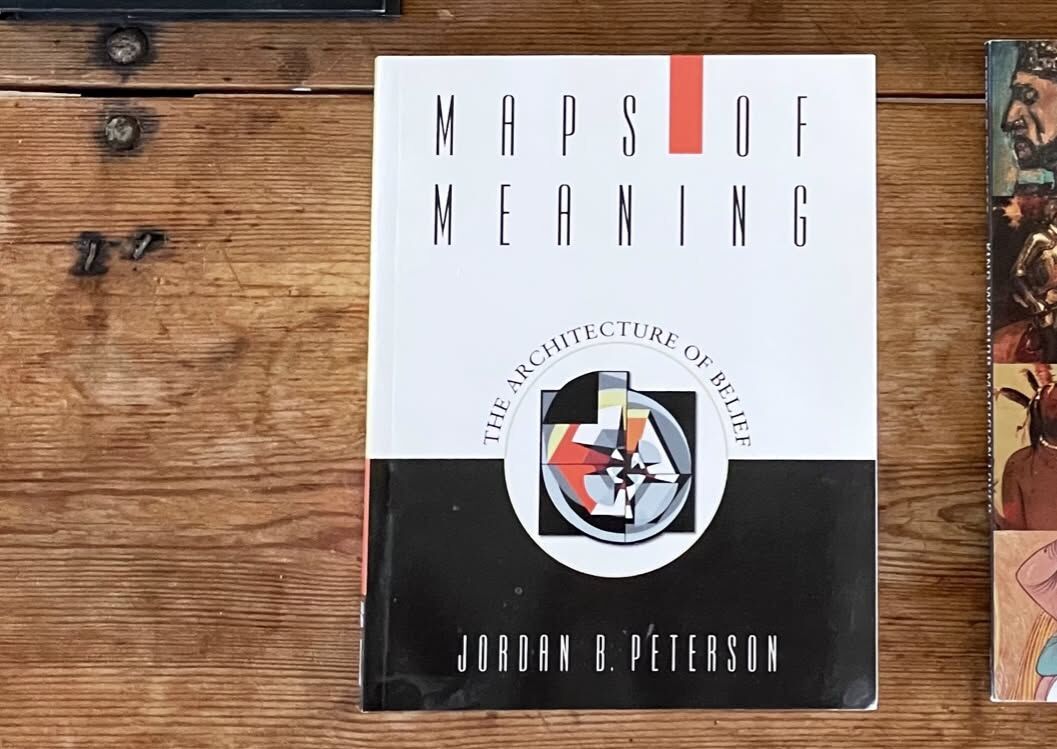
In Maps of Meaning, Jordan Peterson takes us on an odyssey through literature, mythology, and religion. He attempts to connect that which for the longest time has been narrated through stories and myth, with what science now is telling us about the brain.
Our ancestors, like us, were trying to make sense of the world around them. But our approaches to how to do it differ fundamentally.
"Creation myths are generally considered primitive or superstitious attempts to perform the magic of modern science… This presumption is wrong."
"Our ancestors were not as simpleminded as we think they were and their theories of the generation of the cosmos were not merely primitive science. Archaic theory of creation attempted to account for the existence of the world as experienced in totality."
No Science, Huh?!
It's easy to infantilize people of the past: "No science? Well, then it must all be superstition and fairy tales created to uphold social order," some might say.
The difference, Peterson argues, is that the people of the past were interested in what things signified. Their stories were about how to act in the world rather than describing history or the things themselves.
"The world brought into being in archaic myths of creation is phenomenological rather than material. It includes all aspects of experience including those things that we now regard as purely subjective. The archaic mind had not yet forgotten what was important."
📺 Video Review
💡 Key Takeaway
How myth and culture come about: a behavior is imitated, then abstracted into play, formalized into drama and stories, crystallized into myth, codified into religion, and only then — post hoc — is critiqued in philosophy and provided with rational underpinnings.
Maps of Meaning is about how myths are created, and how they were handed down to us only after their meaning and implication had become opaque. We scoff at these stories as superstitious nonsense, because we don't fully understand how they came about.
⚖️ Verdict
This book will stay with me for a while. It's a dense and rich read. If you couldn't get enough of Jordan Peterson's Bible Series then this is the obvious next stop for anyone interested in myth, belief, and the meaning of things.