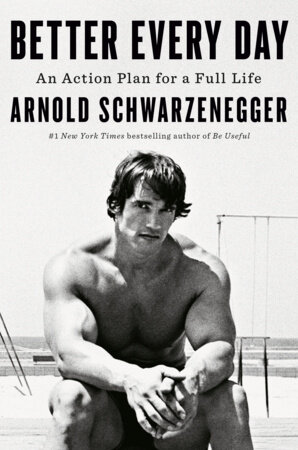
The follow-up to Be Useful: a practical set of lessons for building what Arnold calls a flywheel of growth and purpose. His starting point is that success isn't a finish line but a way of living, and that the happiness is in the effort you put in before you've made it. The publisher calls Be Useful the textbook and this one the workbook: twelve building blocks with weekly actions, from small steps that build momentum to habits, identity, willpower and resilience. Published by Penguin Press.
- You read Be Useful and wanted the practical follow-up
- You want a plan for the year, not just a burst of motivation
- You liked Atomic Habits and want the same idea with a bigger frame
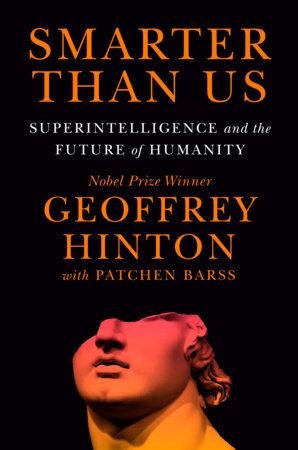
Geoffrey Hinton, the Nobel-winning "godfather of AI", has spent more than half a century trying to understand how the brain learns, and his work on neural networks became the foundation of modern AI. Here he explains in plain language how these systems work, why they're advancing so fast, and why superhuman AI doesn't need to hate us to be dangerous: it only needs goals that leave us out. He doesn't think its advance can or should be stopped. His question is how we live alongside something smarter than us. 240 pages. Published by Viking.
- You've read Superintelligence or The Coming Wave and want to hear from the source
- You followed December's AI pair, God AI and Hype Immunity, and want the deciding voice
- You want to understand how AI actually works before deciding how worried to be
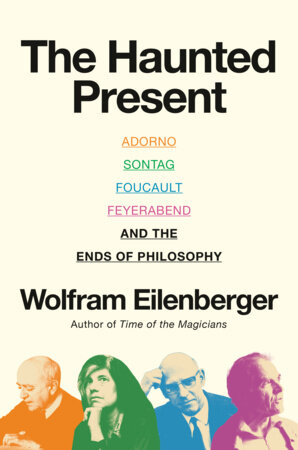
The finale of Wolfram Eilenberger's history of 20th-century philosophy, after Time of the Magicians and The Visionaries. It opens in the winter of 1949: Theodor Adorno comes home from America to a ruined Frankfurt, a war-wounded Paul Feyerabend returns to Vienna, the teenage Susan Sontag visits Thomas Mann in Los Angeles, and a young Michel Foucault is in crisis in Paris. Following those four lives through the decades, Eilenberger tells the story of philosophy in crisis and traces the fault lines of our own world back to them. Published by Penguin Press.
- You read Time of the Magicians or The Visionaries and want the ending
- You want to know where today's arguments about truth and power came from
- You like ideas best when they come with the people who had them
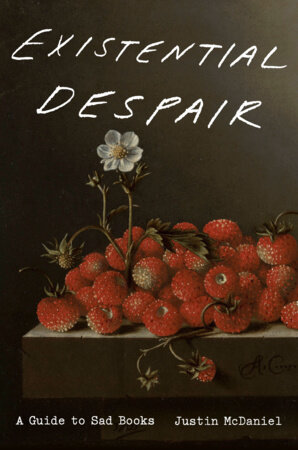
A tour through great literature as a way into despair: how to understand it, and why reading matters more than ever. It grows out of Justin McDaniel's hugely popular University of Pennsylvania course of the same name: one class a week, eight hours long, no devices, one novel read in silence and discussed at the end. McDaniel, a former Buddhist monk who chairs Penn's religious studies department, guides readers through sixteen novels, including books by James Baldwin, Yukio Mishima, Ottessa Moshfegh and Paul Bowles. It is explicitly not a self-help manual. 272 pages. Published by Crown.
- The Death of Ivan Ilyich hit you harder than you expected
- You're tired of New Year books telling you to be positive
- You want a reading list with a guide who has thought hard about why sad books matter
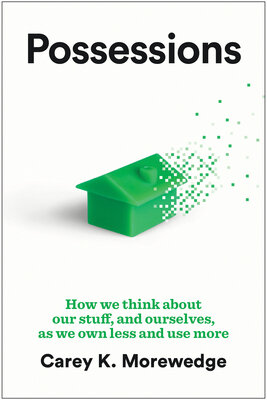
What do we give up when we rent, subscribe and borrow instead of buying? Music, films, software, cars and even homes increasingly come as a service. Carey Morewedge, one of the leading researchers on the psychology of ownership, calls this "liquid consumption" and asks what it does to us, since the things we own have always been part of who we are. He chairs the marketing department at Boston University and began his career as a postdoc with Daniel Kahneman. 256 pages. Published by Harvard Business Review Press.
- You've noticed you own almost none of your music, films or games anymore
- You liked Kahneman and want behavioral science applied to everyday life
- You're curious how ownership shapes identity
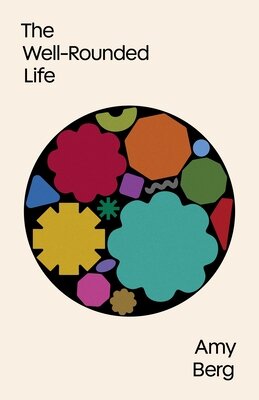
Rice University philosopher Amy Berg argues that well-rounded lives are often better lives: more socially connected, happier and more resilient. Philosophers have rarely taken that kind of life seriously, so she builds the case from research on wellbeing, social science, history, art and pop culture. Along the way she explains why it's fine to be mediocre at things, even the things you care about most, why trying to live a life that would make a great story can backfire, and how to weigh range against the other things that make a life good. 264 pages. Published by Princeton University Press.
- You have more interests than time and feel guilty about it
- You're skeptical of advice that says to pick one thing and optimise it
- You want philosophy that's useful on a Tuesday
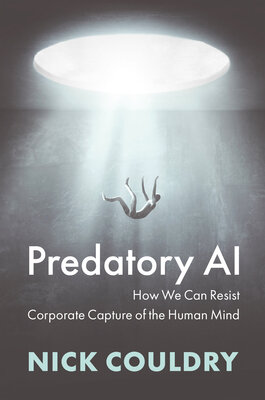
AI is sold to us as inevitable, the next stage of intelligence on Earth. LSE media scholar Nick Couldry asks what happens if we're signing the wrong deal: handing our thinking to corporate models whose terms we don't control. He sets out the damage he sees in work, education and the creative industries, and argues for a different social contract with AI built around human, embodied intelligence. It is the second book in his Humanising the Future trilogy. Paperback. Published by Polity.
- You use AI tools daily and want to think harder about the trade you're making
- Hinton's book leaves you asking who actually controls the technology
- You liked Futureproof and want a sharper, more critical take
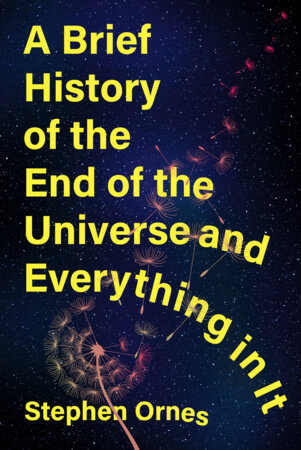
Everything ends. Cells self-destruct, bodies decompose, and stars burn through their fuel and swell, taking whole planets with them. Science writer Stephen Ornes follows the same rules of time and entropy from the microscopic to the cosmic, through biology, forensic science, ecology and cosmology. It's a surprisingly comforting book about falling apart: his argument is that decay is a transformation, not just an ending, and that seeing it clearly makes life more precious, not less. 272 pages. Published by W. W. Norton.
- A Brief History of Time got you into cosmology
- You like science books that connect the very small to the very large
- You've read The Denial of Death and want the cosmic version of the same question
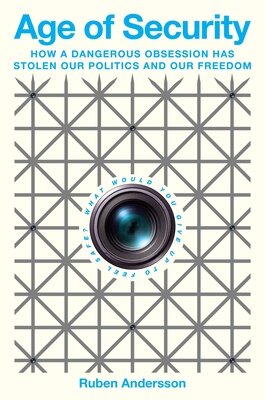
From border walls to video doorbells, we keep buying more security, and Oxford anthropologist Ruben Andersson argues it is making us less safe. He reports from global border zones, small-town Sweden and the Chinese surveillance state to show how fear has spread into private life. His case is that real safety comes from open societies, not higher walls. Published by Mariner Books.
- You've installed a camera doorbell and wondered what you actually bought
- You want to understand why fear sells, in politics and in shops
- You liked Couldry's argument about AI and want the same lens on security
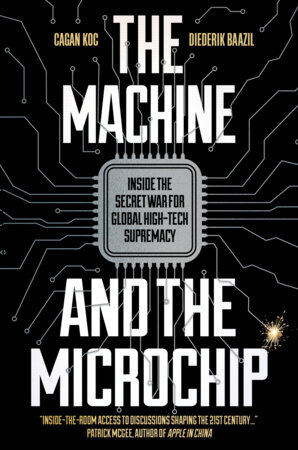
Almost every advanced chip in the world, from the ones in iPhones and Teslas to the ones running ChatGPT, is made by one company in Taiwan: TSMC. And TSMC can only make them with one machine, the extreme ultraviolet (EUV) lithography system built by a single Dutch company, ASML. Journalists Cagan Koc and Diederik Baazil take the story from the White House Situation Room and government offices in Europe and Asia into the cleanrooms where the chips are made, and explain why the fight to control them may shape the rest of this century. 272 pages. Published by MIT Press.
- You read Chip War and want the chapter on the machine behind the chips
- You want to understand why Taiwan matters so much to the AI race
- You like business stories told like thrillers
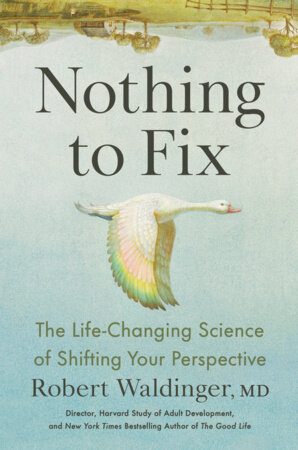
We keep telling ourselves life would be better if only one thing were different, and Robert Waldinger argues that this frantic chase for happiness is exactly what makes us unhappy. Waldinger is a Harvard psychiatrist, the director of the Harvard Study of Adult Development, one of the longest-running studies of human happiness, and a Zen priest. The book is deliberately short and built around one idea: you change your life by changing how you see it, not by fixing it. 272 pages. Published by Dutton.
- You liked The Good Life and want Waldinger's own take on what to do with it
- You're tired of self-improvement that treats you as a problem to solve
- You're curious where Stoic and Buddhist ideas about acceptance meet the research
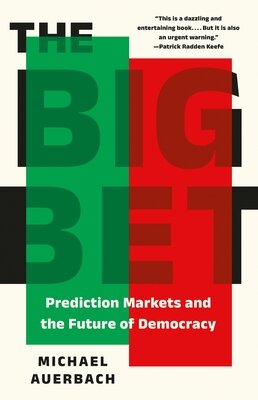
In just a few years prediction markets have spread around the world, changed what gambling means, made billionaires of their young founders and started to outrun traditional polling. Investor Michael Auerbach tells the story across five hundred years, from bets on papal elections to a Pentagon futures exchange to Polymarket, and asks what happens to democracy when almost anything, elections included, becomes something you can bet on. 336 pages. Published by Basic Books.
- You check prediction-market odds and wonder what they're actually measuring
- You like economic history with a story in it
- You're interested in how betting on something changes the thing itself
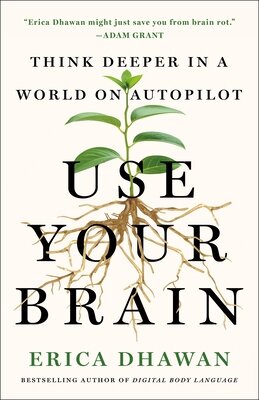
Erica Dhawan's target is the quiet brain rot of the AI age: approving drafts instead of writing them, reaching for the phone before thinking, settling for the summary instead of the argument. Each shortcut feels efficient, but together they hand our thinking over to machines. Her book is a field guide to staying creative and original when a generic answer is always on tap. Dhawan is a leadership expert and the author of Digital Body Language. 288 pages. Published by St. Martin's Press.
- You've caught yourself reaching for AI before you've thought for yourself
- You lead a team and wonder what happens to judgment when the first draft is automatic
- You want practical habits, not a lecture about screens
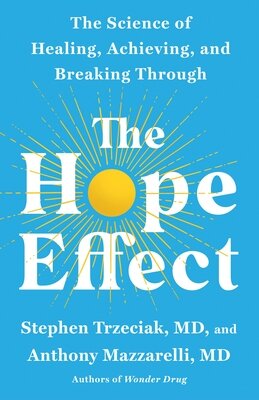
Hope sounds like a soft word. Physicians Stephen Trzeciak and Anthony Mazzarelli, the authors of Compassionomics, argue it's anything but. Building on psychologist C. R. Snyder's hope theory, they treat hope as something different from optimism: a measurable, trainable mix of having goals, seeing paths to them and the will to keep going. They show what it does for healing, for achievement and for breaking through when things look stuck. Published by St. Martin's Essentials.
- You liked the idea of Existential Despair but want the other side of the argument
- You want the research on why some people push through and others stall
- You're skeptical of positive thinking and want to know whether hope is any different
📬 Know a Book We Missed?
If there's a nonfiction release this month that deserves a spot on this list, let me know - I read every suggestion.
Tell me on X → Submit a Book →