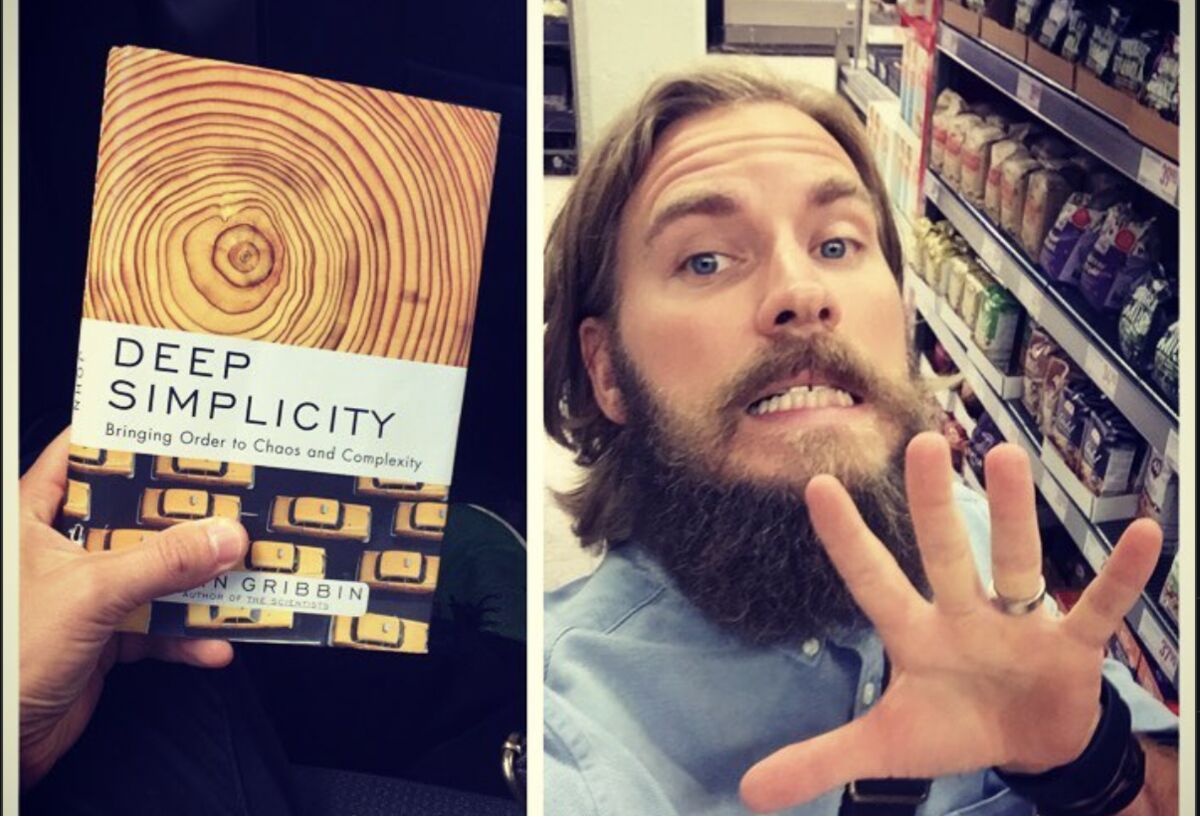
Deep Simplicity
How simple rules create the complex, chaotic systems that shape everything — from earthquakes to stock markets to life itself.
What's It About?
Gribbin provides us with the tools to understand how interactions following simple rules can create complex, chaotic systems. Starting off with an extremely readable history of mathematics, the book soon gets into the strange and interesting things that happen in a system at the edge of chaos — and ends with what implications these systems have for the origins of life itself.
I barely know basic math, but Gribbin does a remarkable job of explaining concepts in a way that anyone can understand. That's rare for a book that covers chaos theory, complexity science, and the thermodynamics of the universe.
The Edge of Chaos
The core idea running through this book is that the most interesting things in nature happen right at the boundary between order and chaos. Too much order and nothing changes. Too much chaos and nothing holds together. But at the edge? That's where complexity emerges. That's where life happens.
Gribbin walks you through how this plays out everywhere. Earthquakes follow a power law — big ones are rare, small ones are common, and every "coin toss" has the same probability. Stock markets follow the same pattern. You don't need a big trigger to cause a big event. Imagine dropping one grain of sand on a table, one at a time. At a critical moment, one more grain will cause an avalanche of some size. The system organizes itself to the edge of criticality without anyone directing it.
"The most complex things in the universe arise from the interaction of simple components following simple rules."
From Weather to the End of the Universe
One of my favorite sections covers the early attempts to predict the weather using mathematical approximations and the laws of physics at the turn of the 19th century. These pioneers had the right idea but not the tools — and their struggle illustrates perfectly why chaotic systems resist prediction no matter how well you understand the rules.
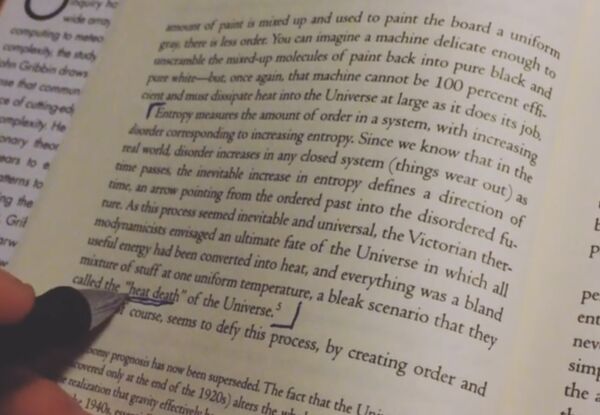
Gribbin also takes you all the way to the end: heat death. The ultimate fate of the universe, when all energy is converted into heat and everything becomes a bland mix of stuff at the same temperature. It's bleak, but it's the logical conclusion of thermodynamics — and understanding it gives you a strange appreciation for the improbable complexity we get to experience right now.
"Entropy measures the amount of order in a system, with increasing disorder corresponding to increasing entropy. Since we know that in the real world, disorder increases in any closed system (things wear out) as time passes, the inevitable increase in entropy defines a direction of time, an arrow pointing from the ordered past into the disordered future."
Charlie Munger's Reading List
I found this book on Charlie Munger's reading list — a source that's given me many of my best reads since 2015. The Selfish Gene, Influence, Titan, Thinking, Fast and Slow — they all came from the same list. When Munger recommends a science book, pay attention. The man built his entire investment philosophy on understanding how systems actually work.
💡 Key Takeaway
The most complex phenomena in the universe — from weather systems to stock market crashes to life itself — emerge from simple components following simple rules. You don't need a grand designer or a massive trigger. You just need interactions at the edge of chaos, and complexity takes care of itself.
⚖️ Verdict
This might have been my favorite book the year I read it, out of the 50 or so I got through. It's one of those rare science books that makes genuinely difficult concepts feel accessible without dumbing them down. If you've ever wondered how the zebra got its stripes, or why a single grain of sand can trigger an avalanche — this is the book. Gribbin is one of the best science communicators out there, and this is him at his best.
If you're interested in understanding how reality actually works at a fundamental level, start here.