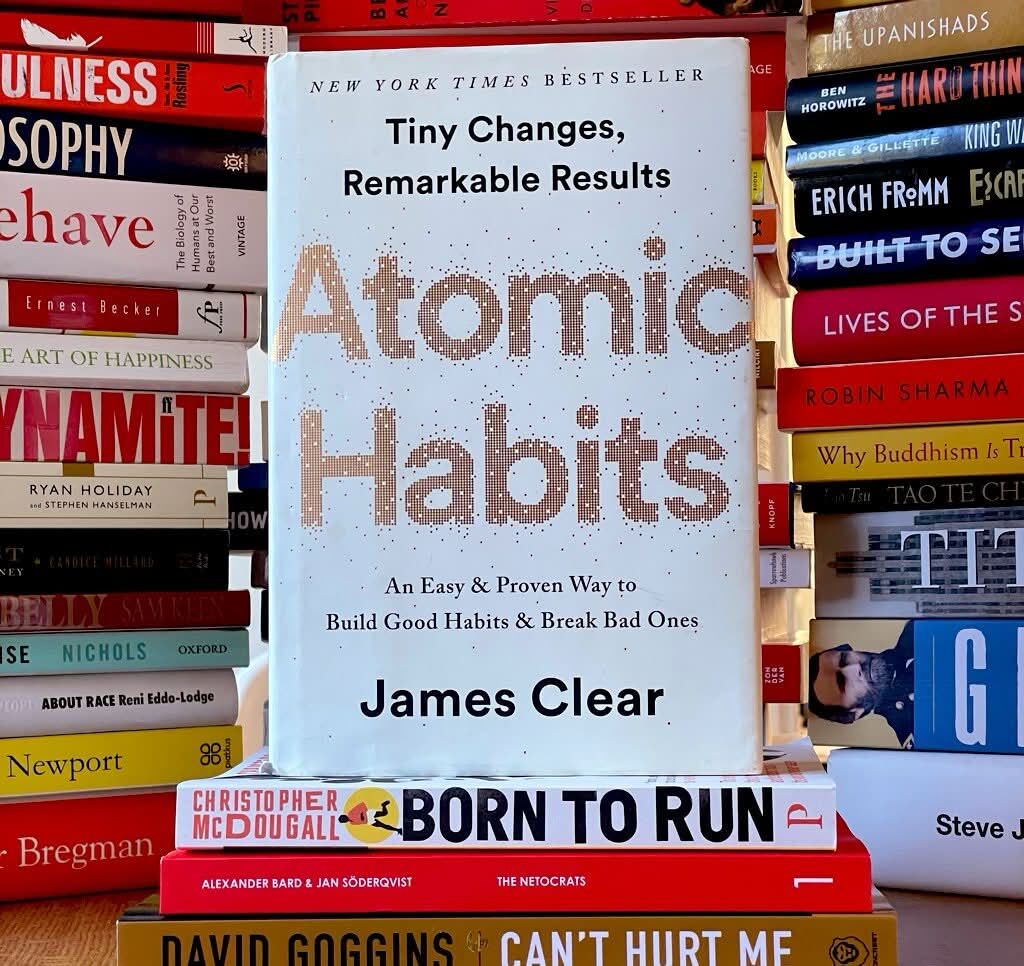
Atomic Habits
The one-stop-shop for habit building — and the only book on habits you'll ever need on your shelf.
Systems Over Goals
It's easy to be a nonfiction purist and scoff at mainstream self-help books as cheap cash grabs. When I created my Great Books list I thought about leaving the how-to/personal development genre out of it entirely. But I'm glad I didn't — because the truth is that these books actually help a lot of people change and improve their lives. As long as you're willing to take the necessary action.
Let's face it: successful people and unsuccessful people have the same goals. It's the systems and strategies you put in place that make the difference between the two.
"You don't rise to the level of your goals, you fall to the level of your systems."
This book is extremely practical and to the point. You won't need another book on habits — though I'm sure there are other great ones out there — if this one lives on your shelf. It helped me quit my lifelong nail-biting habit. It helped me build a consistent video recording habit — one video a week on YouTube for over a year. I don't think it would have taken me six years of unsuccessful attempts at quitting nicotine (Swedish snus was my poison of choice) if I'd had the tools and frameworks from this book.
🎭 Identity: Become the Person
Improvements are only temporary until they become who you are. You're not just going to read a book — you're going to become a reader. You're not going to run a marathon — you're going to become a runner. "Identity" literally means "repeated beingness."
Behaviour that is incongruent with the self won't last. That's why we have better success focusing on who we identify as rather than what we're trying to quit. "I'm not a smoker" is more powerful than "I'm trying to quit smoking." Every action you perform is a vote for the person you want to become.
The two-step process is simple: decide who you want to be, then prove it to yourself with small wins — over and over.
🏞️ Environment: Make It Easy, Make It Hard
Make bad habits difficult to perform and good habits easy. Prep your gym bag the day before and put it by the front door. Bring a book everywhere you go. Move the candy from the kitchen counter to the cellar. Remove the batteries from the remote after watching TV if you struggle with bingeing.
No behaviour happens in isolation — your environment shapes everything. Clear introduces the Diderot Effect: obtaining a new possession often creates a spiral of consumption that leads to additional purchases. Catherine the Great gave Diderot a robe so fine it made all his other belongings look shabby, and he replaced them one by one. Be intentional about what you introduce into your life.
📺 Video: 5 Key Takeaways from Atomic Habits
🚦 Systems: Stack Your Habits
Stack new habits on top of existing ones. "After I brush my teeth, I floss." "After I finish my morning coffee, I journal for five minutes." This implementation intention — a plan you make beforehand about when and where to act — is one of the most effective strategies in the book.
Clear also introduces temptation bundling: pair what you need to do with what you want to do. Dopamine is released not only when you experience pleasure, but also when you anticipate it. Desire is the engine that drives behaviour — so use it strategically.
🔁 Repetition: How Many, Not How Long
Don't ask yourself how long it takes to build a habit — ask how many times. Start small and get the reps in. The two-minute rule says a new habit should take no longer than two minutes to perform at first. Instead of "read before bed each night," try "read one page." Instead of meditating for thirty minutes, meditate for one.
Once you've started doing the right thing, it's easier to continue. Motion — planning, strategising — feels productive but it's not action. Action is doing. Be proactively lazy: reset the room before you leave it, and you'll never have to clean up.
📈 Progress: Don't Break the Chain
One of the most satisfying feelings is making progress. Habit trackers and other forms of visual measurement make your habits satisfying by providing clear evidence of your progress. "Don't break the chain" — keeping a streak alive is a powerful motivator.
We imitate the habits of the close, the many, and the powerful. The higher your friends' IQ at age 11, the higher your IQ at age 15. We soak up from the ones around us. Find an environment where your desired behaviour is the norm.
🔑 The Goldilocks Rule
Professionals stick to the schedule; amateurs let life get in the way. Are you a fair-weather person, or do you run anyway? The key is working at the right level of difficulty — not too easy, not too hard. Combine your strengths into a unique composition. Be the very best in a very narrow category. "Work hard on the things that come easy."
And don't forget to reflect and review. Does your system work as intended? Are you getting better? Annual reviews keep you honest.
💡 Key Takeaway
Forget goals — build systems. Make good habits obvious, attractive, easy, and satisfying. Make bad habits invisible, unattractive, difficult, and unsatisfying. Every small action is a vote for the person you want to become. Knowledge about how to build strong habits is an essential life skill.
⚖️ Verdict
The one-stop-shop for habit building. Extremely practical, no fluff, and backed by Clear's own experience as well as solid research. If you only read one book on habits, make it this one. It goes straight onto my Great Books list — right alongside Eat That Frog by Brian Tracy and The Compound Effect by Darren Hardy, two other books that prove small, consistent action beats grand ambition every time.