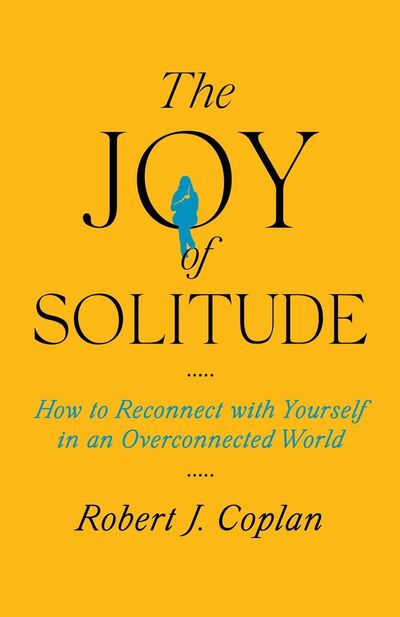
Solitude is a part of the human experience — but just like any other relationship, your relationship with solitude can be satisfying and intimate, or it can leave you stuck in a cycle of sadness, anxiety, or anger. Coplan draws from psychology, neuroscience, literature, and sociology to guide readers through solitude's many dimensions and its effects on mental health and well-being. 272 pages.
- You're craving alone time but can't seem to find it
- You want a science-backed guide to making solitude work for you
- You liked The Stranger in the Woods, Walden, or Deep Work
- You're interested in the psychology of introversion and alone time

A millennium-long history of emotion told through delightful snapshots, often mischievous storytelling, and a masterly command of history. Mount explores the shifting importance societies have placed on empathy and the misfortune of others. Each seismic moment — from the French Revolution to civil rights — has had a corresponding sentimental revolution that fueled great political turning points and came to define human civilization.
- You want a palate cleanser that's unlike anything else on your shelf
- You're curious about how emotion has shaped political revolutions
- You liked The Righteous Mind or The Laws of Human Nature
- You enjoy cultural history told with wit and personality
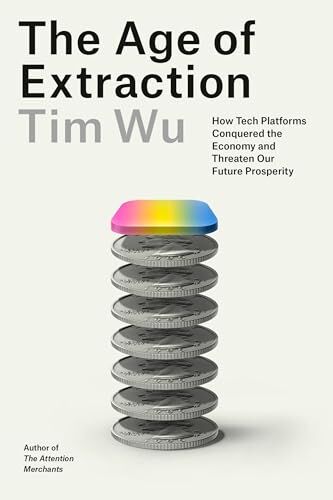
Our world is dominated by a handful of tech companies. They provide great conveniences and entertainment, but also stand as some of the most effective instruments of wealth extraction ever invented — seizing immense amounts of money, data, and attention from all of us. Tim Wu, the scholar and former White House official who coined the phrase "net neutrality," tells the story of an internet that promised widespread wealth and democracy in the '90s, only to create new economic classes and aid the spread of autocracy instead.
- You remember the early internet and want to understand what happened
- You're critical of Big Tech but want the argument backed by scholarship
- You liked The Shallows, This Is for Everyone, or The Sovereign Individual
- You want to understand how the attention economy actually extracts wealth

A dystopian novel set between 2029 and 2047, following a family living through the slow fall of the US empire. The dollar is crashing. The US defaults on its debt. Nations create a new currency called the "bancor." What makes this book remarkable is how much of what Shriver wrote in 2016 is starting to happen — the national debt, the BRICS nations exploring alternative currencies, the fragility of American economic dominance.
- You're interested in what happens when a superpower's debt becomes unsustainable
- You want fiction that feels more like prediction than imagination
- You liked The Fourth Turning, The Bitcoin Standard, or The Sovereign Individual
- You want a novel that pairs well with macro-economic nonfiction