The Mandibles
A fictional vision of America's economic collapse — that no longer feels like fiction.
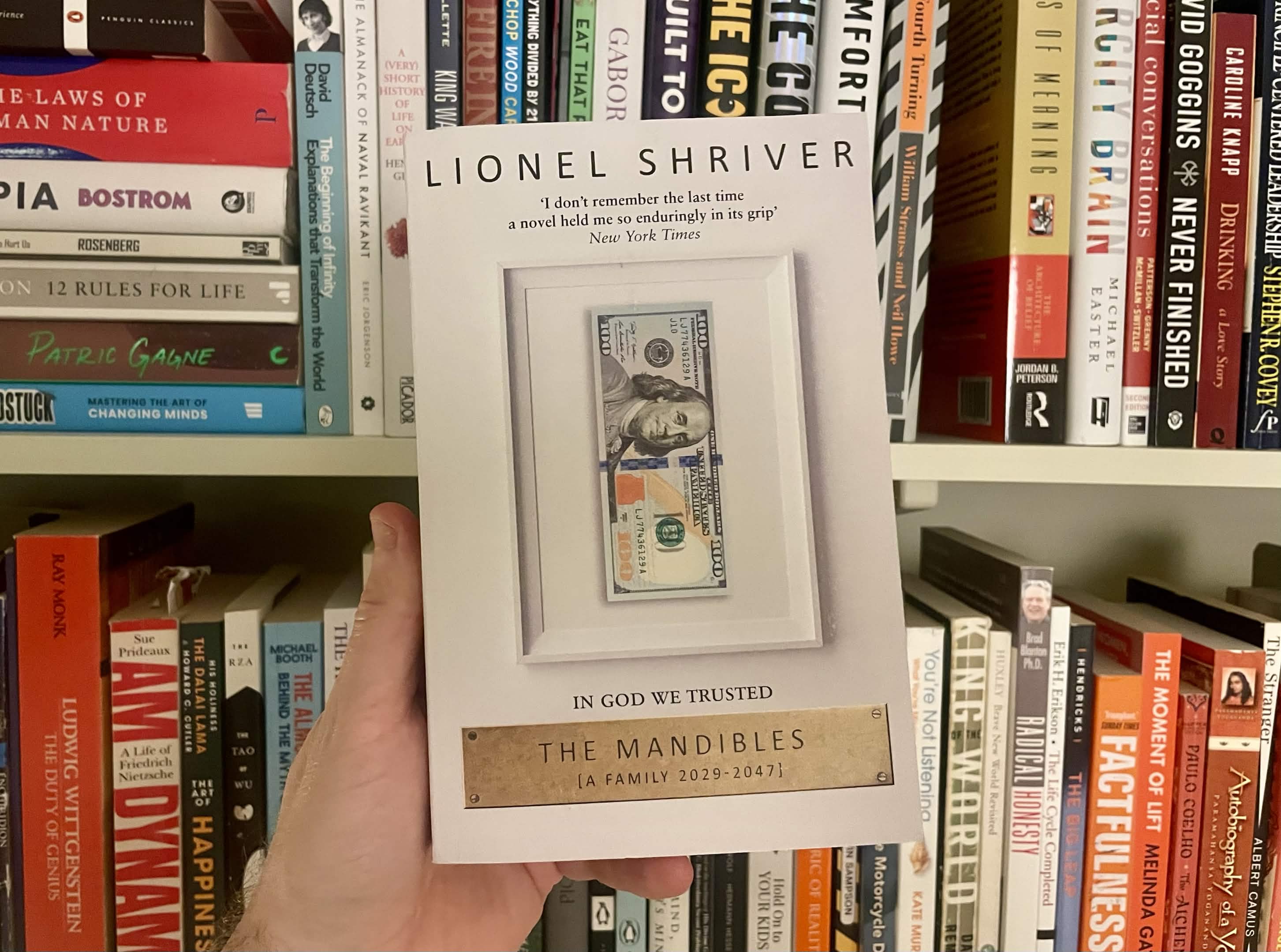
The Mandibles is set in a near-future version of the US where entitlement programs, social justice, and identity politics have reached their peak. Irresponsible government spending has the country stuck between a rock and a hard place. And then the dollar collapses.
Written around 2016, this book was supposed to be fiction. The scary part is that it's starting to feel like a possible reality. Brace yourselves.
A world that's slightly off
When the US dollar collapses, the nation is thrust into a crisis that challenges all assumptions about stability and modern life. The Mandible family — long dependent on a substantial inheritance — watches their imagined future vaporize right before their eyes as their currency falls and capital controls intensify.
The book starts in a world not too dissimilar from our own, but things are slightly off. The bots that started replacing American workers in the early 2020s are now called "robs" — for obvious reasons. When you meet people, you don't ask what you do for work. Instead you ask: "Do you still work?" And if the answer is yes, that comes with the weight of privilege.
Ground crickets are ingredients in energy bars. If you're looking for a job in New York, your best bet is a homeless shelter — because New York will never run out of homeless people. Daily worries for families are the consumption of toilet paper and management of fresh water, both being a luxury.
"Eventually, social democracies all arrive at the same tipping point — where half the country depends on the other half."
There's a powerful scene where one of the family members realizes that English is no longer the default language option when you talk to automatic telephone operators. Now it's Spanish. What starts with a crack ends up as an abyss. Hell is a bottomless pit, after all. Gradually, then suddenly.
Tethered to reality
This book is not scary because it depicts the imaginations of a fictitious dystopia — it's scary because it shows us what could be a near-future reality. The book is tightly tethered to the world we actually live in. Inflation is sticky. Nations around the globe are looking for ways to settle outside of the dollar system. More and more people are living on handouts. Debt and deficits are the name of the game for people managing national economies.
The money printer is warming up for yet another liquidity injection. It's Vaseline for the financial system — but very painful for those who have to end up taking it from behind. Those with the sore butts will be the people without hard assets. And that's the majority, because most people don't own hard assets. Their hard-earned dollars simply buy less and less.
Interestingly, in this book both Bitcoin and gold fail to be the lifeboats that people promised them to be.
📺 Video Review
Sharp, cynical, and honest
After years of trying to study macroeconomics as a clueless pleb, it was refreshing to read a fictional work about what could possibly happen if we continue to kick the can down the road and not deal with the deficits. The tone of the book is sharp and cynical, but it is honest. It doesn't shy away from brutal truths.
You can really feel how Shriver had this vision of what would happen if we continue down this path — and the book feels like it was written as a way to deal with that anxiety. If we don't deal with debt and deficit and how we spend society's money, we will see a lot more things that are straight out of this book around the world.
It's fascinating to follow this family throughout this crisis and see how these relatively lucky individuals — living in a rich country, having what they need — are broken down by the collapse. It creates a lot of perspective. Some characters are easy to relate to, others are quite unlikable. That's what makes it feel real.
💡 Key Takeaway
The Mandibles is the best way to emotionally prepare for what might happen if governments keep kicking the can down the road on debt and deficits. It's a fictional backup plan for your psyche — and a wake-up call to think seriously about hard assets and what happens when the money in your pocket stops meaning anything.
⚖️ Verdict
This is one of the best reading experiences of the year — and that's saying something in a strong year. Not a cheerful book, but a fantastic one. Highly recommended for anyone who feels like something is wrong with the economy but doesn't have the stamina to wade through dense nonfiction textbooks about debt and monetary policy. Shriver gives you the emotional experience of an economic collapse without requiring an economics degree. Read it, and you'll start seeing proof of Mandibles everywhere.