Walden
The golden nuggets are huge — but you'll wade through a lot of pond water to find them.
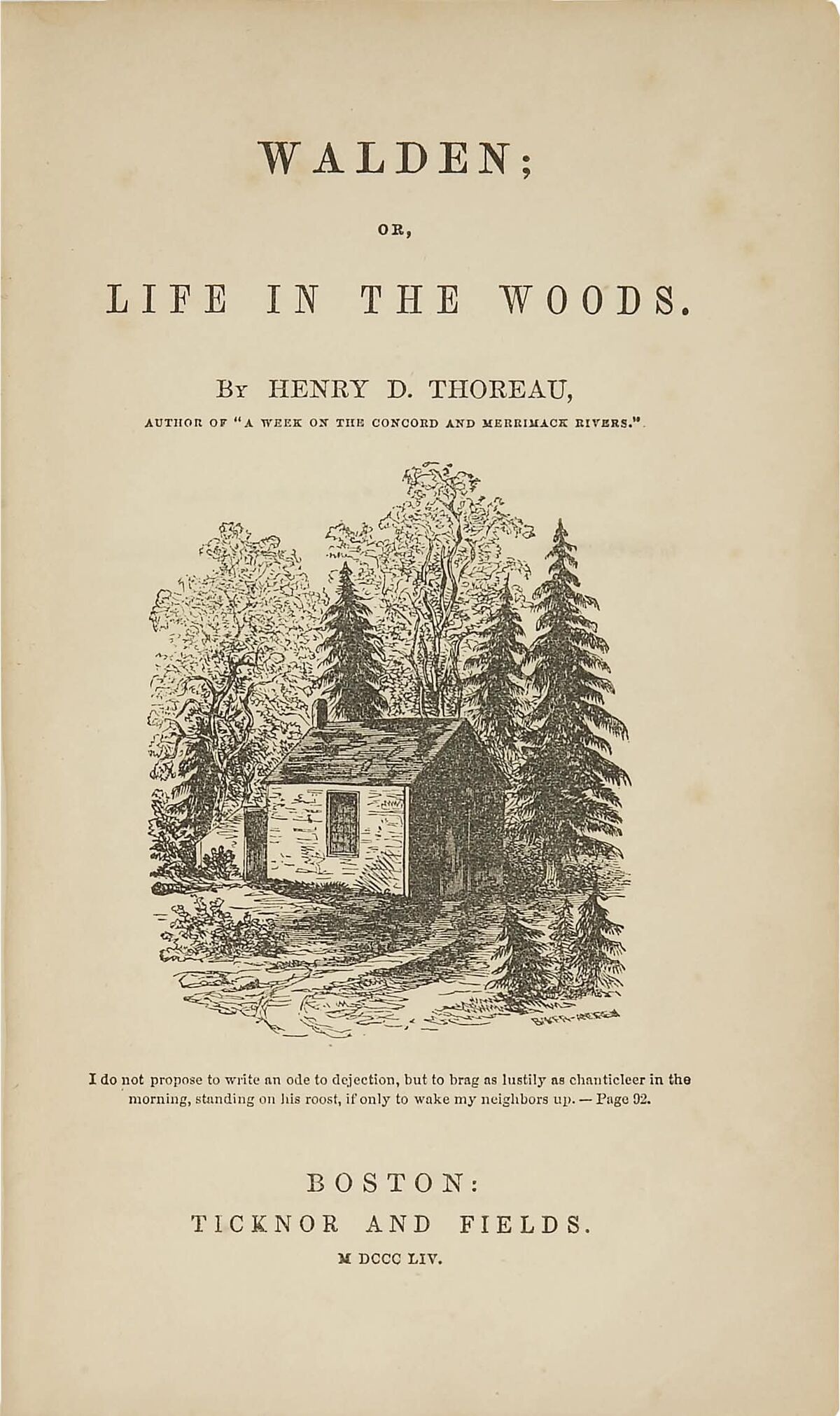
What Is It?
Published in 1854, Walden is Henry David Thoreau's autobiographical account of the two years he spent living in a cabin he built near Walden Pond in Concord, Massachusetts. It's half memoir, half spiritual manifesto — a reflection on simple living, self-reliance, and what happens when you strip away the noise of civilization and sit with yourself in nature.
I picked this up as an action point after reading Nassim Taleb's Antifragile, where the advice was clear: read more books that have stood the test of time. Walden has survived 170 years. That alone earns it a spot on the shelf.
The Quiet Desperation
Thoreau's most famous line might be one of the greatest observations ever put to paper:
"The mass of men lead lives of quiet desperation. What is called resignation is confirmed desperation."
That line hit me when I first read it and it hasn't stopped hitting since. It's the kind of sentence that forces you to look at your own life and ask: am I living, or am I just going through the motions? Thoreau saw the trap clearly — people working jobs they hate to buy things they don't need, too afraid to break the pattern because the pattern feels safe. And he wrote this in 1854. Nothing has changed.
The Case for Simplicity
The heart of Walden is Thoreau's argument for radical simplification. Not minimalism as a lifestyle brand — minimalism as liberation.
"Simplicity, simplicity, simplicity! I say, let your affairs be as two or three, and not a hundred or a thousand."
His logic is elegant: if you eat light, you can work light. If your needs are simple, you don't have to spend your life earning money to meet them. The endless race for more — more stuff, more status, more comfort — creates the very discontent it promises to cure. Thoreau walked away from that race and found that most of what society calls "necessary" is anything but.
On Solitude
For someone who lived alone in the woods, Thoreau had a remarkably healthy relationship with solitude. He didn't see it as deprivation — he saw it as the purest form of companionship.
"I never found the companion that was so companionable as solitude."
There's a depth to this that goes beyond introversion. Thoreau is saying that most social interaction is noise — performative, shallow, draining. Real connection with yourself requires silence. And in that silence, you find something richer than small talk could ever offer.
The Classics as Compass
Thoreau was a voracious reader, and he makes a passionate case for always returning to the classics:
"What are the classics but the noblest thoughts of men."
This is the Lindy Effect before anyone gave it a name. If a book has survived centuries, there's a reason. The classics aren't old because they're irrelevant — they're old because they capture something permanently true about being human. Walden itself is proof of the argument.
The Problem with Walden
Here's the honest truth: about half of this book is boring. Thoreau spends entire chapters describing the exact dimensions of his cabin, cataloguing every bean he planted, and writing extended meditations on the depth of Walden Pond, the behavior of ants, and the sounds of various birds. If you're looking for consistent philosophical insight, you'll find yourself skimming large sections.
The golden parts are genuinely golden — the kind of passages that make you put the book down and stare at the ceiling. But they're buried in pages and pages of naturalist observation that reads more like a field journal than a philosophical text. It's a book where the highlights are extraordinary and the spaces between them test your patience.
The Bhagavad Gita Connection
One thing that surprised me: Thoreau references the Bhagavad Gita throughout the book. He was deeply influenced by Hindu and Eastern philosophy — unusual for a 19th-century American. I was reading about Gandhi at the same time and kept running into the same text. When multiple great thinkers across centuries keep pointing you to the same book, you should probably read it. I love how one book leads you to the next.
💡 Key Takeaway
Most of what we think we need, we don't. Simplify ruthlessly — not to deprive yourself, but to free yourself. The less you need, the less you have to work for things that don't matter, and the more time you have for things that do.
⚖️ Verdict
The good parts of Walden are so good that they've entered the permanent canon of Western thought. The quotes alone justify reading it. But as a cover-to-cover experience, it's inconsistent — half profound philosophy, half nature diary. If you're the kind of reader who can mine for gold and skip the filler, you'll find plenty of treasure here. If you need every chapter to earn its keep, you might find yourself quietly desperate to reach the end.