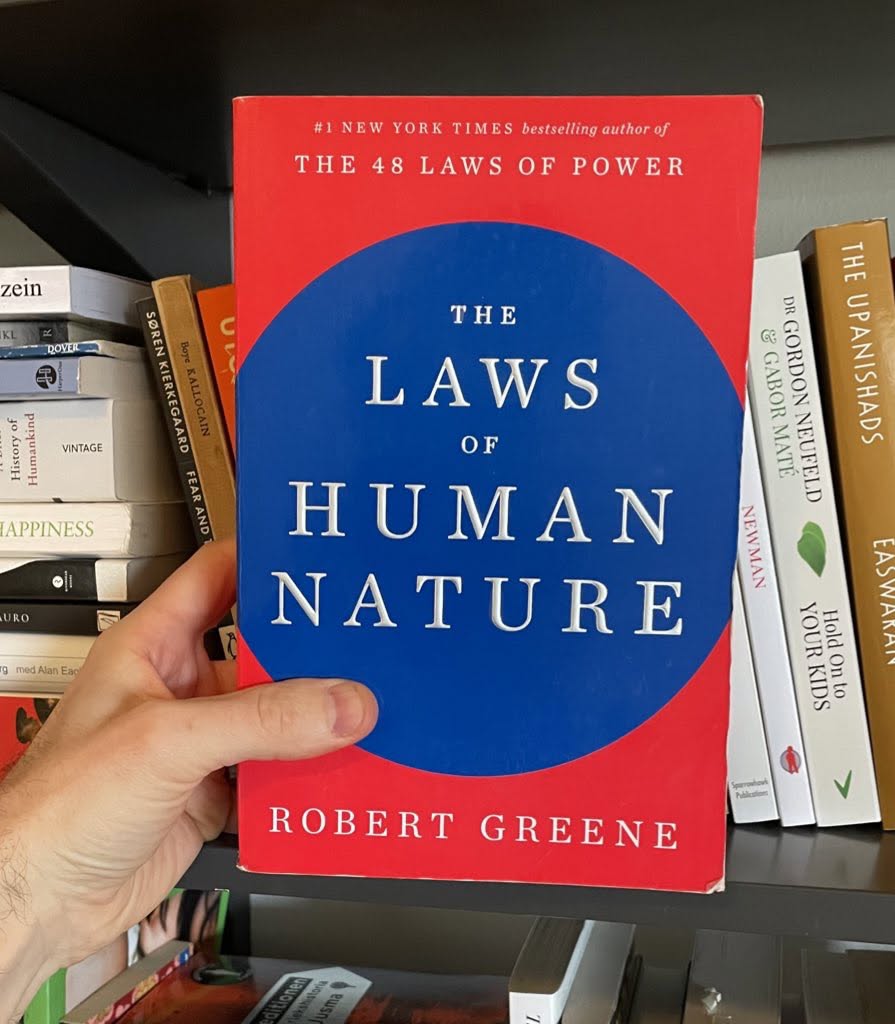
The Laws of Human Nature
18 laws that decode the hidden forces driving every person you've ever met.
Introduction
Robert Greene puts a lifetime of studies of human nature into one huge and important volume. The Laws of Human Nature covers character, toxic personality types, narcissism, cognitive biases, archetypes, childhood trauma, desirability, shortsightedness, the Shadow, attitude, group dynamics, leadership, persistence, fearlessness, and purpose. The list goes on…
You Are More Like Louis XVI Than You Think
One of Greene's most uncomfortable insights is that we all share the same fundamental biases and blind spots as history's greatest failures. We tell ourselves: "I'm different. I'm more rational than others, more ethical as well." But this self-deception is itself one of the laws of human nature — and recognizing it is the first step to genuine self-awareness.
The Power of Time Frames
"If possible, avoid deep contact with those whose time frame is narrow, who are in continual react mode, and strive to associate with those with an expanded awareness of time."
Greene emphasizes the importance of thinking in long time frames. The people who achieve the most meaningful results are those who can resist the pull of immediate gratification and keep their eyes on the larger arc of their lives and work.
Nonverbal Expectations
Your expectations of people are communicated nonverbally. Teachers expecting greater things from their students — without saying anything — have measurable positive effects on their work. This insight applies far beyond the classroom: the expectations you carry into every interaction shape the outcomes you get.
Attitude as a Lens
People with negative attitudes use their worldview to narrow their experience. It gives a sense of control in a world of uncertainty. Greene shows how cynicism often masquerades as wisdom, when in reality it serves as consolation for lack of accomplishment.
"Man would rather have the void as purpose than be void of purpose." Behind this false purpose is the great fear of trying and failing, of standing out and being ridiculed. Cynicism acts as consolation for lack of accomplishment.
The Antidote: Persistent Energy
Self-doubt makes us surrender inwardly before we surrender outwardly. Greene reminds us that almost nothing in the world can resist persistent human energy. The willingness to keep going — through doubt, through failure, through ridicule — is one of the most powerful forces available to us.
Meditate on Mortality
The final chapter drives home the importance of meditating on our mortality. This isn't morbid — it's clarifying. Reminding ourselves about our impermanence is a powerful way to get our priorities straight. After reading this, I committed to a new experiment: pretending each day was my last, to see how it shifted my decisions and focus. 💀⚰️
⚖️ Verdict
This book is great — a Book of the Year candidate — and deeply practical. I almost don't want you to read it, since I want my newly found superpowers for myself. It has already helped me wrap my head around what's really been going on in situations with people that, until now, had left me completely dumbfounded.
If you read one Robert Greene book, make it this one.
📚 Further Reading
- Understanding Human Nature — Alfred Adler
- Games People Play — Eric Berne