The Road to Serfdom
A prophetic warning from the depths of the 20th century — trade your liberty for security and you will lose both.
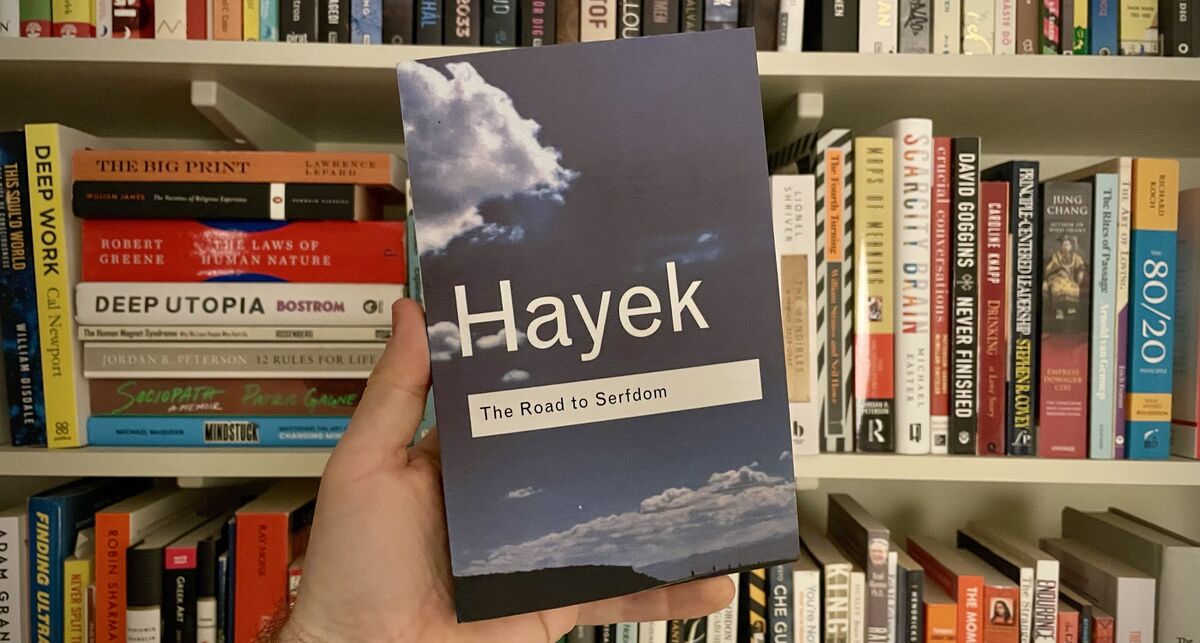
Not Just a Book — A Warning
Hayek's The Road to Serfdom is not just a book. It's a warning. A prophetic call from the depths of the 20th century. Written in the shadows of the Second World War, Hayek saw through the chaos and he saw a chilling path — where central planning, collectivist dreams turn into bureaucratic nightmares.
His message is clear: trade your liberty for security and you will lose both.
Hayek doesn't tiptoe around this argument. He shakes you awake, declaring that good intentions can still lead to terrible outcomes. Every government decree, every five-year plan, he warns, is a step towards despotism. And his examples are not just hypothetical — Soviet gulags, Nazi horrors, and the slow creep of state power that we see in Western democracies proves his point.
"Stop, look, and listen," Hayek urges — pleading the readers to see the fate of nations that embraced state control.
The Paradox of Liberalism
One interesting takeaway from this book is the paradox of liberal society. Hayek exposes a painful irony: the freedom that brings us our prosperity is eventually taken for granted. Its success blinds people to its source.
"It might even be said that the success of liberalism became the cause of its decline."
Freedom's own victories became its downfall. That's the irony. And it stings.
📺 Video Review
Planners Promise Stability — But Create Chaos
Planners promise stability but create chaos. In Hayek's eyes, the rule of law — impartial, transparent, predictable — is the only barricade against the slide into servitude. Without it, even the most industrious citizen can't plan a family dinner, let alone a livelihood.
The liberal plan that everyone should make their own plan for their life and their circumstances? That's not really a plan according to the planners. And many people seduced by the idea of a planned society have an idea that they will be a part of making that plan. But soon enough, that dream will shatter. Instead of being the architects, they become the obedient cogs in the wheel.
Privilege and the Free Market
Hayek argues that central planning is inherently totalitarian. Planners dismiss the idea of individuals making their own choices as chaotic. But the so-called chaos of the free market actually dismantles privilege. True competition offers fairness far better than any bureaucrat could. In an open market with fair rules, there's actually less privilege.
"But to call private property as such, which all can acquire under the same rule, a privilege, because only some succeed in acquiring it, is depriving the word privilege of its meaning."
The Perversion of Language
Another devastating tactic of the planners that Hayek identifies is the perversion of language. Words are twisted until they lose meaning. Totalitarian regimes use this to crush opposition. Without clear language, debate becomes impossible. And Hayek warns that if you haven't experienced this firsthand, it's hard to grasp how damaging this is.
Decentralization Is the Answer
But there is hope. Decentralization is the answer. When power is spread out, no single person can dominate. Separating political power and financial power is the best way for us to safeguard our freedom.
💡 Key Takeaway
Freedom is fragile, and its greatest threats come dressed in promises of equality and security. The very success of liberalism blinds people to its source — and every step toward central planning, however well-intentioned, is a step down the road to serfdom.
⚖️ Verdict
The Road to Serfdom is not a dry academic treatise — it's powerful words, bold and strong writing that kept me going all the way through. I listened to it on audio, which was a great way to enjoy a book like this. It's quite dense, and I won't say I grasped everything, but Hayek's tone carries you. It's relevant even though it describes times that have passed — there are still signs that the ideas that caused many of the tragedies in the 20th century are lurking in the shadows and peeking out behind curtains everywhere. Especially being a Swede, growing up in a world that takes many socialist ideas for granted without much talk about liberalism per se — Hayek gives us his view on what the road ahead looks like. It's up to us to choose which way to go. A classic I recommend everyone to read. His central question still stings: how much freedom are we willing to give up until we realize it's all gone?
💰 Go Deeper: Money & Financial Freedom
Hayek's warning about centralized power connects directly to the broader fight for financial independence. Explore more books on sound money, sovereignty, and economic liberty — including The Bitcoin Standard, The Sovereign Individual, and The Wealth of Nations.
Read the Full List →