The True Believer
Faith in a holy cause is, to a considerable extent, a substitute for the lost faith in ourselves.
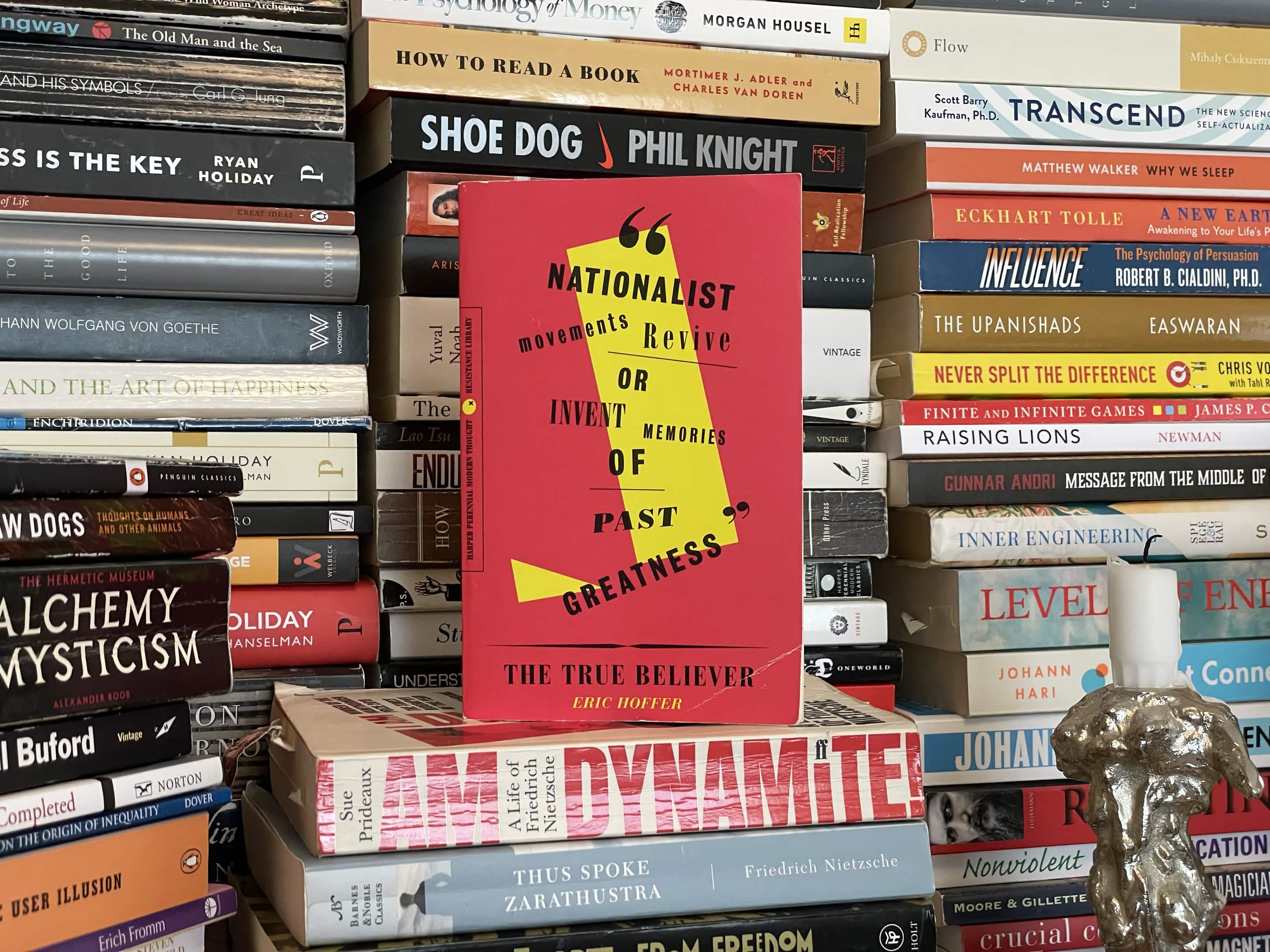
Making Sense of Mass Movements
The True Believer by Eric Hoffer. Philosopher Eric Hoffer tries to make sense of the mass movements that so much characterized the 20th century. And his central thesis is striking: maybe our willingness to join a mass movement comes from our longing to escape individual freedom. Or as in the words of the zealous young Nazi — to escape from freedom.
The Burden of Freedom
Freedom comes with a lot of drawbacks for people who are not well equipped to face life's challenges or the competition of a free society. Freedom of choice places all the blame of failure on the shoulder of the individual. And as Hoffer puts it, "freedom encourages a multiplicity of attempts" — meaning we have to fail several times in order to get the skills and experiences we need — it inevitably multiplies frustration and failure throughout society.
If you don't have the talents to make something of yourself or aren't well adapted to face the harshness of life, freedom can become a vexing burden.
By joining a mass movement, you can hide your shortcomings, real or imaginary, and lose yourself in the anonymity of a collective body.
"The passion for equality is partly a passion for anonymity. To be one thread of the many which make up a tunic, one thread not distinguishable from others. No one can then point us out, measure us against others and expose our inferiority."
The exaltation of the true believer does not flow from reserves of strength and wisdom, but from a sense of deliverance. He has been delivered from the meaningless burdens of autonomous existence.
The Paradox of Self-Sacrifice
My biggest takeaway and insight from this book about human nature revolves around the paradox of self-sacrifice.
"It is a perplexing and unpleasant truth that when men already have something worth fighting for, they do not feel like fighting. People who live full, worthwhile lives are not usually ready to die for their own interest, nor their country, nor for a holy cause. Craving, not having, is the mother of all reckless giving of oneself."
That idea stopped me cold. The people most willing to throw themselves into a cause aren't the ones with the most to give — they're the ones with the least to lose.
📺 Video Review
More Than Just Why — The Full Anatomy
I reread this book immediately after turning the last page. Even though this review focuses mostly on mass movement as an escape from freedom, the book covers much more: the prerequisites for mass movements to happen, the key actors within them, the phases a mass movement goes through, and the groups in society most susceptible to the lure of mass movements.
If You Liked This, Read These
There are a few other books that touch a similar theme of mass movements and the psychology behind them.
Escape from Freedom by Erich Fromm — Why, after finally attaining personal freedom after centuries of struggle, are humans so eager to give it up? Fromm tries to explain the rise of mass movements during the 19th and 20th century and the psychology behind why people want to surrender their freedom. An excellent companion to Hoffer's work.
The Story of My Experiments with Truth by Mahatma Gandhi — Gandhi was a mass movement leader, and one of the best ways to study fascinating people is by reading their own writings. This autobiography gives a very intimate look into his life and his struggles.
The Madness of Crowds by Douglas Murray — The grand narratives of religion are collapsing, but the search for meaning goes on. In their place, a burning desire to right perceived wrongs has put identity politics, social justice, and intersectionality at the top of the agenda. Murray takes on the complex questions of modern ideological movements — one of the most thought-provoking books I've read in a long time.
💡 Key Takeaway
The desire to join a mass movement stems not from conviction but from a profound sense of emptiness. Hoffer shows that "craving, not having, is the mother of all reckless giving of oneself." People with full, worthwhile lives don't typically sacrifice themselves for a cause — it's those who feel their individual existence is worthless who are most willing to lose themselves in something larger.
⚖️ Verdict
Riveting, thought-provoking, and extremely relevant — even decades after it was written. The True Believer provides a powerful lens for understanding the psychology of mass movements, both historical and modern. I reread it immediately after finishing, and it has earned a permanent spot on my Great Books List. A must-read for anyone interested in psychology, sociology, and the forces that shape history.