Wisdom Takes Work
The finale of Holiday's Stoic Virtues series — a grounding refresher on wisdom, even if it leaves you reaching for the originals.
What's It About?
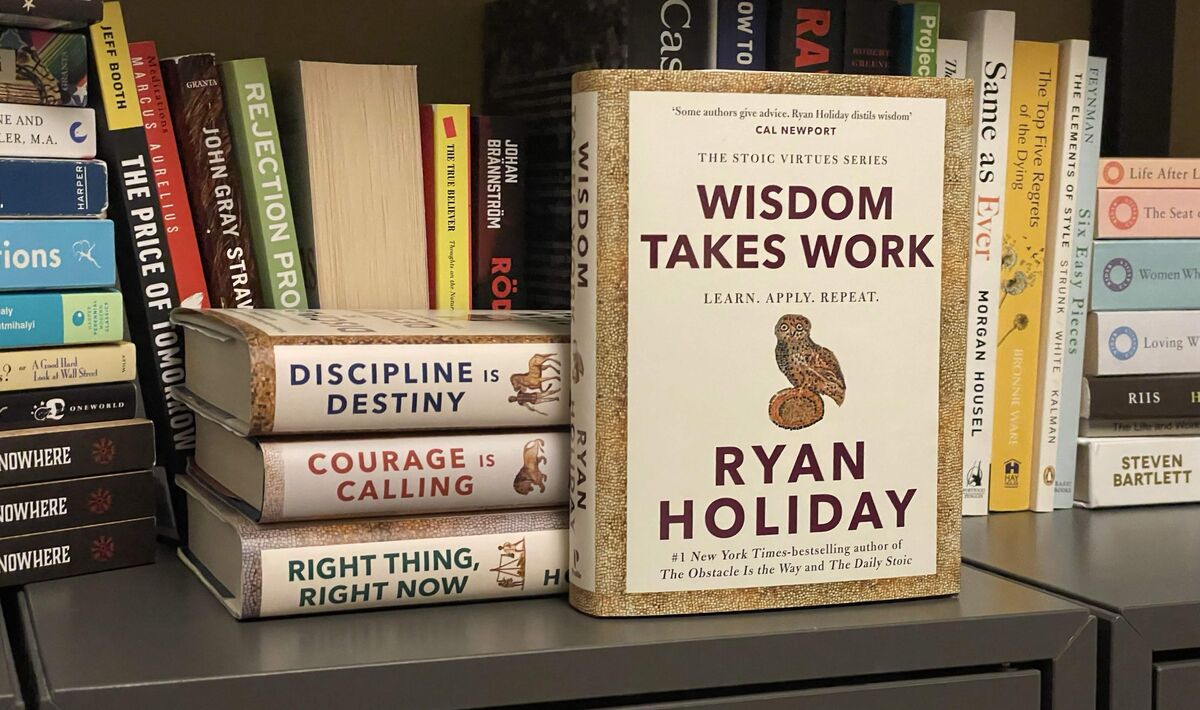
Wisdom Takes Work is the fourth and final book in Ryan Holiday's Stoic Virtues series, following Courage Is Calling, Discipline Is Destiny, and Right Thing, Right Now. The four stoic virtues are courage, temperance, justice, and wisdom — and this book tackles the last one. The one I've been waiting for.
Wisdom, as a virtue, is close to my heart. It's the reason I spend my free time reading and learning continuously. So when I picked this up, I wanted a refresher on the principles of stoicism — to start the year aligned with the values I care about.
The premise is simple: modern life rewards speed, novelty, and confidence — even when those things outpace understanding. Wisdom Takes Work pushes back. It reframes wisdom not as abstract philosophy or ancient quotes on Instagram, but as a practical skill that must be practiced daily. Slow down. Reflect. Don't jump to conclusions. Look yourself in the mirror and ask: what am I missing here? Where are my blind spots?
The Format
This isn't a dense philosophy text, and it's not a fluffy self-help book either. Holiday uses short chapters, historical examples, and clear language to explore how wisdom is built over time. As usual, he tells the story through people who embodied wisdom — or people who, in some aspects, failed to do so.
The book is full of examples from the lives of prominent figures: Montaigne, Lincoln, Martin Luther King Jr., Churchill, and the likes. Of course there are mentions of stoics — Seneca, Marcus Aurelius, and the bunch — but there's less talk about the stoics than you'd expect from a stoic virtues series.
What Stuck With Me
"Nothing either good nor bad but thinking makes it so."
📺 Video Review
Where It Falls Short
My main complaint is the double standard. The book takes shots at Elon Musk — and sure, the man has flaws and does some stupid things. But in a book that celebrates people who pursued the impossible against all odds, the inconsistency is hard to ignore.
Holiday quotes the book: "People will almost always work harder for what they are interested in than what they have a financial interest in." The Wright brothers weren't the most suited, smartest, or most experienced to create the first aircraft — but they took it on anyway. Flight was impossible, people said. How is that different from Musk teaching himself about rockets and, together with his team, pulling off the impossible? Both seem the same to me. The book has a double standard.
The other issue is depth — or the lack of it. The glimpses we get of the people and ideas are brief enough to make you want more. But if you want more, you have to go to the original sources. It's a bridge to the ancients and the greats, but you really have to read the original biographies and philosophical works to get the full picture.
It felt a bit like sitting next to the person who's having all the fun.
💡 Key Takeaway
Wisdom isn't something you arrive at — it's a striving. Choose happiness, slow down, talk to the dead through books, and ask better questions. The work never stops.
⚖️ Verdict
If you're looking for inspiration, a refresher on good principles, or new rabbit holes to dive into, Wisdom Takes Work delivers. It's a smorgasbord of virtues and lessons — and if you like biographies, it'll introduce you to a ton of people worth reading up on. But the stories are glimpses, not deep dives. For the real thing, go to the sources: read Seneca, Marcus Aurelius, Montaigne. And if you want the best practical introduction to stoic philosophy, pick up A Guide to the Good Life by William B. Irvine. This book is a solid entry point, but the originals are where the wisdom actually lives.
🏛️ Want Better Stoicism Books?
If Wisdom Takes Work sparked your interest in stoicism but left you wanting more depth, these are the books to read next. From Letters from a Stoic by Seneca to A Guide to the Good Life by William B. Irvine — the originals and the best modern introductions, all in one place.
See the Best Stoicism Books →