Antifragile
Some things don't just survive chaos — they need it.
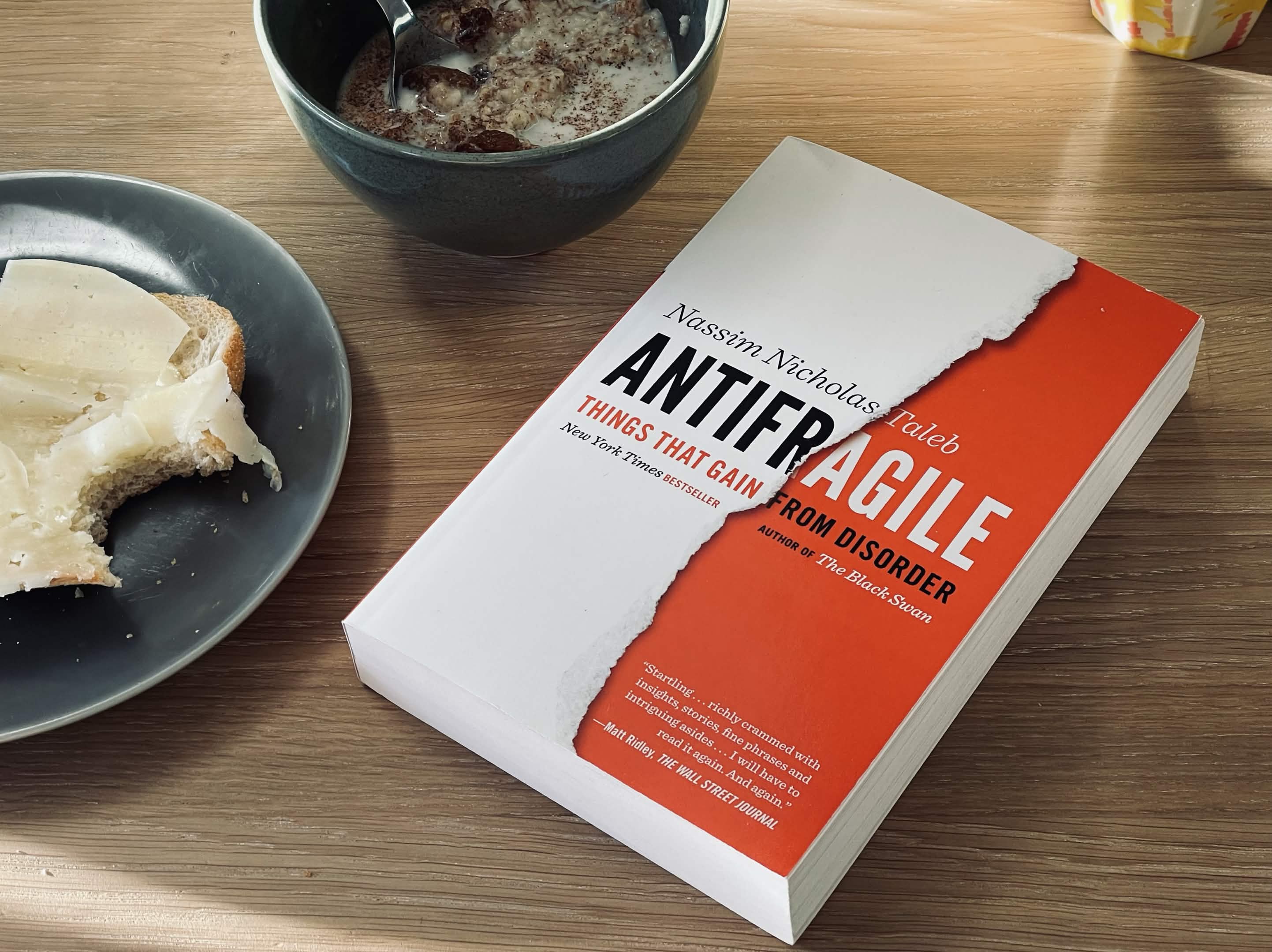
The Opposite of Fragile
This is a really hard book to summarize. While having a central concept — fragility vs. antifragility — the book takes you to so many different places. One moment we're talking about Socrates, the next about dieting, then exercise, reading habits, airplane safety, financial crashes, and we suddenly land in a rant about how academia is overrated.
Everybody knows that something fragile is something that easily breaks from outside forces and stress. Nassim Taleb argues that there is an opposite to fragile, even though there is no English word for it. "Antifragile" is something that gains and grows stronger from stress and turmoil. The aim of the book is to help us find and take advantage of antifragile systems — and identify and avoid fragile ones.
Taleb Being Taleb
Nassim's writing is direct, authoritative, and he comes across like an asshole at times. But if you can have some oversight with those things, there is a ton to gain from reading Antifragile.
Notes & Highlights
No headline, no matter how bad (almost), can hurt an artist or author. They will sell more. That's antifragility.
⭐️ Takeaway
The core idea is deceptively simple: stop trying to be robust (merely surviving shocks) and start building systems that actually benefit from volatility. It's a lens that changes how you see everything — from your career to your health to how you read books.
Fair warning: Taleb will annoy you. He knows he's smart and he won't let you forget it. But the ideas are so powerful that it's worth pushing through his ego.
⚖️ Verdict
A sprawling, opinionated, and genuinely original book. It's not a tight read — Taleb wanders, rants, and name-drops constantly. But the central concept of antifragility is one of those ideas that, once you see it, you can't unsee. If you liked The Black Swan, this is its more practical and philosophical big brother. Four stars because the delivery occasionally gets in the way of the message.
🦢 Also by Taleb
Antifragile is the sequel to The Black Swan — where Taleb first made the case that we're blind to the events that matter most. Start there if you haven't already.
Read The Black Swan Review →