The Curious Mind of Elon Musk
Not a biography — an ideas-driven map of how the most polarizing builder of our time actually thinks.
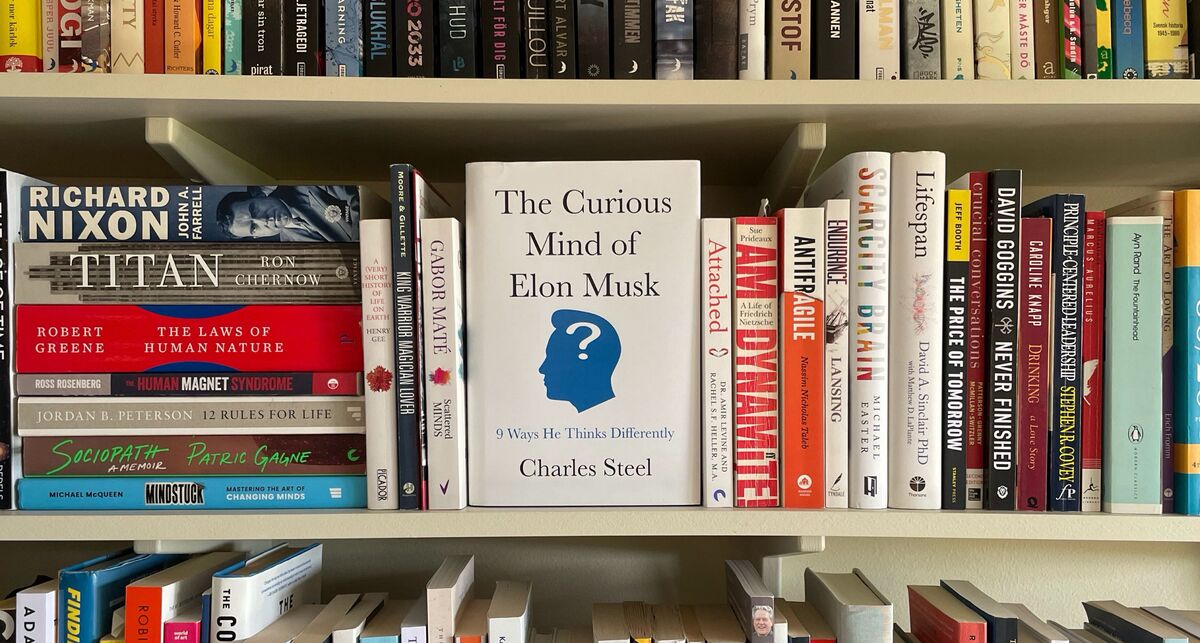
Not Another Musk Biography
Some people are a force of nature like we've never seen in a century. Elon Musk is one of those guys. And this is not the first biography of Elon Musk — not even close. I read Ashlee Vance's biography back in 2015 when it came out. After that, Walter Isaacson had his take on Elon's life in a big, thick tome. And the same month this book came out, Eric Jorgenson — who made the Naval Ravikant book — also released The Book of Elon.
What made this book stand out was that it's an ideas-driven exploration of how Elon Musk thinks, and that it traces Musk's obsessive curiosity back to its roots: an early existential crisis shaped by childhood trauma, neurodivergence, and the profound influence of sci-fi writers like Douglas Adams and his famous Hitchhiker's Guide to the Galaxy.
Charles Steel maps the mental models, events, and voracious reading that formed Musk's worldview. First-principles thinking, radical uncertainty, the possibility of expanding human consciousness. This isn't a conventional biography. It's a guide to the philosophical commitments and intellectual habits of one of the most efficient — and most polarizing — builders of our time.
A warning: this book will probably grow your reading list by at least 10 to 20 new books. There are so many references in it.
The Nine Beliefs
The book is structured around nine contrarian beliefs grouped in three parts that reveal how Musk actually thinks.
Part One: The Convert
This section traces how a deeply unhappy childhood and an early existential crisis turned curiosity into a religion for Musk. Three beliefs emerge:
"My religion, if I've got a religion of any kind, is a religion of curiosity."
Steel connects this with the myth of Prometheus — the guy who stole fire from the gods and gave it to mankind.
Part Two: The Builder
This is where Musk puts all the philosophical thinking into practice. And what does he do? He makes stuff.
"If you don't make stuff, then there is no stuff."
Musk starts from Steve Jobs' realization that everything you see around you was built by people no smarter than you. So he built PayPal, then SpaceX, then Tesla, then Neuralink, then the Boring Company, then xAI. Six companies tackling civilization-scale problems simultaneously.
Then Steel goes into Musk's obsession with exploring space to spread human consciousness throughout the universe. The idea is that leaving Earth makes the universe more human. One of the ways to scale consciousness is to become a multiplanetary species.
"A new philosophy of the future is needed. I believe it should be curiosity about the universe."
📺 Video Review
Part Three: The Crusader
This is where it all gets spicy. It's where Elon Musk goes on the offense to defend his core beliefs. This covers him acquiring X to defend freedom of expression, the right to offend, the political stuff, the drama with OpenAI that resulted in Grok — the truth-seeking AI — which also feeds into his anxiety about AI as an existential threat to humanity.
The Biggest Takeaway
My biggest takeaway from this book is deceptively simple: you can just do things. But most of us don't. Steel tries to explain why:
💡 Key Takeaway
You can just do things — but most of us don't because we care too much about social approval, inherit beliefs without questioning them, and stay distracted by things that don't matter. This book maps the mental models of someone who does the opposite of all three, at a scale most of us can't even imagine.
⚖️ Verdict
This is one of the books that absorbed me the most this year — it's actually a candidate for book of the year. Not because it has the best writing or the newest insights or the deepest analysis, but because it hits at the core of what I find most interesting about the most consequential visionary of our time. What makes Elon different? What were the influences that made him that way? How does he use these ideas and philosophies to feed into the decisions he makes?
For me — someone who once was a teenage boy who had his brain blown away by Douglas Adams' Hitchhiker's Guide to the Galaxy, and now as an adult is obsessed with first-principles thinking and the contrarians who dare to go where no one else does — this is book heaven.
📣 See the Highlights
I highlighted this book extensively while reading — key passages on obsessive curiosity, Douglas Adams' rules for technology, and the Steve Jobs quote that unlocked something for me 10 years ago.
See My Highlights →🤖 Go Deeper: Books by the Founders of AI
This book is part of a bigger reading journey through the minds building AI. Explore the full list — from The Infinity Machine to The Coming Wave and beyond.
Read the Article →