The 80/20 Principle
Results are unequally distributed — and if you exploit that fact, you can be both lazy and get massive results at the same time.
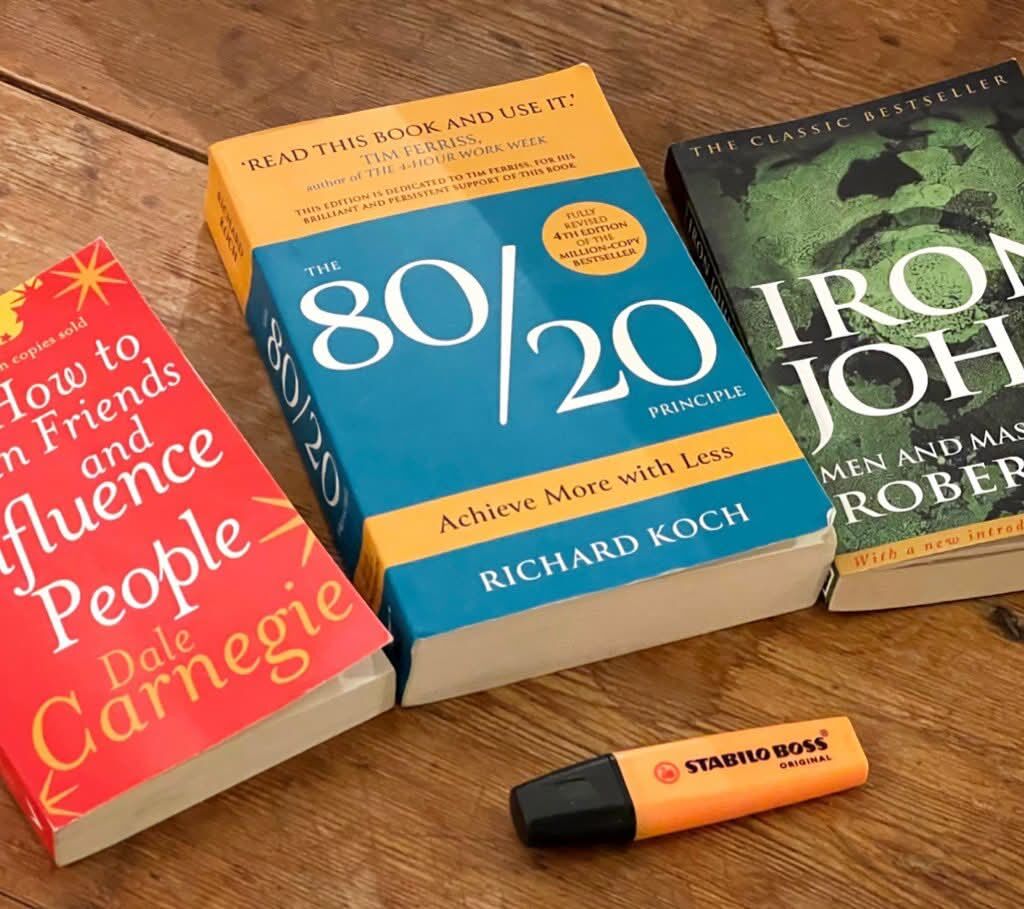
The 50/50 Fallacy
There's a natural expectation that causes and effects should be equally balanced. We tend to assume that 50% of our efforts leads to 50% of the result. While this happens sometimes, it's more of an exception rather than the rule.
This fallacy — the 50/50 fallacy — is one of the most harmful and inaccurate beliefs you can have. The fact is that efforts and results are unequally distributed, and that's what the 80/20 principle teaches.
A few methods, courses, ideas, inputs, and uses of time, money, and manpower will lead to great results — while a minority of efforts actually leads to poor results. The point is to identify the areas where 20% gives you 80% of the results and double down on those areas. Focus on the things that give you the best results. Avoid working hard. Be very selective with what you do. Have a great life.
80/20 in Action
Common examples of 80/20 dynamics:
For BookLab, 80% of the traffic comes from 20% of the content — the articles, the videos. That's the 20% I focus on. I put links on those, keep them up to date. And when I've optimized that 20%, I ask myself: what's the next thing I could do? How can I best use my time to reach my goals? And usually the answer is not to go and continue doing the same thing for the rest of the 80%.
How I Use It at the Gym
I go to the gym during lunch at work, and it doesn't give me that much time to work out. My old routine was really random and not optimized — I walked around endlessly, did a few sets on different machines, and in between I just dabbled on my phone.
Now I get better results in shorter time. I focus on big muscle groups and core exercises: deadlifts, squats, bench presses, pull-ups — and I add as much weight as I can. This way I get a lot out of each minute at the gym. I'm actually done in time so I can go to the sauna as well during the lunch hour.
Which is another part of the 80/20 principle — you can spend your leisure time however you want, but 20% of your leisure activities gives you 80% of the enjoyment. Saunas are definitely in my 20%, and I was super happy to get that into my daily routine.
📺 Video Review
Reading a Book the 80/20 Way
Richard Koch had a tutor at university who told him: never read a book from cover to cover unless you're reading for leisure. Here's how to read a book the 80/20 way:
Read the conclusion. Then read the introduction. Then read the conclusion again. Then lightly dip into any interesting bits you find in the book.
If you read a lot of books, you might have noticed this already — 80% of the value from a book comes from 20% of the content. Absorb only the pages that matter, and you'll save yourself a lot of time and effort.
But Is It Scientific?
One of the comments I usually get when I post about the 80/20 principle — the Pareto Principle, whatever you want to call it — is that it's unscientific and should be ignored.
I don't think like that. Science is cool and all, and I read a lot of scientific material, but when it comes to mindsets and mental models like these, my primary concern is if it's useful or not. The distribution between input and output might not be 80/20 exactly — sometimes it's 95/5, sometimes it's 70/30. But that's not the main point. The main point is that effort and results are unequally distributed, and if you keep an eye out and find places where this is true, you can gain tremendous results with fairly little effort.
💡 Key Takeaway
Effort and results are unequally distributed. Find the 20% that gives you 80% of the results — in your work, your training, your reading, your leisure — and double down. Stop doing more. Start doing what matters.
⚖️ Verdict
The sad thing about this book is that the author seems to have forgotten about the 80/20 principle while writing it. It's way too thick for a book that covers a very simple topic. If you're allergic to repetition, you might want to stay away — it applies the 80/20 principle to many different areas (relationships, time, business, sales), which I appreciate because it really hammers it home and helps solidify the knowledge. But it's too much. Hundreds, maybe thousands of examples, and you probably only needed 100 to get the idea.
Regardless of whether you want to spend your time reading 400 pages or learn about it from other sources — one fact remains: the 80/20 principle is a must-know concept. If you don't use it in your everyday life, you should. It has changed my life and it's continuing to change my life. It's really a game changer.
Check out more books like this on the Best Productivity Books list.