How to Break Free of the Drama Triangle and Victim Consciousness
The dysfunctional social games you didn't know you were playing — and the five steps to quit.
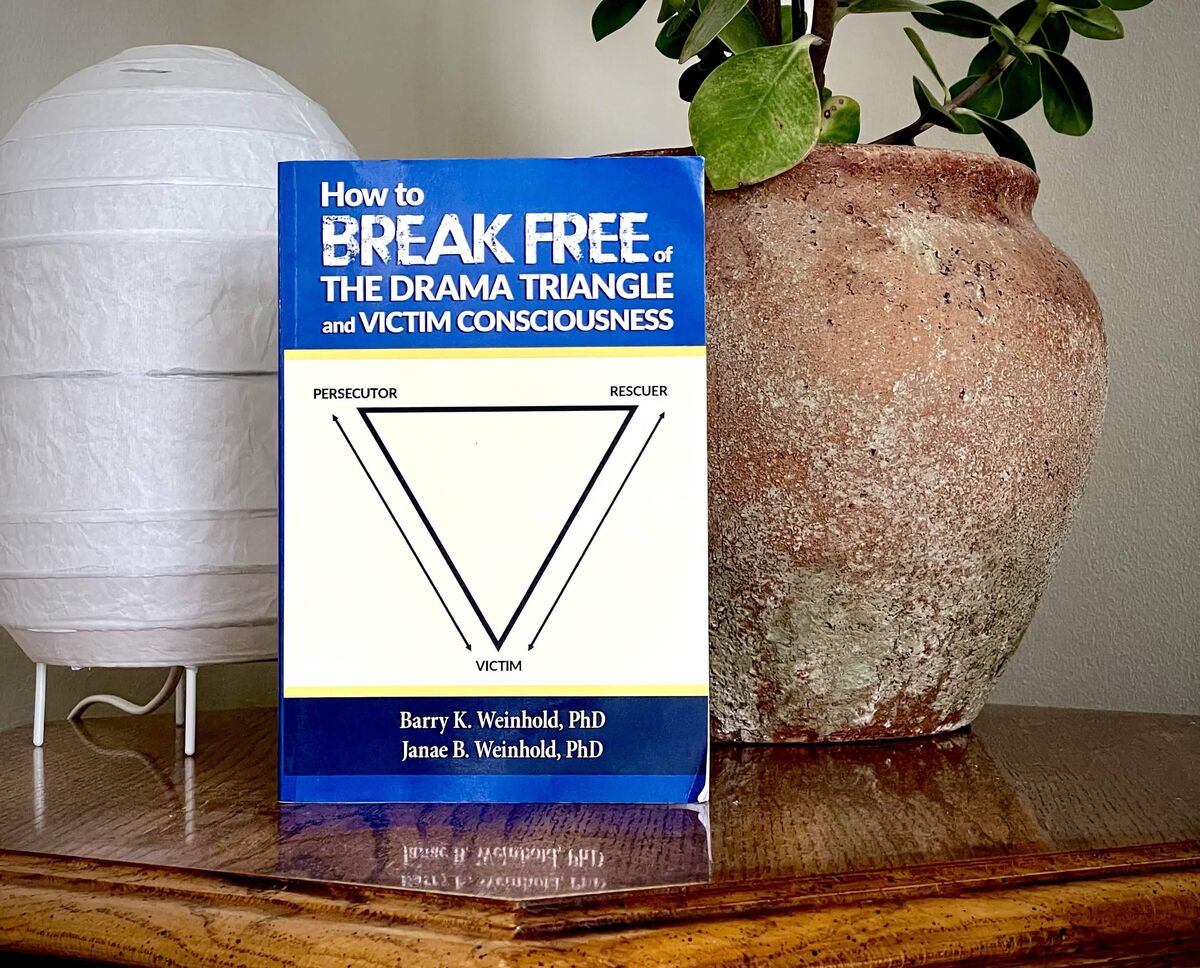
The Games We Play
Have you ever felt stuck in a never-ending cycle of conflict, tension, and emotional turmoil? Maybe at work, maybe with friends, maybe in your family. If so, you've probably been caught in the drama triangle — you just didn't have a name for it.
To understand what the drama triangle is, we need to go back to transactional analysis — a psychoanalytical theory that examines social interactions. Its founder, Eric Berne, wrote Games People Play back in 1961, describing a number of mind games that people act out through patterned, predictable social interactions. These transactions appear normal to bystanders — even to the people involved — but they are emotionally dishonest. They conceal people's real motivations. And once you start breaking these games down into their components, you notice how childlike and banal they really are.
Berne used casual, often funny phrases to describe these games: "See what you made me do," "Now I got you, you son of a—," "Why does everything always happen to me?" and "Let you and him fight." He believed adults play these games as a result of warped childhood experiences, culture, and society — and that most people are psychologically incapable of authentic intimacy.
Three Roles, One Toxic Loop
The drama triangle is a dysfunctional social game that involves three interchangeable roles: the Victim, the Rescuer, and the Persecutor. The dynamics are characterized by a continuous cycle of shifting roles — individuals alternate between feeling powerless, trying to save others, or adopting an aggressive stance. These roles fit into each other, leading to a toxic loop of drama and tension.
The book provides a vivid example of how this plays out in a domestic setting. Dad comes home from work expecting a quiet evening with dinner ready. Instead, the kids are watching TV and mom is reading the newspaper. He assumes the persecutor role: "You're supposed to be in your room doing your homework!" The children take on the victim role: "Mom said it was okay." Mom enters as the rescuer: "The kids are just relaxing after school."
Then the roles start spinning. Mom shifts from rescuer to persecutor, attacking dad. Dad becomes the victim. The children jump into the rescuer role and head to their rooms. Dad flips back to persecutor and attacks mom about dinner. The daughter runs in to rescue. Dad tries to rescue by suggesting pizza. Mom becomes the "super victim." And around it goes — seven acts of pure dysfunction, with not a single moment of direct, honest communication. Just projections, judgments, and assumptions.
📺 Video Review
Victim Consciousness
Here's the key insight: the ultimate goal of every player in the drama triangle is to end up as the victim. Because as a victim, you're not responsible. You always have someone to blame.
Victim consciousness is a mental state where a person perceives themselves as powerless or helpless, attributing their circumstances and emotions to external factors beyond their control. Those caught in it tend to focus on their own suffering and unintentionally seek attention and validation from others. This mindset perpetuates feelings of helplessness — and it invites the involvement of rescuers and persecutors, keeping the triangle alive.
Five Steps to Break Free
Breaking free takes serious commitment, intention, and self-awareness. The book lays out five key steps:
- Ask directly for what you want and need. Give up your victim behavior. Stop playing games to get your needs met indirectly.
- Refuse to rescue others. Don't do anything for anyone unless they've asked you to or you have permission.
- Recognize and reclaim your projections. Take a close look at your judgments of other people — they often represent things you don't like about yourself. This echoes Jung, who observed that when we are annoyed by someone's behavior, it's often a projection of something we reject in ourselves.
- Learn conflict resolution skills. Replace the game-playing with direct, honest communication.
- Express your emotions authentically in the present moment. Don't save things up and dump them on people later — when you suppress feelings, they come out less authentically and more explosively.
The Broken Coke Machine
There's a brilliant analogy in the book about what happens when you stop playing. It's like being a broken Coke machine. When you stop giving people the drama they expect, they'll start pushing all your buttons. If that doesn't work, they might even start bashing and kicking. This is probably the hardest part — you might have to stop engaging with certain people as you escape victim consciousness. But eventually, they'll understand that this particular machine won't dispense any more drama, and they'll go find another one.
💡 Key Takeaway
Becoming an autonomous, integrated individual means stopping the games. It starts with awareness — and that's exactly where books like this come in. These dysfunctional dynamics are everywhere, but they're hard to see because they're so commonplace. You might not even know you're playing. Once you learn to recognize the patterns, awareness becomes the first step to unraveling your own dysfunctional behaviors and communication patterns.
⚖️ Verdict
This is one of those books where I felt like I was underlining every other line. The information is very condensed and elegantly presented — utterly to the point with zero wasted time. Compared to Berne's Games People Play, this one is much more accessible, though I'd still call that a classic worth reading if you're interested in this kind of psychology. I'd file this under what I call "dark psychology" — the themes can make you feel uneasy, but that discomfort is exactly why the book matters. A compact, powerful read for anyone ready to look honestly at their own relational patterns.
📐 Go deeper: I wrote a full concept page that explains the Drama Triangle model and maps a reading path through the key books — The Drama Triangle: explained + what to read.