The Drama Triangle
The three roles behind almost every conflict — and what to read to actually understand them
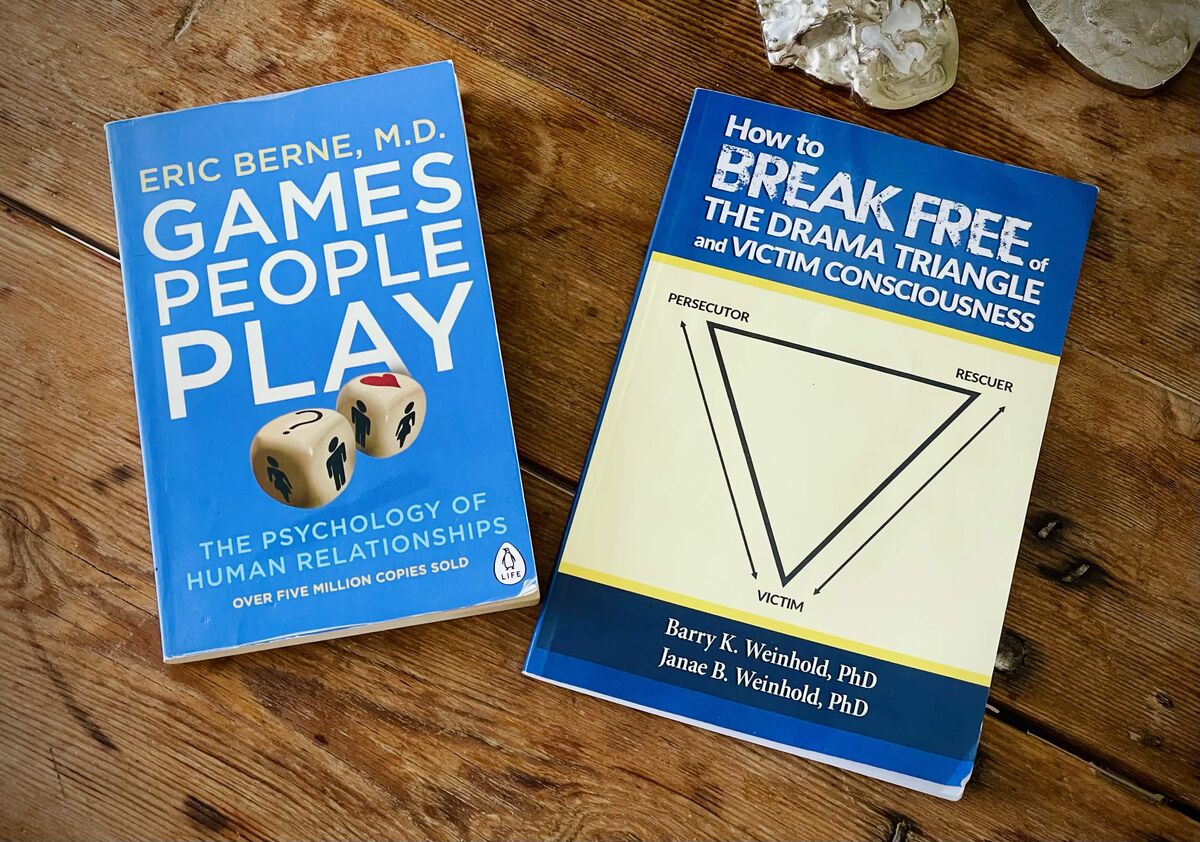
Once you learn the Drama Triangle, you can't un-see it. It shows up in your family arguments, your work meetings, the last fight you had with your partner, and — this is the uncomfortable part — in your own head.
Stephen Karpman first sketched it in a 1968 paper called Fairy Tales and Script Drama Analysis. Three roles: Victim, Persecutor, Rescuer. Everyone in a conflict is playing at least one. Most of us rotate through all three without noticing.
That's the whole idea. But the idea isn't the hard part — living with it is. Which is what the books are for. This page explains the concept and then tells you, honestly, what to read and in what order if you want to actually understand it.
The three roles
The Victim
Overwhelmed, powerless, hard done by. Not a real victim of a crime or accident — those people aren't playing the role — but positioned as powerless, because the payoff is that no one expects you to fix anything.
The Persecutor
Blames, criticizes, controls. Right about everything, and if you'd just do what they told you the mess would be sorted. Gets to feel powerful and morally superior without ever having to look in the mirror.
The Rescuer
This one's the trap. Looks like the good guy — rides in to save the Victim, stands up to the Persecutor. But the Rescuer needs the Victim to stay a Victim. If the Victim actually solves their own problem, the Rescuer loses their identity. So the Rescuer, quietly, unconsciously, keeps them dependent.
Karpman's insight — the reason this outlasted the dozens of similar frameworks published in the same era — is that the three roles depend on each other. You can't have a Victim without a Persecutor. You can't have a Rescuer without a Victim. The three positions lock together, and the whole triangle spins.
Where the model came from
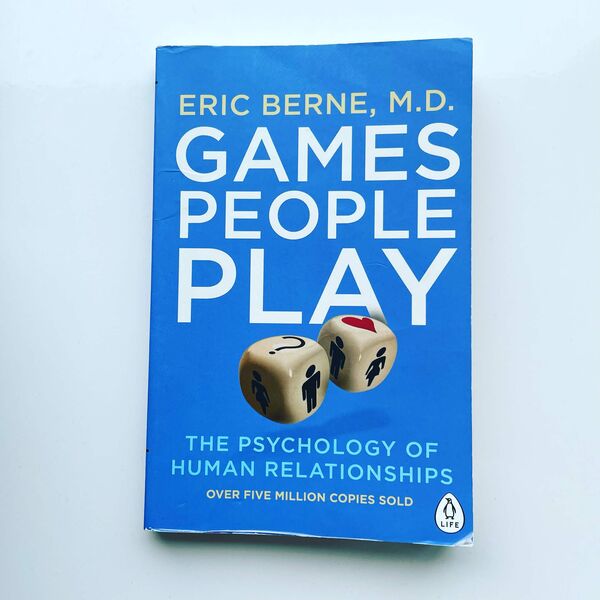
Karpman was a student of Eric Berne, the psychiatrist who founded transactional analysis and wrote Games People Play in 1964. Berne's whole project was cataloging the repeating psychological "games" people play in ordinary life — 40+ of them, with names like "Kick Me," "Why Don't You—Yes But," and "See What You Made Me Do."
The Drama Triangle is essentially a compressed, three-role version of what Berne was doing across an entire catalog. Karpman took the mess of Berne's games and reduced them to a shape you can hold in your head.
That lineage matters for the reading order, because the two books read very differently.
The reading path
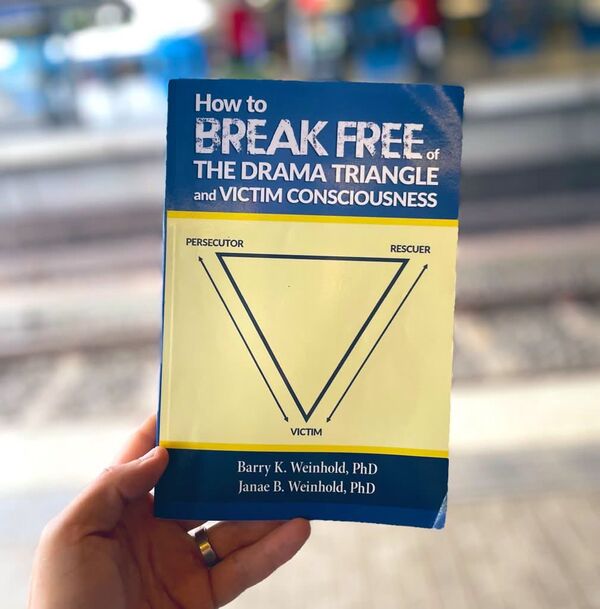
Three books. One is a short paper. Here's how I'd actually approach it if I were starting from scratch.

Where it goes next
Once the triangle has clicked into place, the interesting thing is that you start seeing it in books that don't mention it by name. Berne's ego states are the underlying grammar. But the same shape shows up in family systems theory, in a lot of good marriage writing, in half the "manipulator" pop-psych books at airport bookstores. The triangle is a lens, and once you have it, you're going to bring it to whatever you read next.
I'll build this page out as more of those reads get reviewed. For now, the two books above will take you from "what is the Drama Triangle" to "oh no, I do that one" faster than anything else I know.
This all sits inside the broader project of understanding human nature — the recurring patterns underneath our behavior. If that's why you're here, that pillar is the next stop.
If you learn to see the triangle, you'll see it everywhere. Including — sorry — in yourself.