Eat That Frog!
21 practical ways to stop procrastinating — no fluff, no theory, just do the hard thing first.
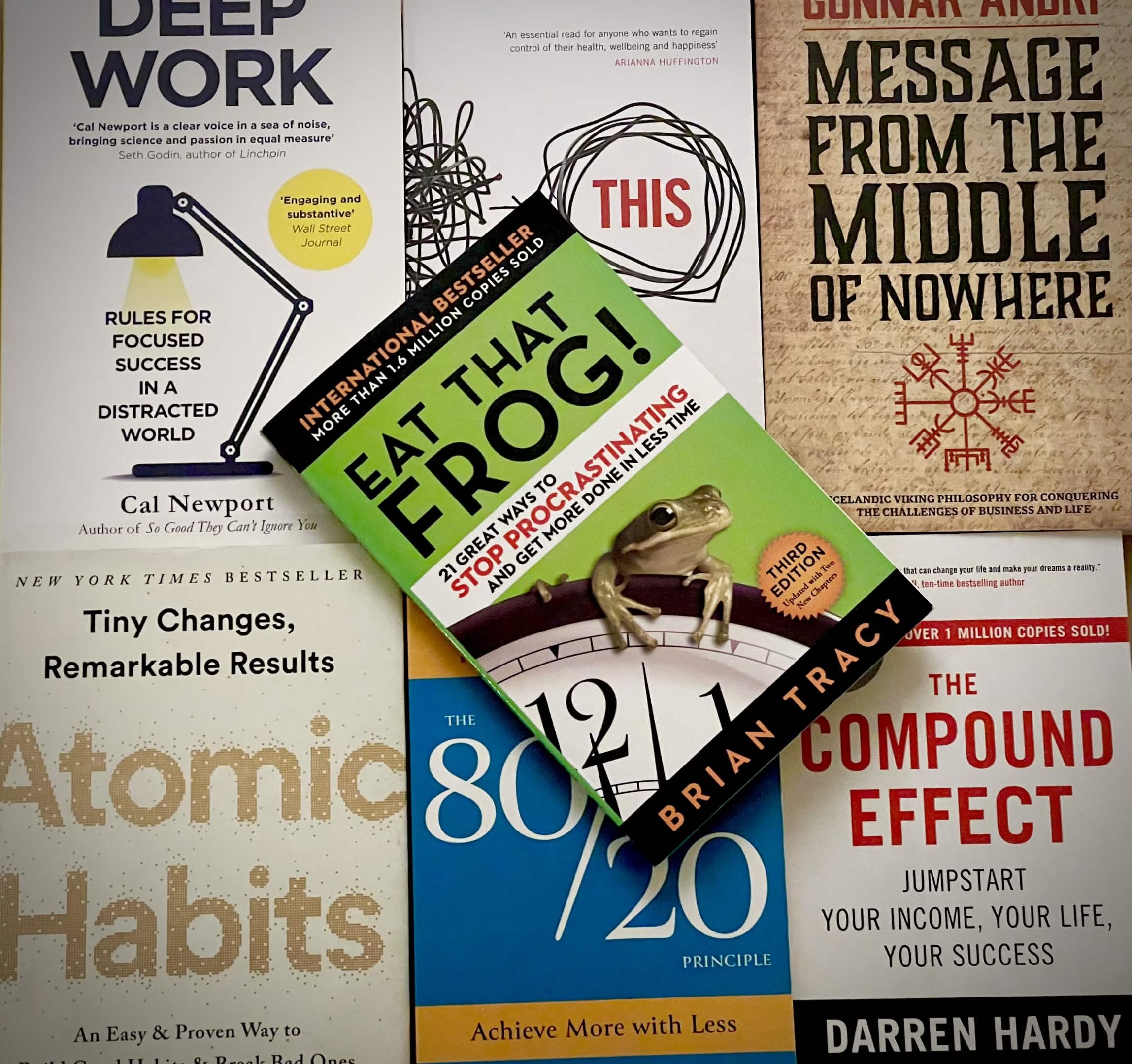
The Premise
The expression "eat that frog" is a metaphor: if the first thing you do each morning is eat a live frog, you'll have the satisfaction of knowing it's the worst thing you'll have to do all day. Your "frog" is your biggest, most important task — the one you're most likely to procrastinate on. Brian Tracy, an old-school motivational speaker and personal development coach who's been at it since the '80s, lays out 21 techniques for tackling that frog head-on.
The book has sold millions of copies, and for good reason: it's short, actionable, and straightforward. No fluff, no academic padding. Just practical advice on how to stop procrastinating and get more done.
The 80/20 Principle
"Apply the 80/20 rule to everything. 20% of your activities will account for 80% of your results. Always concentrate your efforts on the top 20%."
One of the core ideas in the book is the Pareto Principle — the idea that efforts and results are unequally distributed. If you exploit this fact, you can achieve massive results while actually doing less than everyone else. Tracy keeps coming back to this: focus on the vital few, ignore the trivial many. It's one of the most important concepts I've ever stumbled upon in productivity, and it runs through this entire book like a spine.
Questions That Change Everything
Tracy provides some powerful questions to guide your focus. Two that stood out:
- "What one skill, if I developed it and did it in an excellent fashion, would have the greatest positive impact on my career?"
- "What is the one thing that only I could do, that if done well, would really make a difference?"
These are deceptively simple questions, but sitting with them honestly will reshape how you spend your time. I'd add two of my own that aren't from the book but complement these perfectly: "What else could I be doing right now?" — because there's an opportunity cost in everything — and "Do I actually like this?" Sometimes we go through routines and habits without ever stopping to question whether they still serve us.
The Compulsion for Completion
This one hit a nerve. Tracy argues for developing a compulsion for finishing what you start. As a game developer, I know how easy it is to jump to the next shiny thing before completing something 100%. The definition of "done" is often vague, and there's always something new pulling your attention. But being able to fully complete tasks — to actually take them off the list — builds confidence and momentum. It's pretty rare that people finish what they start in a timely fashion, and that's exactly why the ones who do stand out.
📺 Video Review
💡 Key Takeaway
Do the hardest, most important thing first — every single day. Not the easy wins, not the fun tasks, not the emails. The frog. Everything else gets easier after that.
⚖️ Verdict
If you're new to productivity books, this is arguably the single best place to start. It covers time management, task prioritization, and focus on a broad but accessible level. You'll get 80% of the results you'd get from reading a shelf full of productivity books — in a 2-hour read.
If you've already read Deep Work, Atomic Habits, The 80/20 Principle, and the rest of the productivity canon, there's nothing new here. But it still works as a sharp reminder and a wake-up call. Reading it made me realize I've been bad at putting first things first — doing the smaller, more fun tasks before the ones that actually move the needle. Old-school self-help tone? Yes. But sometimes the obvious advice is exactly what you need to hear again.