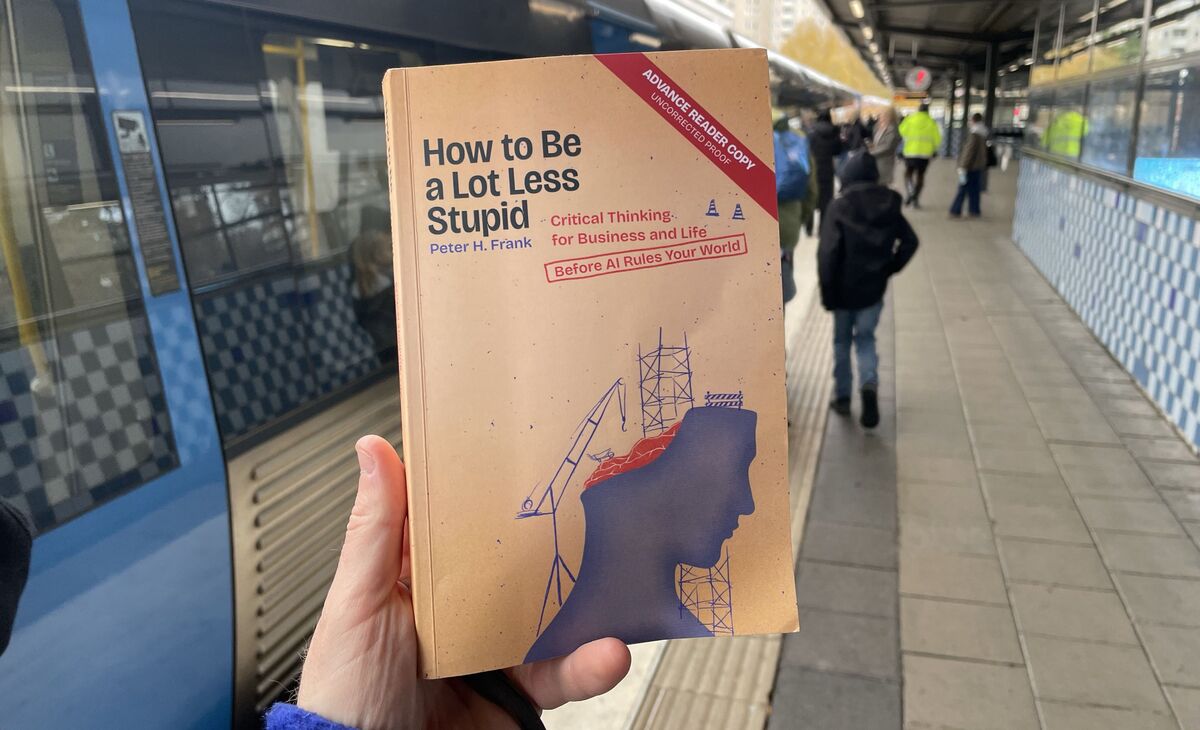
How to Be a Lot Less Stupid
Critical thinking as a survival skill, from first principles to the definition of stupidity.
What's It About?
Every day, smart people make remarkably bad decisions. Not because they lack information, but because they don't see the world clearly. How to Be a Lot Less Stupid is a no-nonsense guide to recognizing and overcoming the shortsighted thinking, cognitive traps and blind assumptions that quietly sabotage judgment in business and in life.
Peter H. Frank draws on behavioral economics, cognitive psychology, philosophy, logic and game theory. He has spent forty years watching bad thinking up close: as a business reporter for The New York Times, financial editor at The Baltimore Sun, a strategic marketing executive at Bank of America, a consultant on four continents and an MBA lecturer.
The timing is the point. As AI reshapes every domain of work and life, the human capacity for critical thinking is eroding. Frank treats thinking as a survival skill, and the result is witty, brisk and at times irreverent.
🎯 Why It's on BookLab
My reason for liking this book is that it is about thinking from first principles, in an age where mastering critical thinking is a non-negotiable skill that everyone needs to master.
It starts where most thinking books skip ahead: with the basics. Define your words. Question what you think you know. Notice when your brain is handing you a story instead of the truth. It's one of the November 2026 releases on my monthly list, and below are the pages I couldn't stop highlighting.
📖 Key Topics
📝 Highlights from My Reading
I shared these pages on X while reading. Here they are in one place, with what I wrote at the time.
We make things more complicated than they need to be
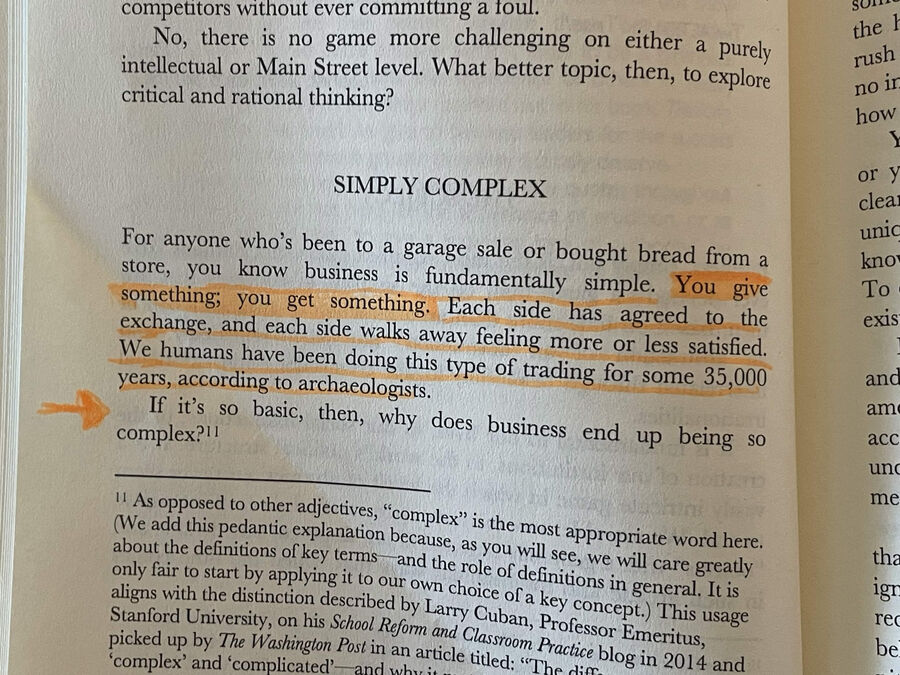
"You give something; you get something. Each side has agreed to the exchange, and each side walks away feeling more or less satisfied. We humans have been doing this type of trading for some 35,000 years, according to archaeologists. If it's so basic, then, why does business end up being so complex?"
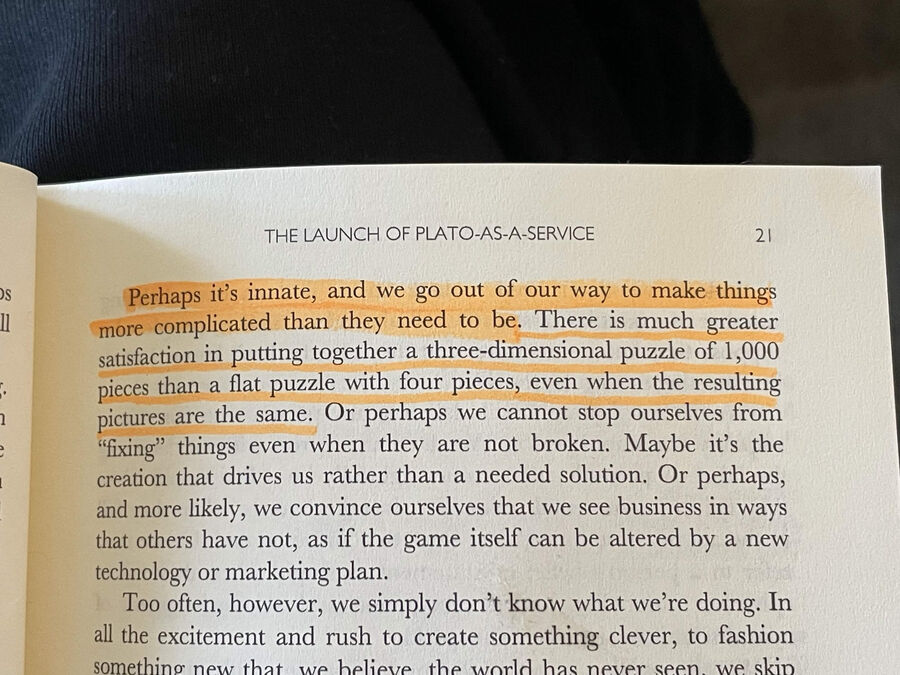
"Perhaps it's innate, and we go out of our way to make things more complicated than they need to be."
We go out of our way to make things more complicated than they need to be.
We need to cultivate First Principle thinking is all areas of life.
First principles are too self-evident for us
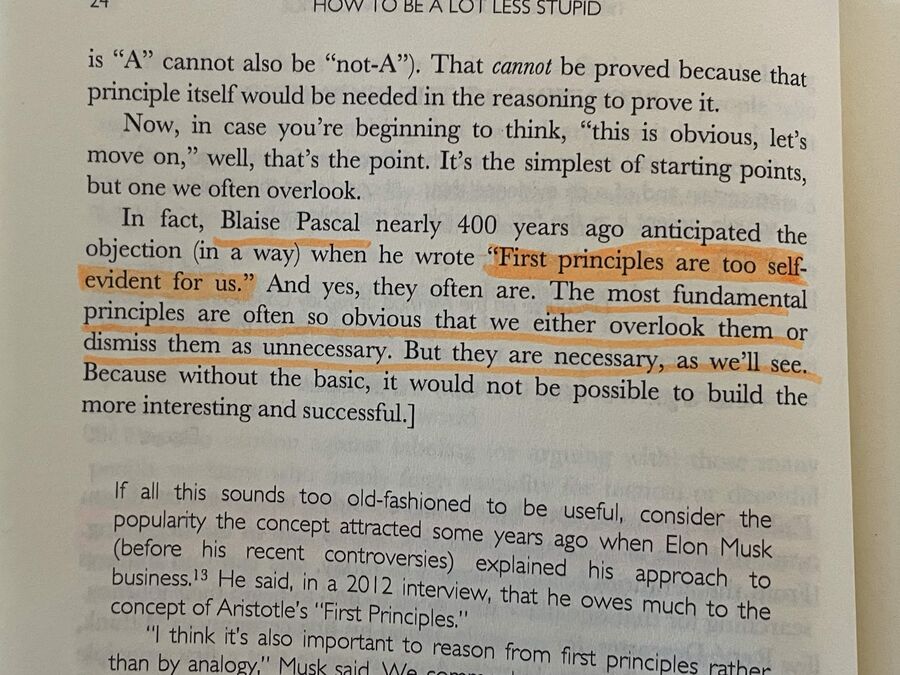
Blaise Pascal wrote "First principles are too self-evident for us." And yes, they often are. The most fundamental principles are often so obvious that we either overlook them or dismiss them as unnecessary. But they are necessary, as we'll see. Because without the basic, it would not be possible to build the more interesting and successful.
Pascal said it nearly 400 years ago, and the same page brings in Elon Musk's take on reasoning from first principles. If you want to see how that plays out in a whole book, I wrote about it in The Curious Mind of Elon Musk.
Define or die
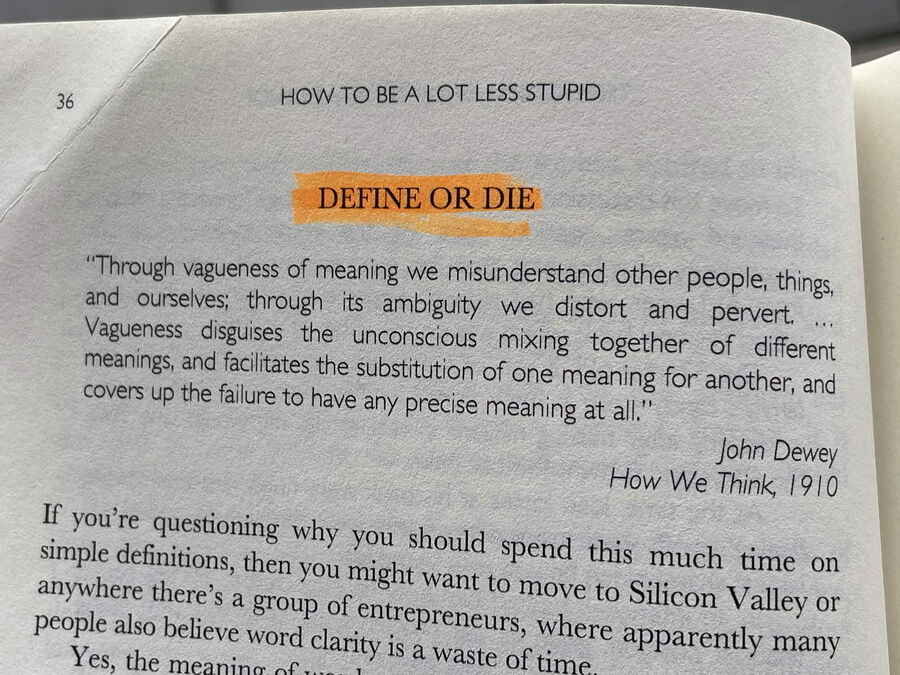
"Through vagueness of meaning we misunderstand other people, things, and ourselves; through its ambiguity we distort and pervert. ... Vagueness disguises the unconscious mixing together of different meanings, and facilitates the substitution of one meaning for another, and covers up the failure to have any precise meaning at all." - John Dewey, How We Think, 1910
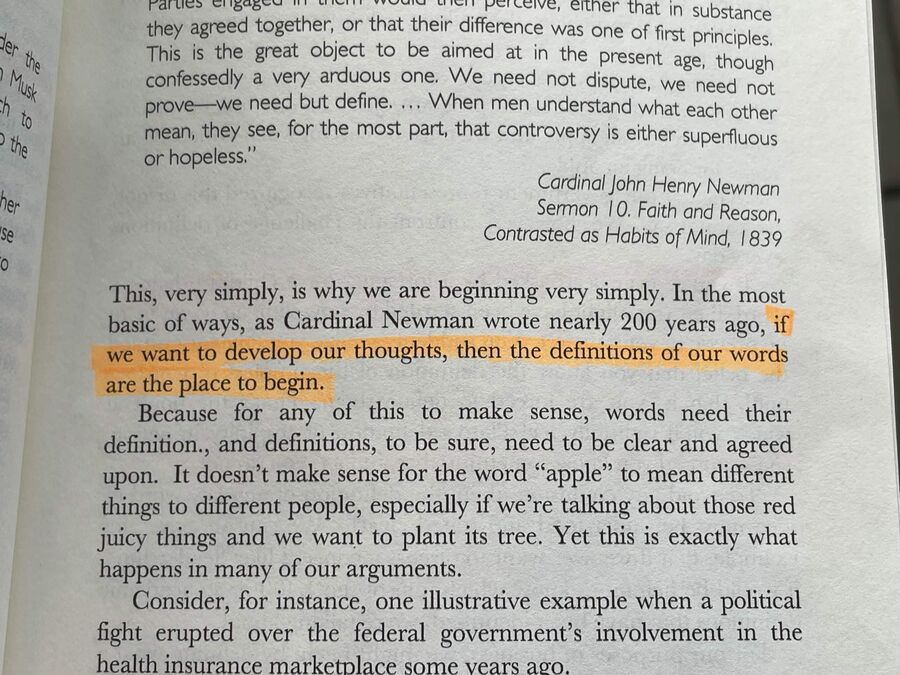
"If we want to develop our thoughts, then the definitions of our words are the place to begin."
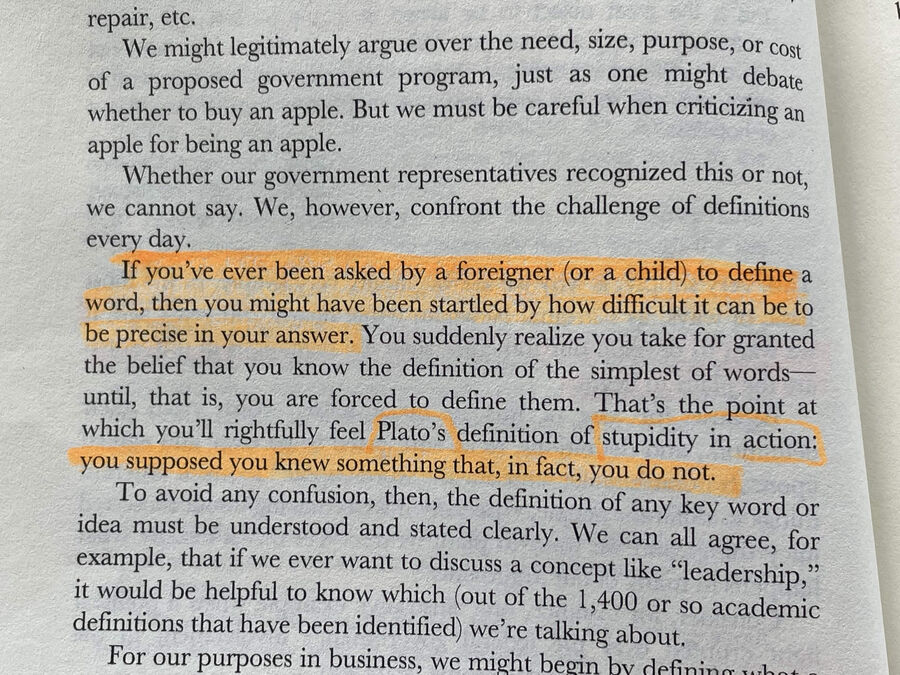
"If you've ever been asked by a foreigner (or a child) to define a word, then you might have been startled by how difficult it can be to be precise in your answer. ... That's the point at which you'll rightfully feel Plato's definition of stupidity in action: you supposed you knew something that, in fact, you do not."
To think clearly we need definitions. Without definitions, how do we even know what we talk about?
Your brain would rather tell a good story than a true one
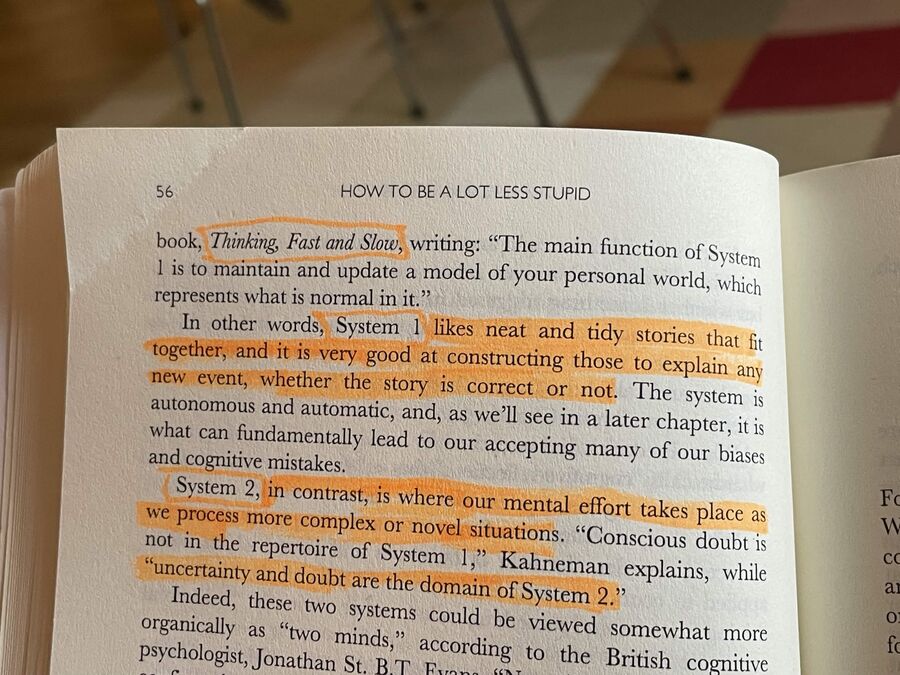
"System 1 likes neat and tidy stories that fit together, and it is very good at constructing those to explain any new event, whether the story is correct or not."
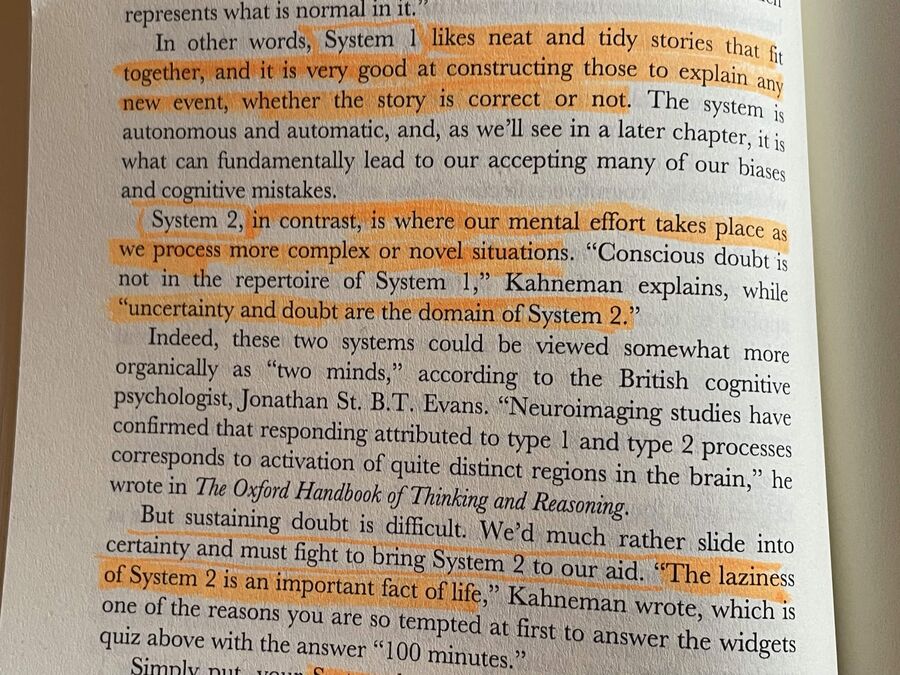
"But sustaining doubt is difficult. We'd much rather slide into certainty and must fight to bring System 2 to our aid. 'The laziness of System 2 is an important fact of life,' Kahneman wrote."
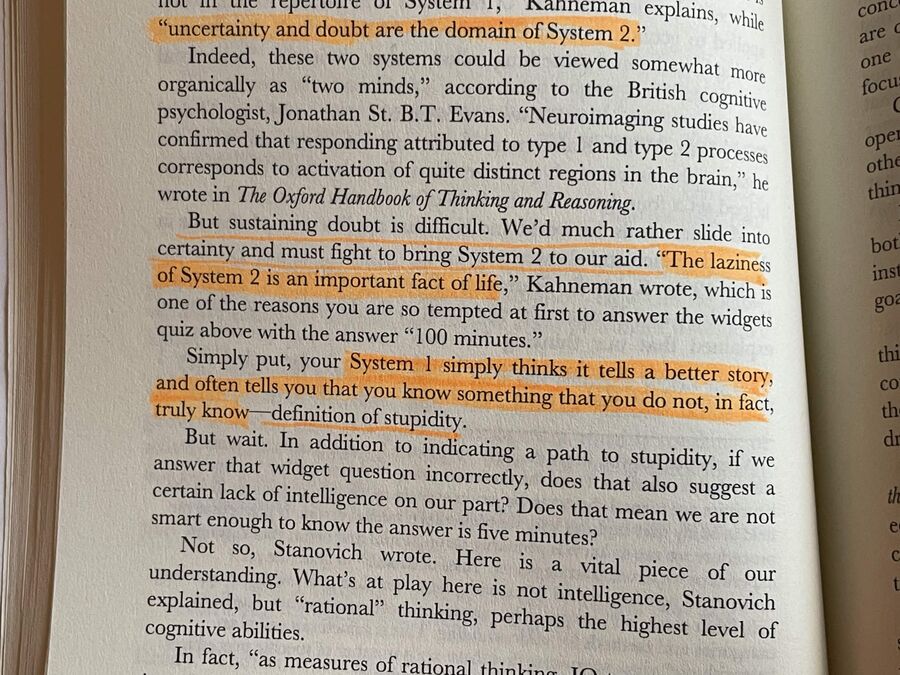
"Simply put, your System 1 simply thinks it tells a better story, and often tells you that you know something that you do not, in fact, truly know - definition of stupidity."
Your brain would rather tell a good story than a true one.
Stupidity isn't a lack of intelligence.
It's when your fast brain tells you a better story and convinces you that you know something you don't.
Learn more about the author at peterhfrank.com.