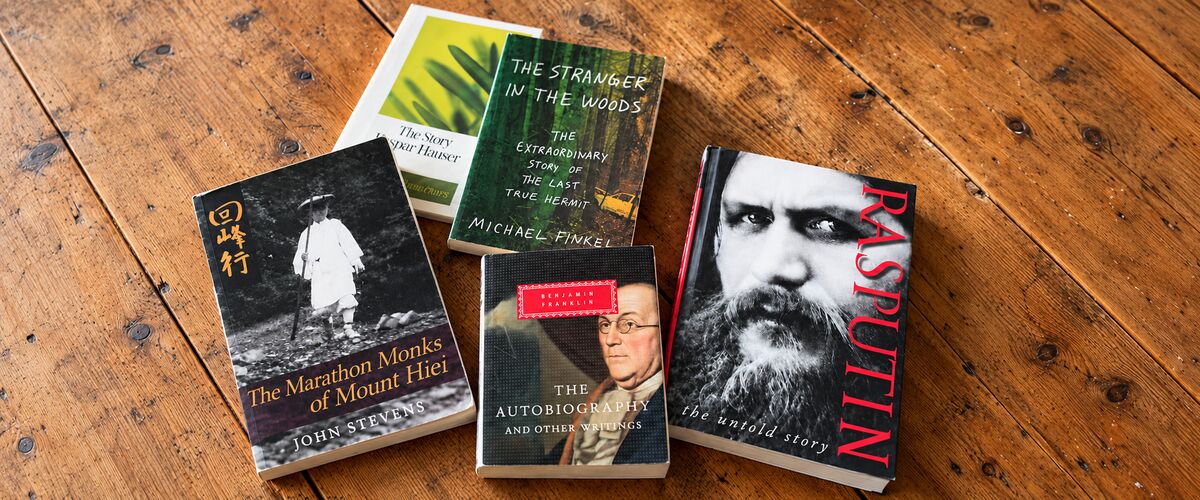
In 1986, a 20-year-old called Christopher Knight drove into the Maine woods, left his car, and disappeared. For 27 years he lived alone in a tent, through winters far below freezing. He says he spoke to another person only once in all that time.
Most of us live inside the same narrow script. If you're curious and want to live deliberately, the fastest way to see your own script is to study the people who threw theirs away.
Here are six such stories, and six interesting people I want you to study. I'll go through them one by one.
Peasants, hermits, philosophers, monks and one very curious printer. None of them followed the script.
Rasputin was a simple peasant from Siberia with no formal education who wandered as a pilgrim and ended up very close to the last Tsar and Tsarina of Russia. They believed this mystical man could ease the suffering of their son, who had hemophilia, which is a terrible disease, by the way.
Rasputin was a farmer, not a doctor. He managed to heal the boy anyway. Nobody knows how. And that's just one of many crazy stories about this infamous guy. After healing the boy he was the favorite. The Tsarina was his biggest fan, and he eventually ended up as the third most influential person in all of Russia. It's one of the stories from history that everyone needs to know.
This is a legend. In May 1828, a teenage boy appeared in a square in Nuremberg holding a letter. He was barely able to speak. Later he said that he had spent all his childhood alone in a dark cell, fed only bread and water.
Kaspar Hauser was really an oddball, and the people in high society in the town grew very interested in him. They offered him a place to stay, and things just get weird from there. He was later found stabbed, and we don't know if it was self-inflicted or not.
I first found out about Kaspar Hauser when I was a student up in the north of Sweden. Late one night on television there was this weird movie, The Enigma of Kaspar Hauser by Herzog, and it really blew my mind. The film was actually a little bit better than the book, but either way, you need to read up on Kaspar Hauser.
Back to the story of the hermit. Christopher Knight survived in the woods by breaking into nearby cabins and taking food and supplies, around a thousand times by the locals' estimate, until he was caught in 2013.
And what was the lesson he learned from all that time in solitude? He had one piece of advice for us: get enough sleep. One of the things Knight thought was strange is that it's okay to spend your life working in a cubicle, but it's not okay, and it's very strange, to spend your life alone in the forest.
An absolutely fascinating book that I recommend everyone to read. This is one that I keep coming back to, one that lives rent-free in my mind. I think about it a lot.
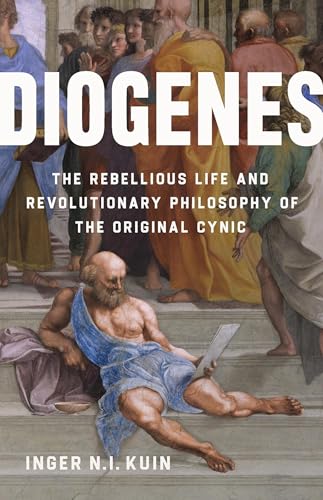
Speaking of unconventional ways to spend your life: on my reading list I have Diogenes the Cynic, the Greek philosopher who lived in a large jar in Athens and owned almost nothing. The famous story is that he met Alexander the Great, who stood over him and offered him anything he ever wanted. Diogenes, being Diogenes, asked him to move away because he was covering the sunlight.
The lesson: the less you need, the less anyone can hold over you, even an emperor. Every time Diogenes pops up as a reference in a book I read, and there have been plenty of references, I know I'm about to get a delightful story. So I want to read about his life, and I urge you to do the same.
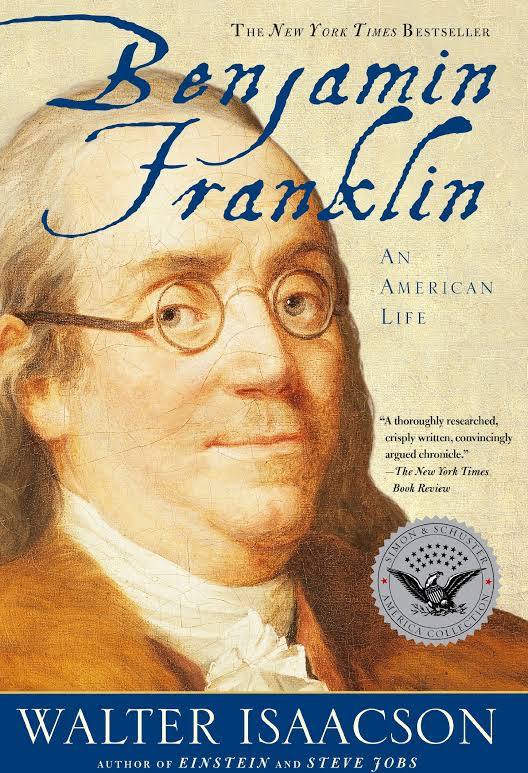
I love his childlike curiosity. He invented the lightning rod. He wrote satirical essays about making farts smell better. He trained his writing by turning essays into poems and then turning them back into essays again.
He even experimented with his own character. He had 13 virtues written down, things like temperance: do not eat to dullness, drink not to elevation. He kept them in a notebook and focused on one each week, putting a dot every time he failed. The goal was a full clean page. He never got there, but he said that trying made him a better and happier man. I've actually tried his little book of virtues, and it's hard.
Of course you should read his autobiography. It's great. But if you want the full picture, combine it with Walter Isaacson's fantastic biography of one of the most interesting men in history.
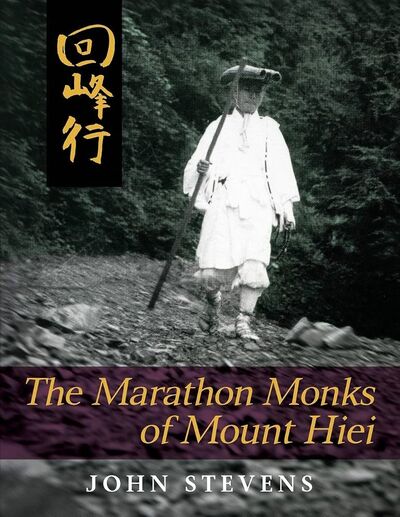
Last summer I was blowing air into an inflatable pool, and I was not using a pump. We were going to have guests over, and when they saw the pool and realized I had blown the air into it myself, they were like, "Oh god, you didn't use a pump for that. That's crazy." That brought my thoughts to the monks of Mount Hiei, because I realized how low our standards for physical achievement have become.
On a mountain outside Kyoto, they walk and run its trails for 1,000 days over a period of 7 years. Some days it's up to 84 km. They wear white, the color of death, and they traditionally carry a knife and a rope in case they fail and have to kill themselves. 700 days into the challenge, it's time for 9 days without food, water, or sleep.
This is a five out of five book about one of the most unconventional ways of living I've ever heard of, and also a monument of human achievement. Not the most well-written book, but the story is just mind-blowing. I keep thinking about it almost every week, and I've done so for 7 years since I first read it.
So that's a few unconventional, unique ways of living your life. We don't want to be Kaspar Hauser per se, or Rasputin for that matter, but these books show the vast variety of flavors that life comes in.
They show you a dial in your own life that you didn't know you could turn. Most of all, these books open my eyes to a road less traveled, to the strangeness of circumstances, and to the fact that going against convention is a viable option in many cases.
Let me know in the comments on the video which of these books you would read first, and if you have any books you want to add to this list. I'm very much open to reading about more of these fantastic and unique lives.
๐ฌ Subscribe to the Newsletter โ
Last updated: October 27, 2026