The True Story of Kaspar Hauser
A mysterious youth appears from nowhere in 1828 Germany — barely able to walk or talk, claiming a lifetime of solitary confinement in darkness.
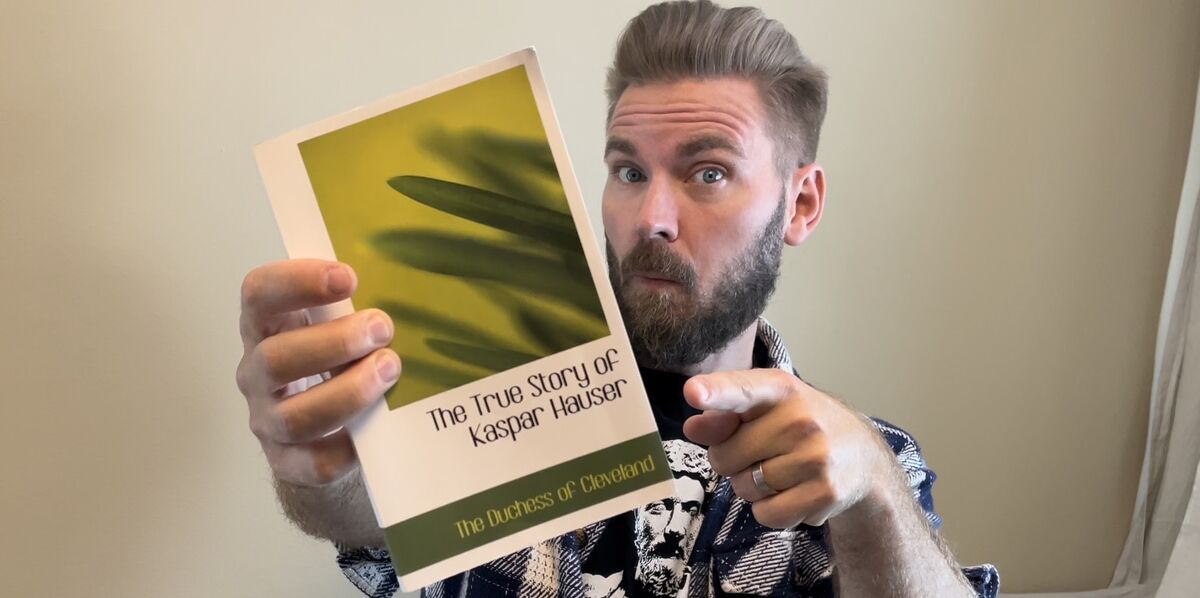
A Movie That Haunted Me for 15 Years
It was a cold and dark evening in the north of Sweden where I happened to be studying. I woke up, turned on the TV because I couldn't fall back to sleep, and saw this strange and mysterious German movie on the screen. The scene portrayed a simple man standing totally still on a town square, with a plea to the mayor — a small piece of paper in his hand.
The movie really made an impression on me, but I never got the name of it. For the coming years I thought about it from time to time, but it took 15 years until I found out the name of the movie — and that it was based on a real legend and a real person. When I realized it was a true story, I decided to read up on it.
The Enigma of Kaspar Hauser
Kaspar Hauser was a German youth who claimed that he was brought up in total isolation inside a cage in total darkness. He appeared out of nowhere in Nuremberg in 1828, barely able to walk or talk.
"He could see in the dark as well as by day, but could not endure the light of the sun. His sense of smell was extraordinary. He also claimed to have magnetic qualities — iron attracted him, silver spoons brought on such violent tremblings that he was scarcely able to raise them to his mouth."
Throughout his life, Kaspar Hauser was taken care of by different people — people with scientific interests or who were just well-off and curious about this mystical character. He walked like a small toddler, he couldn't speak properly, and everything he said was related to horses. Nobody knew who had left him there. This was an enigma.
📺 Video Review
Fraud or Victim?
Kaspar Hauser was stabbed to death — most likely by himself. This might sound strange, but he had previously used self-harm to get out of sticky situations. The common theory is that he faked an assassination to be moved into the care of another protector. Many argued, understandably, that Kaspar Hauser was a fraud — both during his life and after it. But in a bored upper-class society, there was a great willingness to believe in the magical and mystical.
The most interesting aspect of this book is speculating whether Kaspar Hauser was simply a sociopath and narcissist, or if there's any truth to his background story of growing up in isolation — and if that environment caused him to act the way he did.
💡 Key Takeaway
It is stories like these that kindle a childlike wonder and encourage you to keep learning and exploring. The parallels to Rasputin are striking — a simple, strange man joining high society through novelty and the excitement he created among people fascinated by the weird and mysterious.
⚖️ Verdict
The book is a bit dry at times — at the end it's more of a rant criticizing other writings about the case. It was written in 1893, and it shows. If this sounds interesting, I'd actually recommend prioritizing the movie — it's really exceptional. The book is maybe a three out of five. But if you're a fan of the Kaspar Hauser legend, it's a quick read worth picking up. Also recommended: The Stranger in the Woods by Michael Finkel, about Christopher Knight who spent 27 years living alone in the Maine forest — another fascinating tale of isolation.