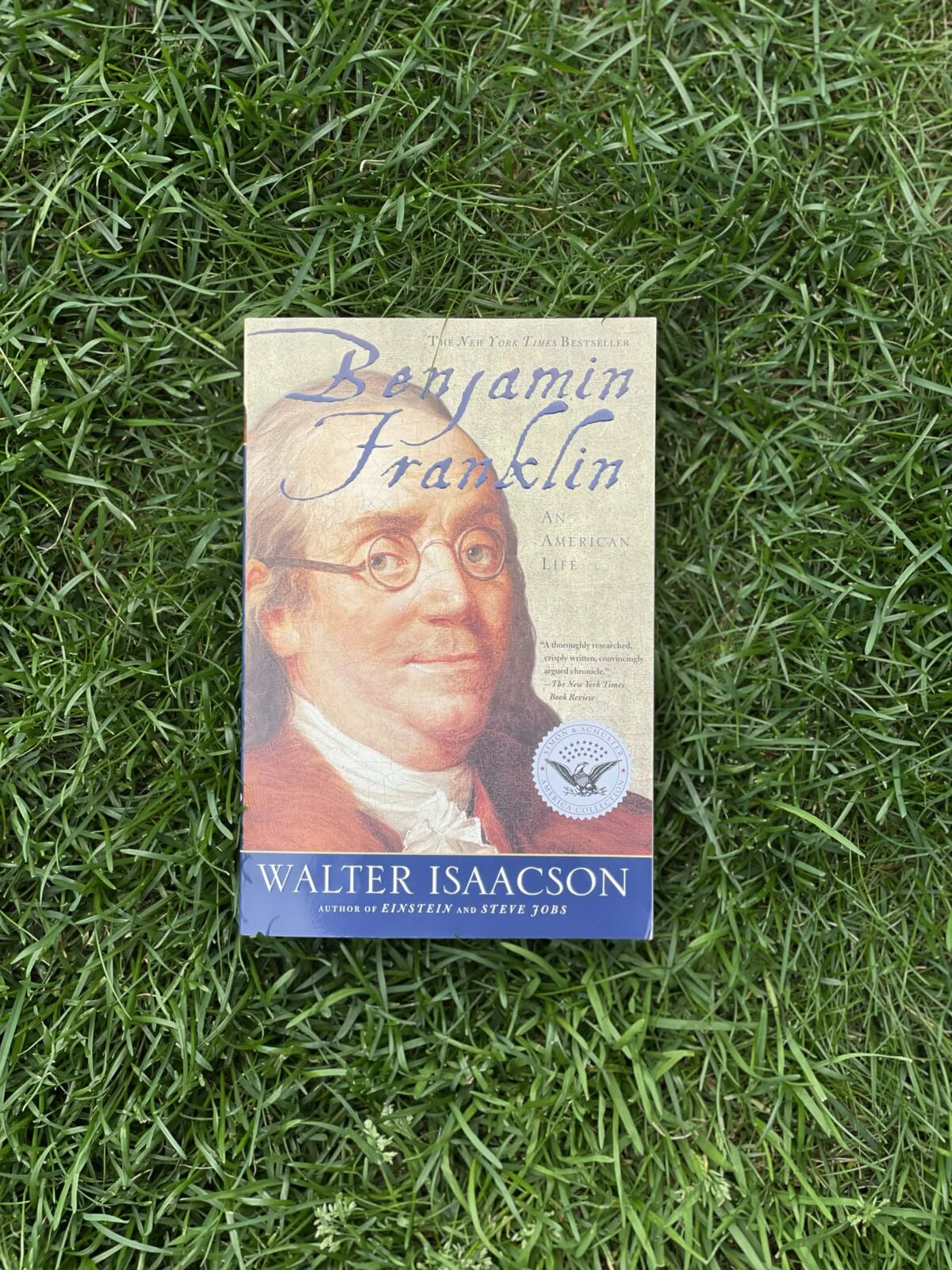
Benjamin Franklin: An American Life
Isaacson does for Franklin what he did for Jobs and Einstein — turns a myth back into a man.
Why Isaacson?
Walter Isaacson is arguably the best biographer working today. His books on Steve Jobs and Einstein are definitive works, and his Benjamin Franklin biography is no different. Where Franklin's own autobiography gives you the man in his own words — charming, witty, occasionally self-serving — Isaacson gives you the full picture. The context. The contradictions. The parts Franklin left out.
And Franklin left out a lot. His autobiography was never finished — it stops well before the Revolution, before the Constitutional Convention, before his time in Paris. Isaacson picks up every thread Franklin dropped and weaves them into a 590-page portrait of one of the most fascinating humans who ever lived.
The Runaway Who Built a Nation
One of the things that makes Franklin's story so compelling is how improbable it is. He was the 15th of 17 children. He ran away from his apprenticeship in Boston as a teenager, arrived in Philadelphia broke and friendless, and through sheer curiosity and hustle built himself into the most famous American in the world.
Isaacson traces this arc beautifully. You get Franklin the printer, mastering his trade and starting his own newspaper. Franklin the civic organizer, founding the first public library, the first volunteer fire department, the University of Pennsylvania. Franklin the scientist, flying kites in thunderstorms and inventing bifocals. Franklin the diplomat, charming the French court into bankrolling the American Revolution.
What Isaacson captures so well is that Franklin wasn't a genius in the traditional sense — he wasn't Newton or Einstein, working in pure abstraction. He was endlessly practical. Every experiment had a purpose. Every invention solved a real problem. The Franklin stove. The lightning rod. The flexible catheter. Even his famous 13 virtues were essentially a productivity system disguised as moral philosophy.
The Flaws Behind the Wit
Isaacson doesn't shy away from Franklin's darker side. His relationship with his son William — a Loyalist during the Revolution — is one of the saddest family stories in American history. Franklin essentially disowned him. There's also his complicated relationship with women, his vanity, and his tendency to present himself as more humble than he actually was.
This is where the biography adds real value over the autobiography. Franklin was a master of self-presentation. He crafted his public image with the same care he brought to everything else. Isaacson sees through the performance without diminishing the man. You come away respecting Franklin more, not less, because you see the full human being — flaws, contradictions, and all.
"He was the most accomplished American of his age — the most famous scientist, inventor, diplomat, writer, and business strategist." — Walter Isaacson
What Franklin Means Today
Reading this biography in 2026 feels surprisingly relevant. Franklin was the original polymath-entrepreneur — someone who refused to be defined by a single role. In an age of hyper-specialization, his life is a reminder that curiosity doesn't have to be narrow. He moved between science, politics, writing, and business without ever treating any of them as his "real" career. They were all expressions of the same restless mind.
There's also something deeply inspiring about his self-education. Franklin had about two years of formal schooling. Everything else — the science, the languages, the philosophy — he taught himself through reading and experimentation. His method of improving his writing by deconstructing essays, turning them into verse, reconstructing them from memory, and comparing the result to the original is one of the most practical self-improvement techniques I've ever encountered. It's basically deliberate practice, 250 years before Anders Ericsson coined the term.
And his debating style — the Socratic method of humble inquiry rather than direct argumentation — is still one of the most effective persuasion techniques around. He eventually dropped the formal Socratic approach but kept its essence: never using absolute terms like "certainly" and "undoubtedly," always leaving room for the other person to save face.
💡 Key Takeaway
Franklin's genius wasn't raw intellect — it was applied curiosity. He combined relentless observation with practical experimentation and a gift for making complex ideas accessible. Isaacson's biography shows that behind the witty aphorisms was a man who worked harder, read more, and experimented more broadly than almost anyone in history. The lesson: be curious about everything, but make sure your curiosity produces something.
⚖️ Verdict
If you're going to read one book about Benjamin Franklin, make it this one. It's thoroughly researched, beautifully written, and Isaacson manages to make a man who's been dead for over 200 years feel alive and relevant. It's a long read at nearly 600 pages, but it never drags. Pair it with Franklin's own autobiography for the complete experience — the autobiography gives you Franklin's voice, and Isaacson gives you the full story.