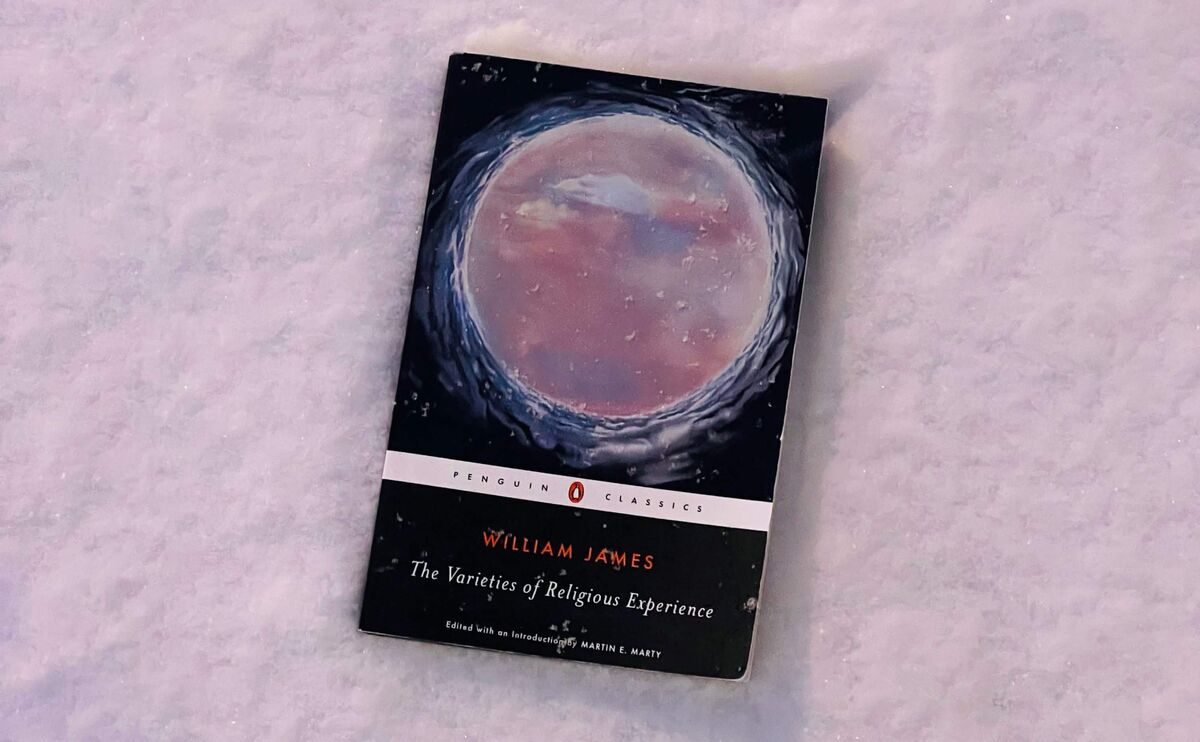
The Varieties of Religious Experience
William James makes the case that religious experience — judged by its results alone — may be one of the most important biological functions of mankind.
When Science Falls Short
Science can be a poor substitute for the religious life. When all is lost, when things fall apart, when despair knocks on your door, then pure reason falls short as a way of comfort.
Nietzsche's hunch that the death of god — the societal demise of the faith in a higher power, and its subsequent replacement by a godless science — would create a crisis beyond measure doubtlessly had some truth to it. As we ripped away the foundation of our traditional way of being and killed God — but still acted in morals and behavior like he was still around — we created an itching cognitive dissonance. A crisis of meaning was imminent.
Man need belief in a higher order and a sense of being part of a greater whole for a cold and harsh world to make sense. Science, as a replacement for this higher power is a pathetic substitute when the unthinkable happens. As in the loss of a child or being diagnosed with an incurable disease.
Judging Religion by Its Results
In his classic book from 1902, The Varieties of Religious Experience, philosopher and psychologist William James takes a look at the value of religious life from the view of the individual's personal experience, and judges it by its result exclusively.
The religious experience in this case is not tied to any specific religion but is looked at in a much broader sense as experiences of transcendence.
"The feelings, acts and experiences of individual men, so far as they apprehend themselves to stand in relation to whatever they may consider the divine."
The Religious Attitude
A consequence of adopting what James calls "the religious attitude" — the belief that there is an unseen order and a supreme good, and accordingly adjusting ourselves thereto — is what he calls healthy-mindedness.
"The tendency which looks on all things and sees that they are good." An attitude to life that focuses on the good, and ignores evil, or reinterprets experiences in a positive light.
"Positive thinking is an inlet to the divine."
The book talks a lot about the value of having a positive attitude.
A while back I experienced a period in my life that was characterized by relentless optimism and confidence. I often found myself in awe over the almost magical fashion in which events and opportunities presented themselves. I'm convinced there is power in how we frame our reality — and maintaining a consistent positive attitude over time can be a challenge.
📺 Video Review
The Faith State
Religion treated as a purely subjective phenomenon without regard to questions of their truth, lead William James to conclude that:
"We are obliged on account of their extraordinary influence upon action and endurance to class them amongst the most important biological functions of mankind. Their stimulant and anesthetic effects are so great … that so long as man can use their god they care very little who he is or even if he is at all."
"If he proves himself useful then the religious consciousness asks no more than that."
A larger, richer and more satisfied life is in the final analysis the end of religion.
💡 Key Takeaway
Adopting a religious attitude might be the single most important thing one can do. If you live all your days happy and content with what is and striving for good, showing gratitude, then how can you fear death or have regrets? In this way you have nothing to lose — in a truly positive sense. An idea worth pondering!
⚖️ Verdict
A thick and dense read. Definitely not for everyone, but after hearing about this title in countless great books over the years I'm glad I finally checked it out. Can it be psychologically beneficial to adopt a religious attitude even though you are atheist or agnostic? William James would say yes — and after reading this, I'm inclined to agree.