Fear and Trembling
Faith starts where rationality ends — Kierkegaard's meditation on Abraham, sacrifice, and what it means to truly believe.
What's It About?
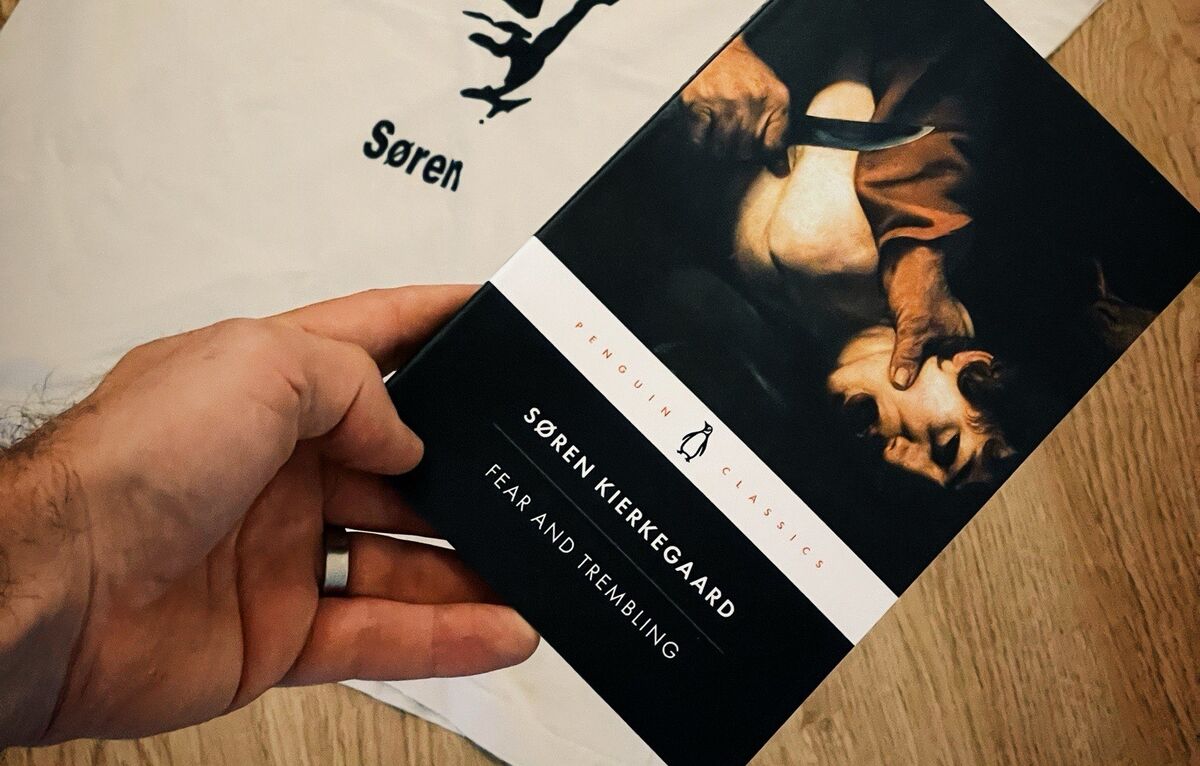
Fear and Trembling is considered one of the most important works by the Danish philosopher and theologian Søren Kierkegaard. First published in 1843, it's a meditation on the biblical story of Abraham and his willingness to sacrifice his only son Isaac. The book explores the theme of faith in relationship to ethics and morality.
True faith, Kierkegaard argues, involves a radical and paradoxical commitment to a higher power that goes beyond reason and ethics. As people, we are tightrope walkers between the finite and the infinite. The world of the finite contains immediate needs and desires — the pull and push of the world's necessities. Right now, you probably have a bunch of cravings, phobias, worries, or dreams pulling you in this and that direction. In these moments, you live in the finitude of your existence. The problem is that if we live only for our immediate whims and needs, life will rattle by without anything bigger.
The Knight of Infinite Resignation
In Fear and Trembling, Kierkegaard presents two different ways of relating to life, centered around the topic of faith and the spiritual. The first is the knight of infinite resignation.
Being a knight of infinite resignation is a good thing, because while most people — as Kierkegaard says — are just benchwarmers on the game of life, preoccupied with the aesthetic, the knight of infinite resignation plays a part in the dance. These are people who can focus their attention and efforts towards a higher good, a purpose beyond themselves. Most importantly, they won't abandon their purpose just because the world is against them, because it's a challenging task, or because what they try to achieve seems impossible.
The resignation Kierkegaard talks about isn't self-pity. It's more about accepting things as they are and finding solace in that fact — being able to stand independently of the world. In adversity, the knight of infinite resignation makes a movement into the realm of the spiritual, giving up whatever is most precious to them and reconciling themselves with the pain of that loss.
Kierkegaard exemplifies this with the story of a man who falls in love with a princess, but their union is impossible. The slave of the finite would scream in despair or abandon the love entirely. The knight of infinite resignation, on the other hand, can reconcile to the fact that the world is how it is — accept reality and the loss as part of the universal.
📺 Video Review
The Knight of Faith
Kierkegaard then presents an even higher level of being in the world — the closest possible connection to the divine. He calls this the knight of faith.
In life, we meet with challenges, pain and suffering, loss of loved ones. When we face these challenges, the knight of infinite resignation will accept them as they are. The knight of faith will also resign to the facts of reality, going through the same process — but then takes it one step further. They will have faith that what they want could possibly happen by the will of the divine, because for God anything is possible. Their faith continues even in the face of impossibility.
Kierkegaard refers to this as the double movement. They know that they can't achieve something, yet they embrace the absurd. They say that no matter if it's impossible, even if it denies rationality and logic, with faith in God anything can happen — and what they long for can still be theirs.
The Story of Abraham
Kierkegaard identifies Abraham as the true knight of faith. God demanded Abraham to sacrifice his only son — to murder him. A situation full of absurdities and paradoxes. Abraham did this all alone, where no one could see his sacrifice or witness his despair, his pain, his anguish.
Kierkegaard goes through this story in detail, exploring all the paradoxes Abraham has to face and the impossibility of his choice. He sacrificed his only son, yet the whole time he had faith that everything would be okay. This is a fascinating paradox, and it exemplifies what faith can do.
"Faith starts when rationality ends."
💡 Key Takeaway
We are tightrope walkers between the finite and the infinite. Most people are benchwarmers — preoccupied with the aesthetic, enslaved to immediate whims. The knight of infinite resignation finds a purpose beyond themselves and won't abandon it, no matter what. The knight of faith goes further still — embracing the absurd, believing in the impossible even after accepting reality. It's a book about the levels of human existence and the radical commitment that true faith demands.
⚖️ Verdict
I'm super glad I picked this book up. It's not the easiest book to read, but it's quite short and it's not overwhelmingly complicated. I found YouTube lectures to be a great resource alongside the text — they really helped me bring home the key points and interpret why these concepts are relevant. That's one of my favorite things: diving into a book that might be a little harder than my level and exploring it, trying to figure things out. I learned a lot from this one.
Kierkegaard is considered the father of existentialism, and I first got interested in his work after reading The Denial of Death by Ernest Becker. I'm not qualified to critique philosophy books, but as a lifelong learner, I'm committed to learning about the history of ideas and the human experience. I try to read one to three original philosophy works each year with the goal of eventually being able to compare and contrast between the different ideas.