The Psychology of Money
The personal finance book that finally treats you like a human being, not a spreadsheet.
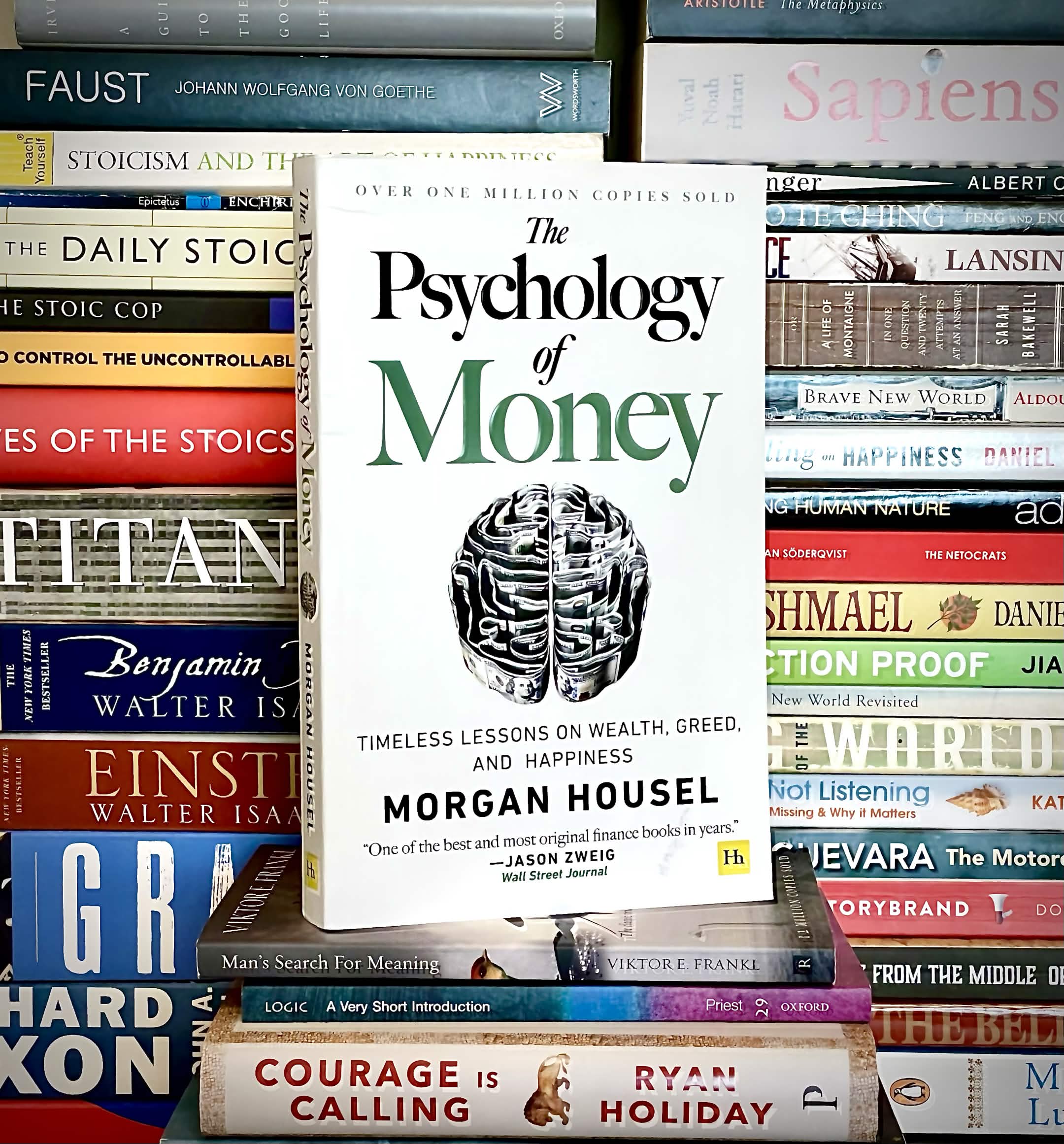
We're Not Rational — And That's the Point
When it comes to money, we tend to act emotionally rather than rationally. We might know how we ought to save, spend, and invest — but we often act contrary to that knowledge. And it's often because we grew up in a certain economic situation, and that experience has colored how we behave around money ever since.
It's one thing to read about an economic collapse. It's another thing to live through one. As Housel puts it:
"Some lessons have to be experienced before they can be understood."
This is what makes The Psychology of Money different from every other personal finance book on the shelf. It doesn't start with formulas, spreadsheets, or "10 steps to wealth." It starts with the messy, irrational, emotionally-driven human being who has to actually follow through on a financial plan for decades.
Good Enough Beats Perfect
There are more or less rational ways to invest, but since the human brain has a hard time dealing with the counterintuitive nature of financial phenomena — compounding, loss aversion, tail risks — it might be better to choose a strategy that is just good enough but easy to follow through on in the long run, regardless of how the market behaves.
I'll share a personal example. I invested in Bitcoin a while back. I don't claim it was the most rational investment — but I learned about myself that I don't have the nerves for investments that volatile. I couldn't take the ups and downs. I sold it — and in hindsight, it's probably the worst financial decision I've ever made.
The lesson? Anything that keeps you in the game for the long run has an advantage. Even if it means dedicating a small percentage of your savings to speculative investments like crypto or high-risk stocks — if that's the excitement you need in order not to tamper with your less exciting investments like index funds, then it's worth it. The important thing is not to interrupt the compound effect.
The Power of Time
One of the most successful investors of all time, Warren Buffett, has compounded at roughly 22% annually. Jim Simons actually has the better record — yet he's far less rich than Buffett. Why? The secret to Buffett's success is time. He started investing at age 11. That's how compounding works — and starting early is key.
"The counterintuitive nature of compounding leads even the smartest of us to overlook its power."
The formula is almost disappointingly simple: avoid the extremes. Steady returns over a long time. A high savings rate. And patience. Those are your friends.
Money's Greatest Value
Perhaps the most powerful idea in the book is this: money's greatest intrinsic value — and this cannot be overstated — is its ability to give you control over your time. Not fancy cars, not status symbols, not the ability to impress strangers. Control over your time. That's the real dividend.
📺 Video Review
💡 Key Takeaway
The best financial plan isn't the mathematically optimal one — it's the one you can actually stick with for 20, 30, 40 years without losing your mind. Understand your own psychology first, then build a strategy around the human you actually are, not the rational robot you wish you were.
⚖️ Verdict
This is a rare personal finance book that respects both your intelligence and your humanity. It doesn't pretend you're a perfectly rational actor — it works with the flawed, emotional, pattern-seeking animal that you are. Accessible to complete beginners, but full of wisdom even if you've read a shelf of finance books already. Short, well-written, and genuinely useful. Your financial future will thank you for the few hours this takes to read.