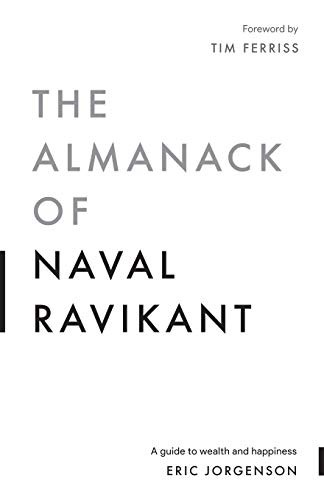
The Almanack of Naval Ravikant: A Guide to Wealth and Happiness
Introduction
"An investment in knowledge pays the best interest." — Benjamin Franklin
The Almanack of Naval Ravikant is a short book, but it packs an extraordinary wisdom-to-word ratio. It captivated me with its profound insights and guidance on wealth and happiness — and it's one of those rare books that genuinely changed how I think about both.
About the Book
This is a compilation of wisdom and insights from entrepreneur and investor Naval Ravikant. Initially, when I saw this book circulating on social media, I dismissed it as one of those mediocre books that business people compulsively publish to boost their egos. I was proven wrong. It serves as an exceptional compendium of Naval's thoughts on fundamental principles for happiness, wealth creation, decision-making, and personal growth — distilled into practical advice that offers a guide to a more fulfilling and meaningful life.
Specific Knowledge and Authenticity
Discovering Specific Knowledge
Naval emphasizes the concept of "specific knowledge," which refers to our unique capabilities. To identify your specific knowledge, reflect on what you effortlessly did as a child, even if you didn't consider it a skill. It is the combination of traits that are distinctively yours — what feels like play to you but appears as work to others.
Pursuing Authenticity
Naval highlights the significance of authenticity. By imitating others, you enter into competition with them. However, by being true to yourself, you can escape competition. No one can compete with you in being you. The more you align with your specific knowledge while being yourself, the better positioned you are. If your curiosity leads you to a path desired by society, you will be highly rewarded. Often, you possess skills that society has yet to learn how to train others to acquire.
Compounding
Wealth is built on the principle of compounding. Working a job alone will not make you wealthy since your input is directly tied to your output, often trading time for money. To accumulate wealth, it is crucial to own equity in a business and benefit from compound interest. The ability to make money while sleeping, during retirement, and even while on vacation is now more accessible than ever, thanks to the internet and the power of computers.
The Broader Sense of Compounding
Naval extends the concept of compounding beyond interest on capital. He suggests that all returns in life — whether in wealth, relationships, or knowledge — come from compound interest. Friendships and learning also follow this principle. Long-term collaborations build trust, facilitating future business opportunities. Similarly, a well-compounded reputation, earned through good judgment, consistent results, and high integrity, holds immense value.
Reading and Learning
Naval's insights on reading and learning resonated deeply with me. He underscores the importance of choosing the path of difficulty. By tackling challenging tasks head-on, without delaying them, you gain a long-term advantage. This principle extends to your reading choices as well.
Embracing Fundamentals
Naval advocates for learning the fundamentals, seeking underlying truths and principles that govern various domains. Although it can be challenging, most people shy away from this approach, giving you an edge. The greatest leverage comes from reading the books that few are willing to take on. No book should intimidate you.
When you have a solid grasp of fundamentals like math, physics, microeconomics, game theory, psychology, persuasion, ethics, and computers, you can adapt easily to societal changes. With a broad and deep understanding of these fundamentals, you can become an expert in any narrow topic within months.
This book inspired me to pick up foundational books that initially intimidated me, such as Adam Smith's The Wealth of Nations.
Video Review
⚖️ Verdict
The Almanack of Naval Ravikant deserves a place on the Great Books List for three main reasons:
- It condenses decades of experience and research into a concise and easily re-readable format.
- It delves into key aspects of life — including wealth, health, and happiness — offering practical and actionable advice.
- It serves as a starting point, recommending further reading that I'm excited to explore.
I highly recommend this book to anyone seeking core principles for decision-making and mental models of the highest caliber. It provides an extensive list of recommended reading that will keep you busy for years. Based on Naval's recommendations, I went on to read The Beginning of Infinity, The Wealth of Nations, and 6 Easy Pieces by Richard Feynman.