The Immortal Life of Henrietta Lacks
The woman behind the immortal cells that changed medicine forever — and the family that never knew.
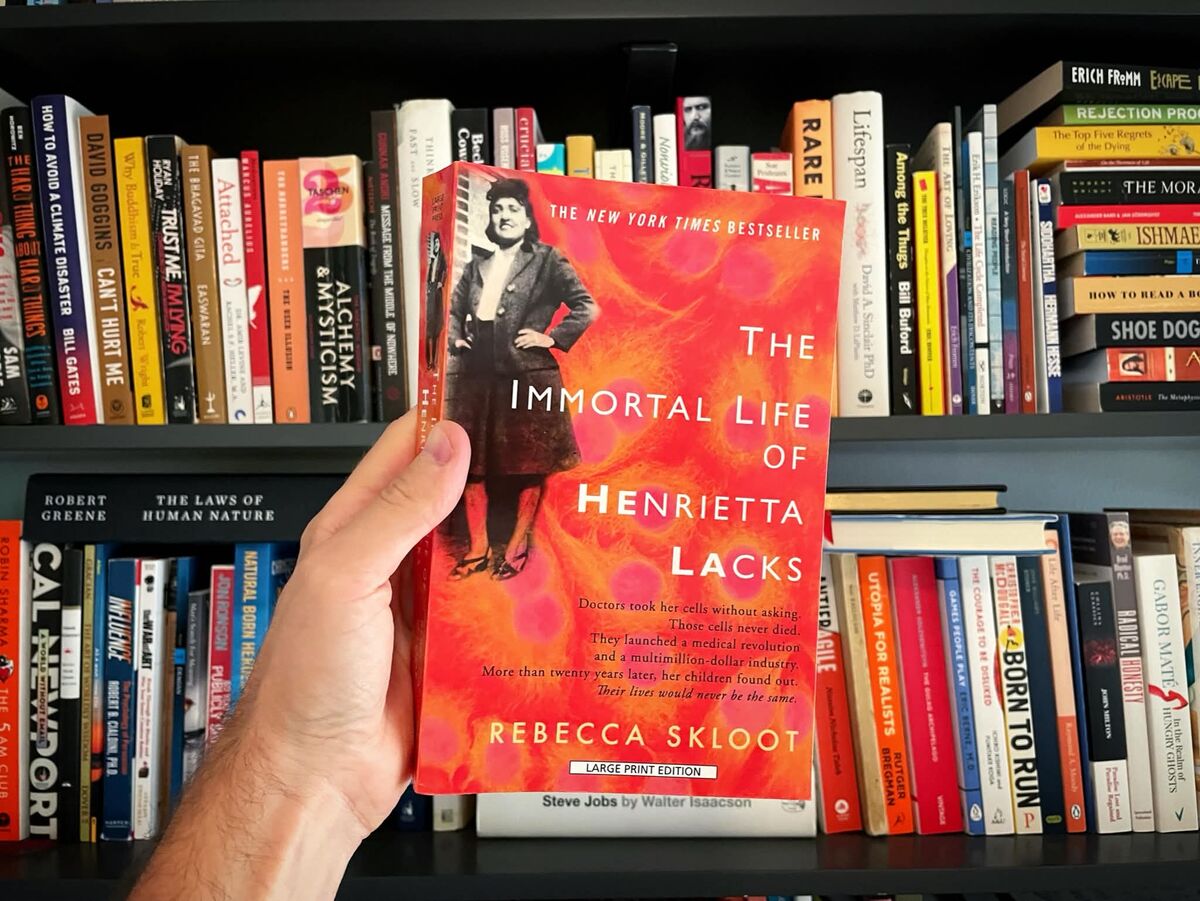
HeLa: The Immortal Cell
HeLa cells were the first immortal cell line ever discovered. That means they can survive and multiply forever in labs, as long as they're provided with cell culture. Without this discovery, modern medicine would look very different.
HeLa stands for Henrietta Lacks — the name of the poor Black tobacco farmer from whom the cells came. This book tells the story of the cells and the Lacks family (which is quite a ride), but also the history of patient consent in medical research.
What Made HeLa Special
What made these cancer cells so remarkable was that they allowed researchers to do all kinds of experiments that would never be allowed on live humans. HeLa cells were exposed to every type of toxin, drug, and radiation scientists could throw at them.
Henrietta's cells doubled every 24 hours in the lab. Cell factories were established for mass production when it was discovered that HeLa cells were extremely susceptible to the polio virus — a disease that was spreading like the plague at the time. HeLa led directly to the polio vaccine, in an era when people were dying in droves from it. And that was only one of many HeLa contributions. These cells have been used to develop treatments for Parkinson's, advance cancer research, and have even been launched into space.
📺 Video Review
The Dark Side of Medical Progress
The book doesn't shy away from the ugly history of medical experimentation. Radium, for instance, was used for everything back in the day — paint, earrings, even marketed as a cure-all. But it kills cells and causes mutations. Cancer, essentially.
Then there's the Tuskegee syphilis study. In the 1930s, scientists studied how people died from syphilis by observing Black men dying from it — without intervention, even though penicillin was already known to cure it. "Doctors were doing experiments on Black people. Watching them die." That was the word on the streets when the study came to public knowledge. No wonder African Americans were distrustful of scientists.
People in prisons volunteered to have Henrietta's cancer cells injected into their arms to see how healthy bodies rejected them. These patients fought off the cancer. (I would not volunteer for that. 😬)
Science vs. Ethics
The Nuremberg Code established guidelines about patient consent — but they were just guidelines, not law. And modern gene patenting continues to inhibit research. The Lacks family has seen nothing of the millions of dollars being made from HeLa cells. They are still poor.
💡 Key Takeaway
What made things worse was the Lacks family's lack of education. When they heard about Henrietta's cells being cloned in London, her daughter thought actual copies of Henrietta were walking around the city — when in reality it was only her cancer cells that had been cloned. The stress made her sick. So much unnecessary suffering could have been avoided by education.
All cancers originate from one cell going wrong. Scary thought. Memento mori, I guess.
⚖️ Verdict
A fascinating intersection of science, race, and ethics in American medicine. Skloot tells both stories — the revolutionary science and the human cost — with equal care. It's a solid read, though it doesn't quite reach the emotional depths or narrative grip of the very best in the genre. Worth your time if you're interested in medical ethics, the history of consent, or the stories science tends to forget.