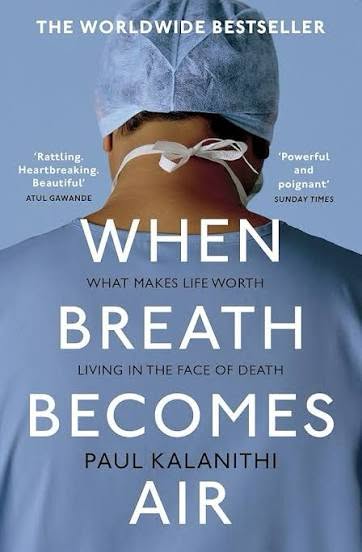
When Breath Becomes Air
A neurosurgeon confronts his own mortality — and asks what makes life worth living.
Arriving at the Destination — Then Cancer
Paul Kalanithi was just arriving at his destination. Years of study followed by excruciatingly long hours of residency were supposed to pay off in high salaries, a big house, and fulfilling work at the cutting edge of neuroscience. Instead, he got terminal cancer.
The scene that opens the book sets the tone perfectly: Paul collapses on the floor of a hospital corridor. A security guard approaches.
"Sir, you can't lie down here."
"I'm sorry," I said, gasping out the words. "Bad… back… spasms…"
"You still can't lie down here, sir."
"I'm sorry but — I'M DYING FROM CANCER!"
It's darkly funny and devastating at the same time. That tension — between the absurdity and the gravity of death — runs through the entire memoir.
The Examined Life
Paul wasn't just a doctor. He was deeply versed in literature and philosophy, which gives this memoir a rare intellectual weight. He doesn't just describe what happened to him — he wrestles with what it means.
"If the unexamined life was not worth living, was the unlived life worth examining?"
This question haunts the book. Paul spent his career studying the brain, trying to understand what gives life meaning. Then he was forced to answer that question for himself, with a ticking clock.
Living While Dying
One of the most striking aspects of the book is Paul's relentless writing in his final months. What fueled this? Had he found a new passion? Or was this a causa sui project — a vessel that could create meaning beyond his own life? A way of coping with the terror of death?
As Montaigne put it:
"To study philosophy is to learn how to die."
And there's a beautiful residency saying Paul shares that captures the paradox of medical training — and maybe life itself:
"In residency, there is a saying: the days are long but the years are short."
💡 Key Takeaway
If we need to reach a goal — say, becoming a full-time philosopher — and that requires solving our financial situation first, should we spend 100% of our effort on financial freedom? Or are we better off doing 20% philosophizing while we build our wealth? That way it takes longer to reach our financial goals, but at least we get some philosophizing done in the case that death comes early.
Don't postpone the thing that matters most. The years are short.
⚖️ Verdict
A good memoir that puts you in a deeply reflective state of mind. The book is, in a sense, unfinished — derailed by Paul's rapid decline. But that incompleteness is an essential part of its truth. If you're in the medical field, it will likely connect even more deeply. For everyone else, it's a powerful reminder to not wait until the end to ask the important questions.