The Comfort Crisis
Boredom is dead. Silence is vanishing. And we're more miserable than ever. Maybe it's time to rewild ourselves.
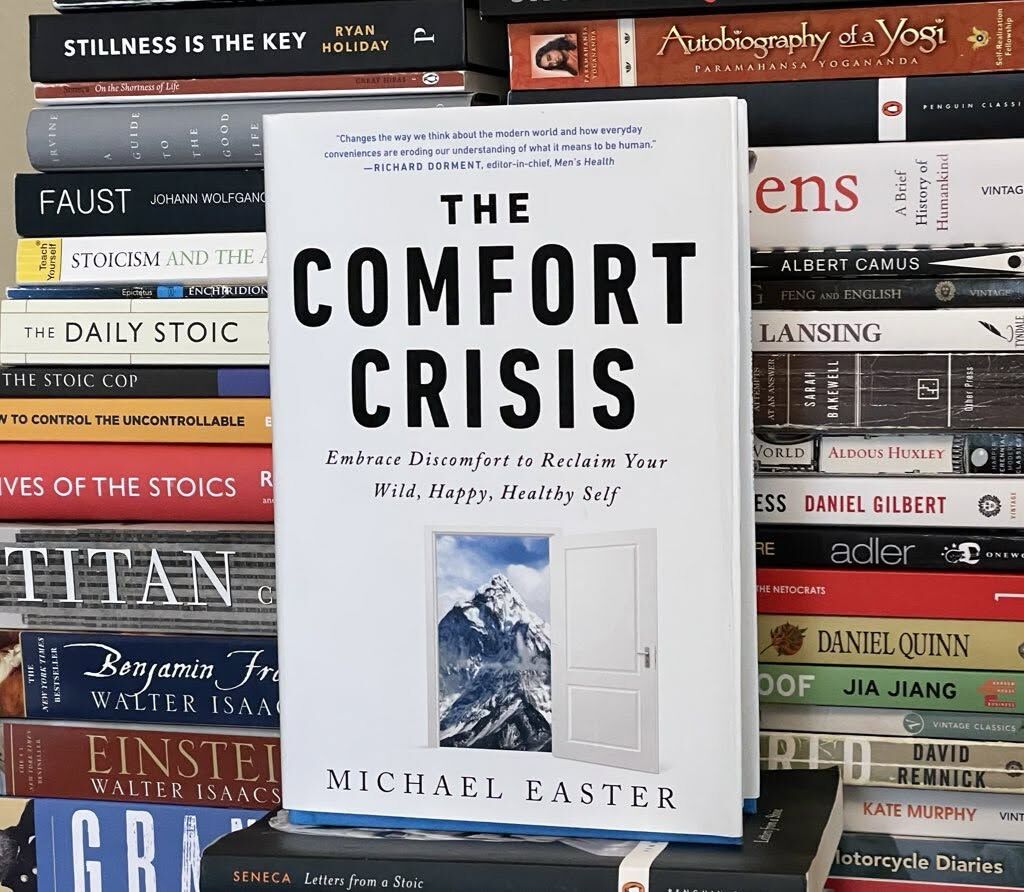
The Problem with Comfort
Boredom is dead. Technology killed it. Other inconveniences are diminishing too: feelings of hunger, cold, physical exhaustion are becoming rare. Even that uncomfortable thing called "silence" is rapidly being eradicated.
Now finally people can live a life of fulfillment and peace, right?
Quite the opposite. It seems like the further we stray from the stressors that our ancestors faced daily, the more depressed, anxious and petty we become.
"A radical new body of evidence shows that people are at their best — physically harder, mentally tougher and spiritually sounder — after experiencing the same discomfort that our early ancestors were exposed to every day."
Scientists are finding that certain discomfort protects us from physical and psychological problems like obesity, heart disease, cancers, diabetes, depression and anxiety. And even more fundamental issues like feeling a lack of meaning and purpose.
Rewilding Ourselves
In this book we follow the author's investigation into why people get sick and depressed in modern, sheltered and temperature-controlled lives where food is plenty and our physical challenges are few. Could the antidote for many ailments of civilization actually be overcome if we made an attempt to rewild ourselves and voluntarily seek out discomfort?
In The Comfort Crisis, Michael Easter ventures out to meet the people — both scientists and practitioners — who argue that this might actually be the case.
📺 Video Review
3 Concepts from The Comfort Crisis
As we experience fewer problems, we don't become more satisfied — we instead lower our threshold for what we consider a problem.
Scientists at Stanford stressed young squirrel monkeys by removing them from their family once a week for 10 weeks. These monkeys became more resilient and capable when they grew up compared to their sheltered siblings. They became leaders and doers. Similar results were found in humans who had faced difficulties in life.
A challenge you set up to test yourself both physically and psychologically. The benchmark: you should have about a 50% chance of making it — and that's if everything goes right.
💡 Key Takeaway
We've engineered discomfort out of our lives and wondered why we feel empty. The science is clear: voluntary hardship — carrying heavy things, spending time in nature, fasting, pushing physical limits — doesn't just build toughness. It protects against the very diseases of comfort that define modern life.
⚖️ Verdict
This is a Book of the Year candidate. It's a book that influenced my thinking and provided the most practical changes to my life that year. It goes through a lot of aspects in which we can gain from going against our instincts and embracing hardship — how it's good for us to carry heavy things, how spending time in nature benefits us mentally (and why living in cities is detrimental to psychological health), why we're better off maintaining a healthy weight, and how going through tough shit makes us less petty.
It reminds me of David Goggins' book in some ways, but from a different perspective and with a different tone. Both books got me to change habits and push myself harder.
🔥 Go Deeper: Voluntary Discomfort
This book is part of a trilogy of reads on voluntary discomfort — alongside Can't Hurt Me and A Guide to the Good Life. See all three and why they work together.
Read the Article →