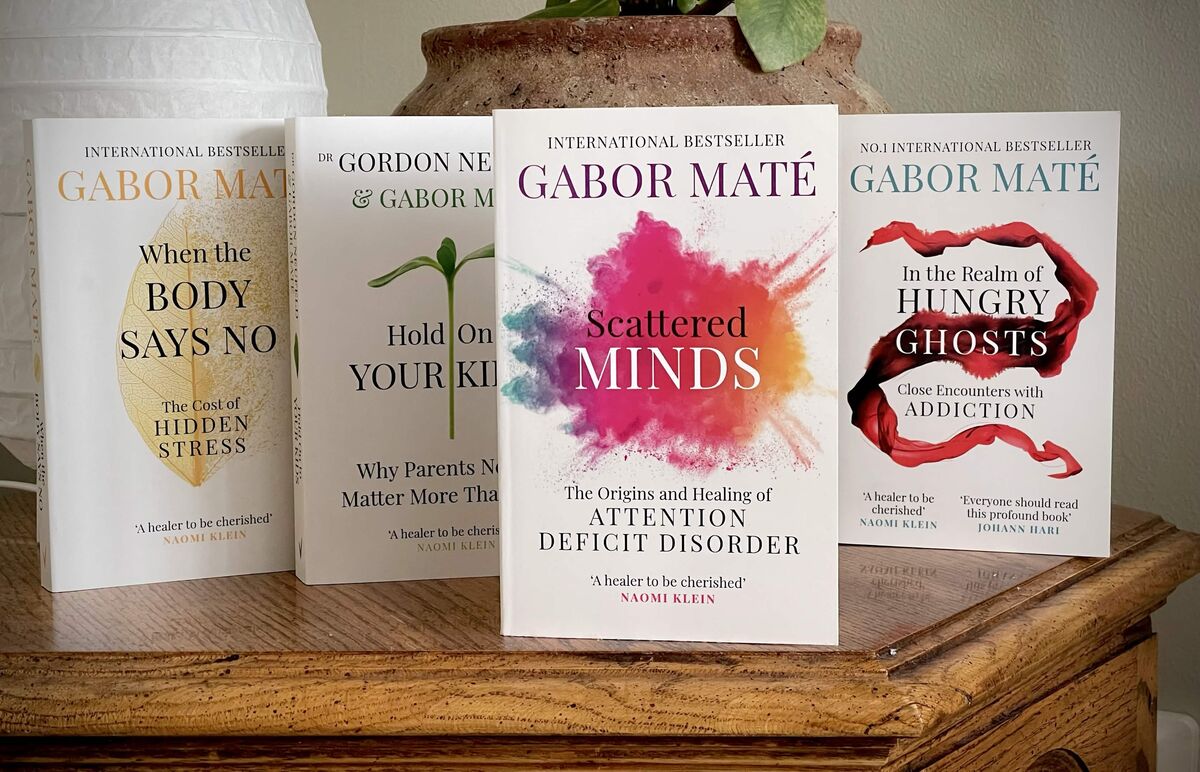
Scattered Minds: The Origins and Healing of Attention Deficit Disorder
Gabor Maté rewrites the ADD story — it's not a brain defect, it's a developmental wound shaped by attachment, stress, and a world that keeps getting louder.
Understanding ADD
Attention Deficit Disorder is characterized by three major features: poor attention skills, deficient impulse control, and hyperactivity. However, to receive a diagnosis only two of these features need to be present. Maté — who was himself diagnosed with ADD as an adult — approaches the subject not as a distant clinician but as someone living with the condition. That personal stake makes this book feel different from most medical writing on the topic.
The Role of Attunement and Attachment
Maté sheds light on the crucial role of attunement and attachment in child development. In one striking experiment, mothers interacted with their infants through smiles, hand gestures, and eye contact. The infants were happy. Then the experimenters played a video feed of the same mother's face — but from one minute earlier. The result? The infants were just as distressed as in the classic "still face experiment," where mothers gave no emotional response at all.
A happy and friendly face is not enough. The child needs signals that the mother is aligned with them emotionally from moment to moment — responsive to and participating in the infant's mental states in real time. All of that was absent in the replay.
The implication is profound: emotional stress and "zoning out" by caregivers interfere with infant brain development because they disrupt attunement contact. As distractions and external stresses increase in society, the damage from lack of attunement is bound to rise. Attunement is necessary for the normal development of the brain's capacity for emotional self-regulation and attention.
The Multigenerational Nature of Suffering
A recurring theme across Gabor Maté's work is the generational perpetuation of trauma. As humans, we tend to repeat the same patterns our parents lived through. Attachment disturbances run in families and can be a risk factor for ADD and other psychological issues.
"The generations are boxes within boxes. Inside my mother's violence you find another box which contains my grandfather's violence. And inside that box, I suspect but do not know, you would find another box with some such black secret energy. Stories within stories, receding in time…"
— Lance Morrow, Heart
📺 Video Review
Beyond the Pill
Pills are tempting when dealing with ADD — and medication can help. But Maté argues that looking at lifestyle is far more important. Much more difficult, and much more essential, is examining family relationships, psychological security, lifestyle factors, and self-esteem. He puts weight on long-term solutions instead of short-term treatments of surface symptoms. Healing and becoming a person with a firm sense of self is the end goal.
💡 Key Takeaway
For anyone who tends to be impatient with children who are hyperactive, who don't listen, or who fail to focus — this book teaches invaluable lessons. As an adult, you are the emotionally responsible person in interactions with children. Practice what Carl Rogers called Unconditional Positive Regard: approve of your child without condition, even when you don't approve of every choice they make. Basic acceptance and support regardless of behavior — that's what builds the foundation ADD brains desperately need.
⚖️ Verdict
Being normal in a sick world?
When Maté describes his own ADD revelation, the symptoms feel like how most people experience things. If almost everyone struggles with their mind this way, aren't ADD behaviors just people being normal in a sick world? The answer lies in degree — our ability to focus has declined broadly, but it's the extent to which it disturbs your life that determines whether it crosses into diagnosis. Most people have the traits. Only the degree makes it clinical.
A book worth reading
Scattered Minds is a great book for understanding the complexities of ADD — but also for understanding the world we live in. Once again, Maté's holistic and compassionate stance on medicine is impressive. We need more of that.