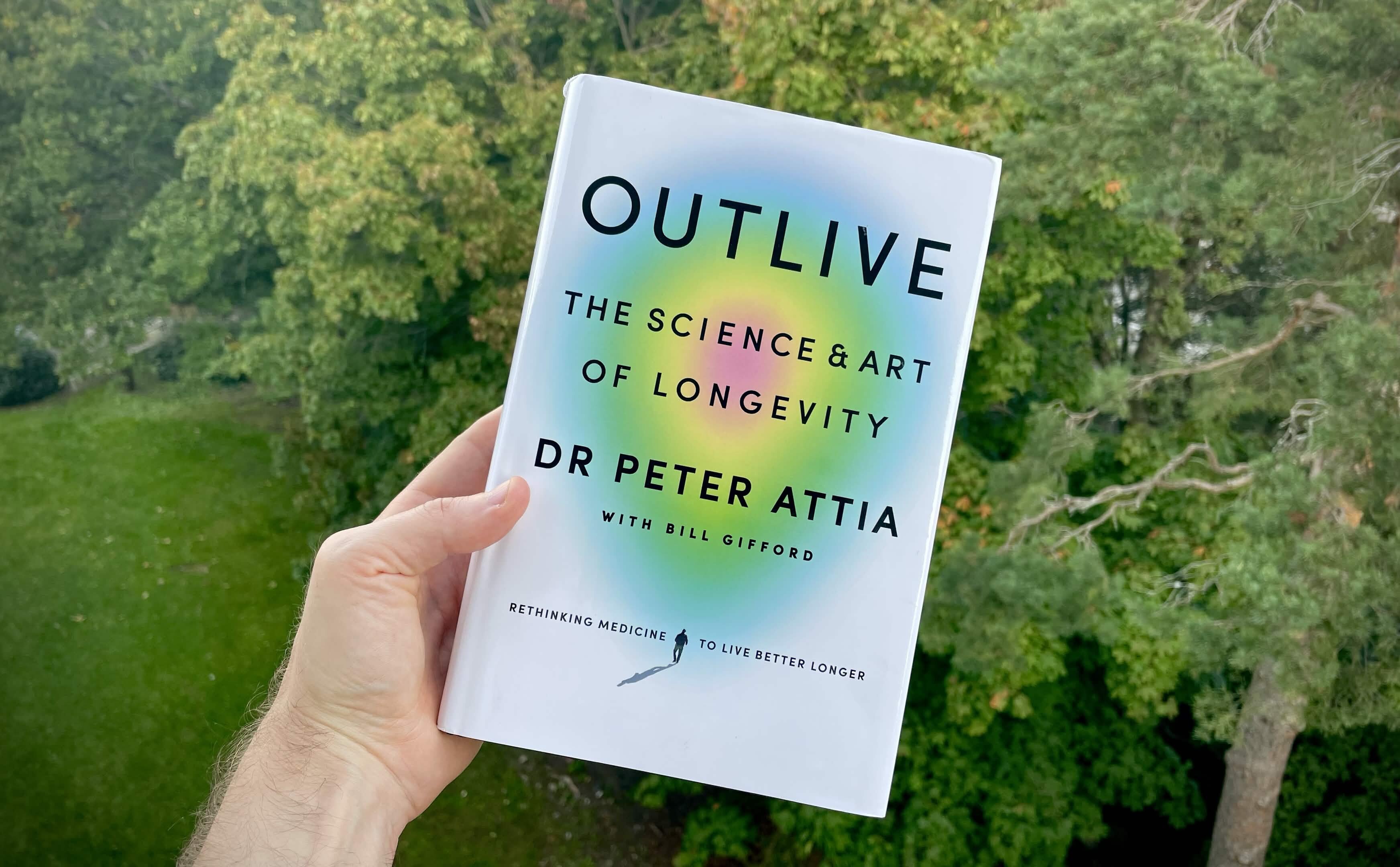
Outlive: The Science and Art of Longevity
The diseases that kill most of us build up over decades. What you do today really matters.
The Problem With Modern Medicine
Peter Attia was a practicing doctor who left the medical establishment out of frustration. What drove him out? The outdated way the profession handles early prevention of the diseases we associate with aging.
To Attia, starting treatment only after you've crossed some arbitrary threshold — hit a certain score on a test, finally shown symptoms — is way too late. By that point the damage has been building for decades.
"Slow death moves even slower than we realize."
The diseases Attia calls "the horsemen" — diabetes, Alzheimer's, heart disease, and cancer — are all incredibly slow to develop. His argument is simple but radical: we need to stop them in their tracks decades before they show up. Individualized, preventive treatment that enables proactive measures long before you reach the age where these killers make themselves known.
The Four Pillars of Exercise
Getting regular exercise is the single most important thing you can do to live longer. The numbers are staggering:
"Going from zero weekly exercise to just 90 minutes per week can reduce your risk of dying from all causes by 14%. It's very hard to find any drug that can do that."
But not all exercise is equal. Attia breaks it down into four components:
Aerobic efficiency (Zone 2 training) — The somewhat boring stuff: long jogs, swims, cycling. This type of training does wonders for metabolic health, helps prevent Alzheimer's, and keeps glucose levels in check. It's also when I do most of my audiobook listening.
Strength training — You want to build muscle now because you naturally lose muscle mass as you age. The more you have, the longer it takes before a fall leads to injuries, which leads to further sickness, which leads to a downward spiral.
Peak aerobic capacity (VO2 max) — Not pleasant. You're at your absolute peak, exerting everything you've got. Super uncomfortable. But having a high VO2 max is highly correlated with a longer life. Like muscle mass, your VO2 max drops as you age — but if you start from a higher baseline, it takes longer to hit critically low levels.
Stability — This is about building a solid foundation that lets you do everything else without getting injured. Posture, using the right muscles for the right movements, maintaining flexibility and balance. You want to become an athlete of life.
Nutrition: Simpler Than You Think
What you eat matters — but how much you eat matters more. We actually know fairly little about nutrition with certainty, yet proponents of specific diets act like their approach is gospel. People are incredibly tribal about food.
But there are a few things we really know for certain:
Being overnourished or undernourished is linked to a shorter life. And it's important to get enough protein — you need it to maintain the muscle mass we just talked about. This becomes especially important as you get older.
Sleep: The Most Overlooked Component
Sleep is probably the most overlooked aspect of health and longevity. It's only in recent years that it's gotten the attention it deserves. For me, the wake-up call was reading Why We Sleep by Matthew Walker during my most stress-filled and underslept period of my life. If you think getting eight hours is only for lazy people and you can sleep when you're dead — pick up that book immediately.
Good sleep is critical to physiological repair. Poor sleep triggers a cascade of negative consequences: insulin resistance, cognitive decline, mental health issues. Attia mentions a study where young, healthy people slept only four and a half hours a night. After just four nights, they showed the same elevated insulin levels you'd see in obese, middle-aged diabetics.
📺 Video Review
💡 Key Takeaway
Health is a messy topic — tribal, shifting, divisive. We know less than we think about nutrition and sleep, and in cases like that, the key is to focus on what we actually know and not make things more complicated than they need to be. Overthinking and overcomplicating is a hallmark of modern society, fueled by market forces. The solutions to good health are simple but hard. If you were thrown out of civilization, you'd get lean fast and have no problem sleeping eight hours. Keep it simple, create a strategy that works long-term, and sustain it for decades. The reward is a long and healthy life.
⚖️ Verdict
The first part feels like a medical textbook — it's a slow start. But what Attia is really doing is preparing you for the practical advice in the second half. The medical history and research details open you up for the solutions that follow. All in all, time well invested, even though it was a strain at times. A really good guide to improving your odds of living longer and healthier — and that's more than you can ask of most books.