King of the World
You don't have to care about boxing to be captivated by the rise of Cassius Clay — this is really a book about race, religion, and reinvention in America.
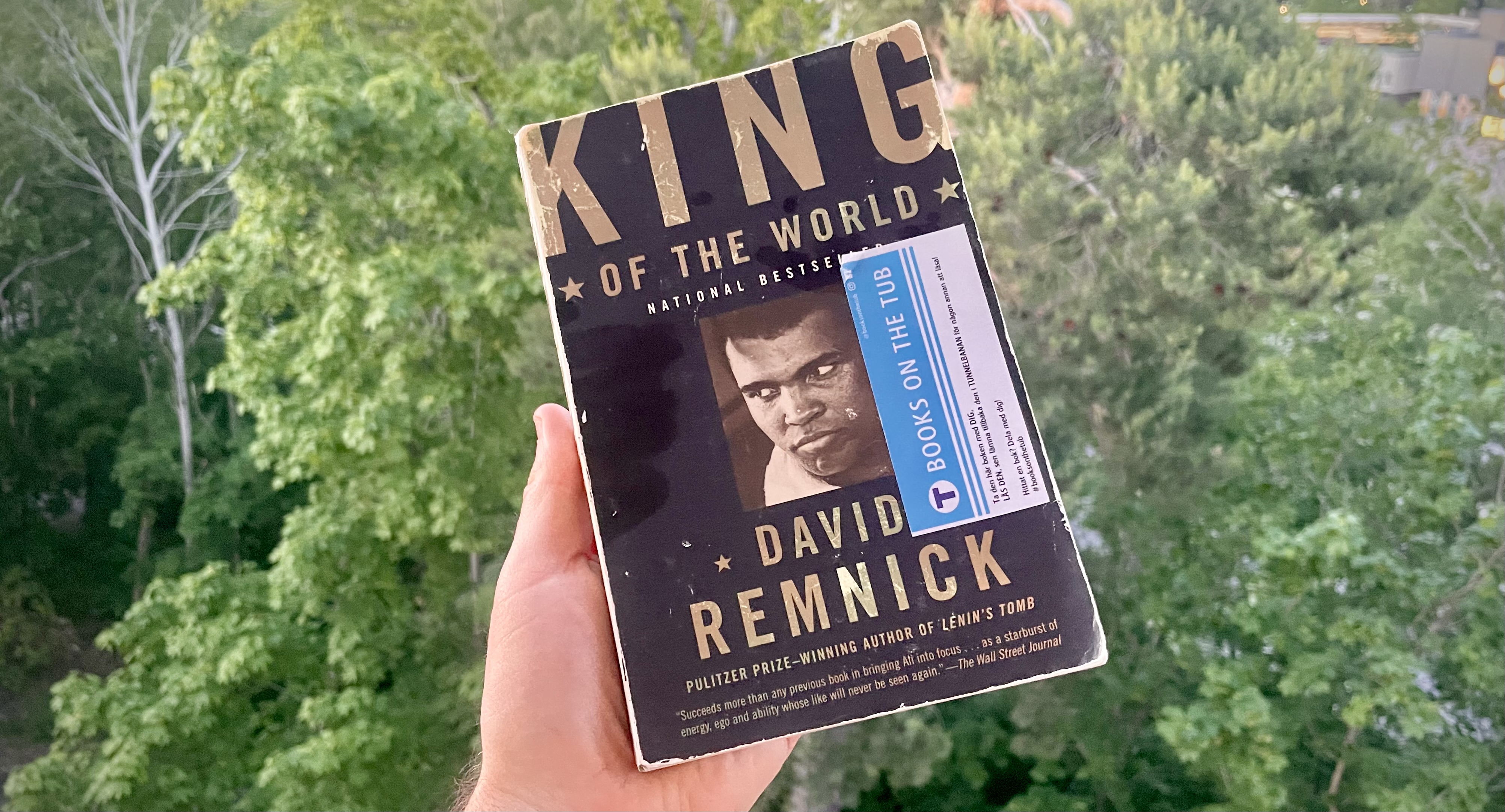
Not Really a Boxing Book
Let's get this out of the way: you don't have to be a fan of boxing to enjoy this book. Only a small percentage of it is spent on the actual fights. The bigger chunk deals with Ali's early career, him joining the Nation of Islam, and the racial tensions of the era. Remnick — a Pulitzer Prize winner for Lenin's Tomb — is a journalist first, and it shows. He sets the scene with the patience of a novelist, spending the entire first third on Ali's two great rivals, Sonny Liston and Floyd Patterson, on mob involvement in boxing, and on the racial fault lines of 1960s America.
Malcolm, Elijah, and the Nation
For me the book really shines in its portrait of Ali's relationship to Malcolm X and Elijah Muhammad. Malcolm became Ali's spiritual advisor, friend, and mentor — they were like brothers. And the Nation of Islam itself is a fascinating, disturbing world: a cult with a crazy version of history, including a "Mother Plane" that would supposedly drop pamphlets in English and Arabic showing the God-fearing where to hide during Allah's day of retribution.
What makes it tragic is how Ali eventually had to choose between Malcolm and Elijah — and chose wrong. Malcolm's trip to Mecca and Africa was life-altering. He came back a changed man, no longer calling white people "white devils." A powerful testament to the value of travel.
"A rooster crows only when it sees the light. Put him in the dark and he'll never crow. I have seen the light and I'm crowing."
The Fights
The second high point was the fights themselves. Remnick builds tons of context around each opponent — their backgrounds, their psychology, the stakes — so that when the bell rings, the descriptions are genuinely thrilling to read. And then YouTubing these classic fights afterward adds another layer of depth to the experience.
In the first Liston fight, Liston's crew is believed to have "juiced" his gloves with some substance that felt like needles in Ali's eyes — almost ending his career before it even started. The drama is real.
Beyond Boxing
Ali widened his scope from racial questions to the Vietnam War in one improvised comment: "I ain't got no quarrel with them Vietcong." People took it as a declarative statement. For the rest of his life, people would love and hate him for those words. He was sentenced to five years in prison — what would have been the prime of his boxing career — for refusing to join the army.
His greatest weakness and most flagrant betrayal of Muslim ideology was his insatiable need for women. He was called "The Pelvic Missionary." Remnick doesn't flinch from showing the contradictions in the man.
In the end, Ali is an American myth who has come to mean many things to many people: a symbol of faith, courage, racial pride, beauty, skill, wit, and love. Of conviction and defiance.
💡 Key Takeaway
Travel more. Both Ali and Malcolm X went from extremist, intolerant positions to more holistic and nuanced worldviews after their trips to Africa and Mecca. Getting outside your bubble — physically, not just intellectually — can fundamentally rewire how you see the world.
⚖️ Verdict
A well-written biography with some genuinely great sections — the Nation of Islam narrative and the fight buildups are excellent. But Remnick name-drops sports managers and writers relentlessly, and the pacing drags in places. If you're into Ali, race in America, or the intersection of sports and politics, it's worth your time. Just don't expect to be gripped from start to finish.