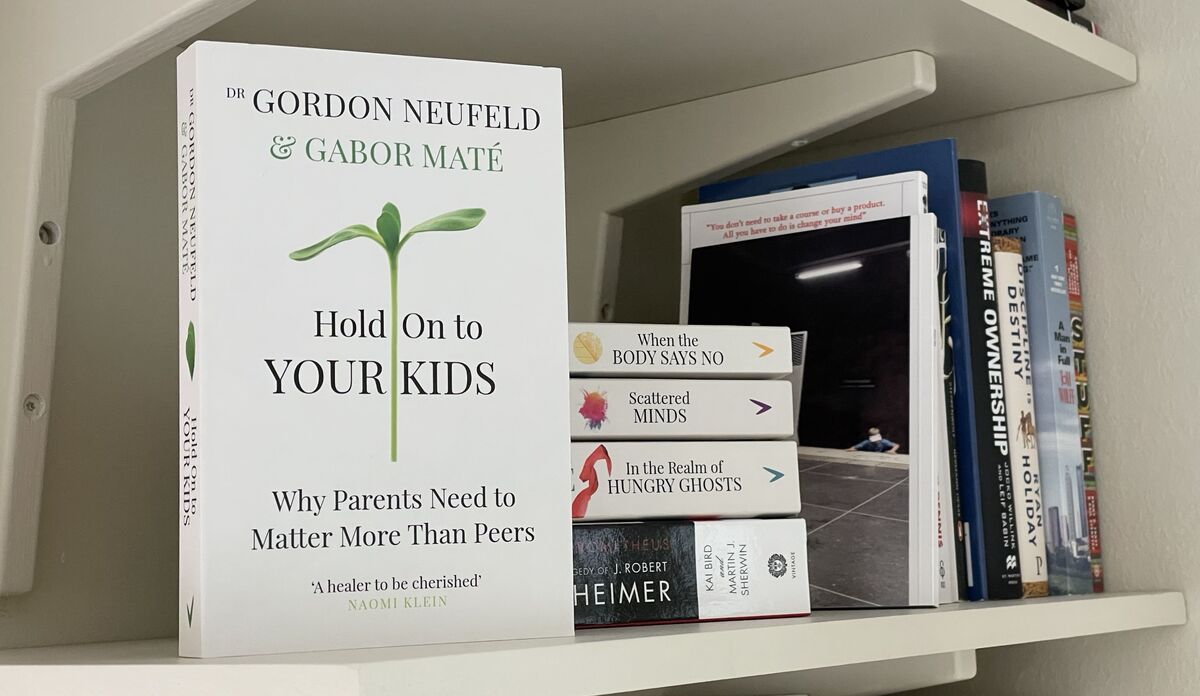
Hold On to Your Kids
Kids haven't changed and neither have parents. What has changed is the culture we raise them in, and the fix starts with connection before direction.
Why is it so hard to be a parent these days?
Why is it so hard to be a parent these days? Have kids changed?
Nope, children haven't changed. Not parents either, but the context of parenting has changed. What has changed is the culture in which we raise our children.
About the Book
Hold on to Your Kids by Gabor Maté & Gordon Neufeld highlights the crucial role that parents play in shaping their children's lives. The authors argue that in today's world, peers have become the primary influence on children's behavior, which has led to numerous social and emotional challenges.
Attachment
In order to dissect the issue we first need to talk about attachment.
Attachment is a primal, biologically-based bond that forms between a child and their primary caregivers. This bond is established through a variety of interactions including physical touch, eye contact, and emotional attunement.
Attachment has evolutionary roots, as it has been essential for the survival and thriving of human infants throughout history. Children are born with a strong need for attachment, and their survival depends on their ability to form a strong bond with their caregivers.
Humans can reattach from parents to others. This remarkable adaptability has come to haunt us in recent times. It has been an evolutionary perk, but when parental attachment is replaced by peer attachment, it becomes a problem.
Parents work more, children spend more time away from their family, and the increased mobility of modern life has broken the multigenerational family and the closeness to grandparents previous generations took for granted.
In the absence of close bonds with natural caregivers, peers have become our children's closest attachments.
All children need to depend on someone, but the crux is, being dependent does not guarantee dependence on the appropriate caregivers.
Youth culture is new
Children have historically gotten their culture vertically, but now they get it horizontally from their peers. The natural order of things has been disrupted.
The existence of a youth culture that is separated from adults dates back only 50-60 years.
The Trouble of Peer Orientation
The increasing bonding of children with their peers is the chief and most damaging factor that undermines parenting authority and parental love, according to Maté and Neufeld.
"For the first time in history young people are turning for instruction and guidance, not to responsible adults that they model, but to their peers. People whom nature never intended for this role. Kids are brought up by each other. This is what the book calls peer orientation."
This shift can have negative consequences for children's emotional development, as peer relationships do not provide the same level of emotional support, guidance, and security as a strong attachment with a caregiver.
Kids are immature beings, intolerant toward anyone breaking the norms of the group. Something that hampers the individuation of peer oriented kids. How is one to find one's sense of self when creativity, exploration, and vulnerability is frowned upon by the people that mean the most to them: the peer group.
Signs of peer orientation:
📺 Video Review
Vulnerability Is the Enemy
In groups of peer-oriented teenagers tears provoke ridicule, and showing curiosity has your friends roll their eyes.
Carl Jung explained that we tend to attack in others what we are most uncomfortable with in ourselves.
"When vulnerability is the enemy it is attacked wherever it is perceived. Even in a best friend."
This part reminds me of my group of friends when I grew up. There were just certain parts of me (that I liked certain things, that were not labeled as "cool") that I couldn't disclose to my closest friends.
The Solution
To promote individuation we need to provide a sense of belonging and unity. To foster independence we must first invite dependence.
For the child to separate we must assume the responsibility to keep the child close.
When they want a hug, we give them a hug warmer than expected.
Attachment needs to be satiated so that the child does not need to work to get his needs met for contact and closeness, to find his bearings, to orient.
"Attachment is a second womb from which he can be born again as an autonomous person."
Focus on Connection Over Direction
If attachment is weak then it's time to focus on connection rather than direction.
One way to collect your kids is to get into their space in a friendly way. Without an agenda. As parents we often fall into the habit of only, or at least most of the time, getting into our children's space when we want them to do something (get dressed, clean the room, brush your teeth, take a break from the iPad).
A failure to collect the child should be a reminder to us to back off our preoccupation with conduct and focus on building the relationship.
Connection before direction.
💡 Key Takeaway
We assume that as parents we lack the skills to make our children compliant, but that is the wrong assumption. What matters is not the skill of the parent but our relationship to our children. Being a parent is not a skill, but a relationship.
⚖️ Verdict
As a parent I found this book both enlightening and frightening. But it has also been a helpful tool, one that has given me the tools to improve my relationship to my children and reclaim my authority as a parent. It's a must read, because most other books about raising children only provide cheap tricks for managing the symptoms of confused and frustrated children, rather than the root cause. This book goes on to explain the foundational attachment needs of children and also helps us with practical advice on how to build healthy relationships with them.
📖 More Gabor Maté on BookLab
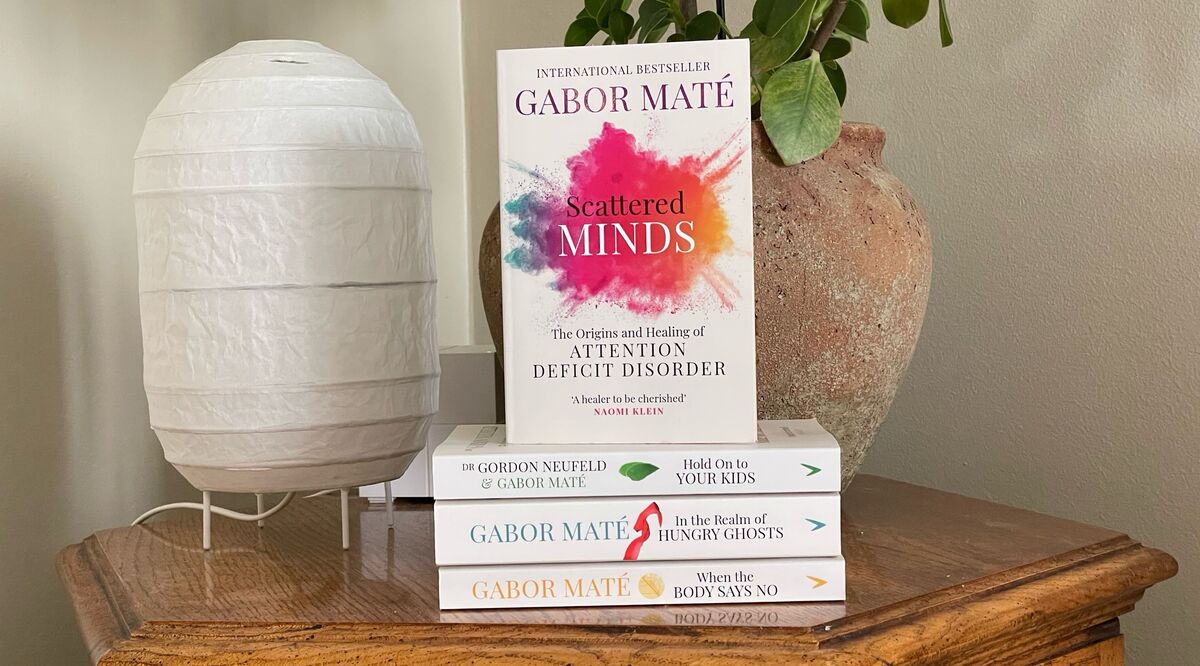
If Maté's way of thinking speaks to you, these are the other books of his I've read and reviewed: Scattered Minds on the roots of ADD, In the Realm of Hungry Ghosts on addiction, and When the Body Says No on stress and disease.