Grant
A leaf in the wind who became the most powerful man in America — and never seemed to want any of it.
Getting to Know the Man
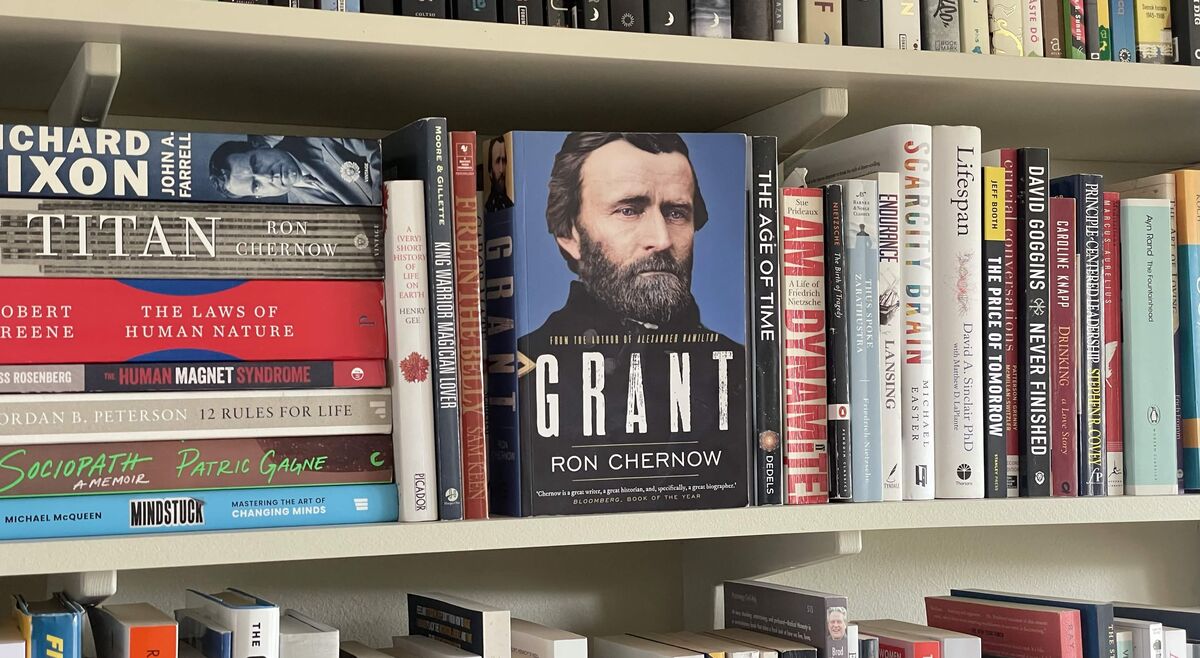
I picked up this book in an attempt to educate myself on the American Civil War. I had no idea who Ulysses S. Grant was, but halfway through the book I felt like I knew the man better than I knew myself. The detail Chernow goes into is remarkable — you almost feel like you're experiencing the war firsthand.
Grant came from simple beginnings, and throughout his life his fortunes rose and fell with "incredible speed and frequency." He was a failed businessman. He was even thrown out of the army during the Mexican War — probably due to drunkenness — only to quickly rise through the ranks during the Civil War, ultimately reaching the absolute peak of military achievement. And eventually becoming the 18th President of the United States.
I listened to this one as an audiobook, and I'd actually recommend that format. It's a long book — over 1000 pages — and having someone read it to you makes the journey a lot more manageable.
A Reluctant Leader
Looking only at his track record, you'd be led to believe Grant was a man of fierce ambition. Quite the opposite seems to be the case. He never sought fame or power — even his presidency was seen more as a burdensome duty, rather than something he pursued. He had a clever way of placing himself in the pathway to success and calling it fate.
Before the Civil War, Grant was broke and directionless. He tried farming, loan collecting — nothing stuck. He was an avid reader though, and would read to his wife in the evenings. Charles Dickens was a favorite. But it was the North–South conflict that ignited his purpose. Something clicked. Something he had lacked before.
📺 Video Review
The War That Made Him
Grant's military career during the Civil War is where the book really comes alive. He took two forts in quick succession, which made him a celebrity in the newspapers. His masterpiece was the siege of Vicksburg, Mississippi — a strategically crucial victory that Lincoln loved him for. It got him promoted and brought to Washington.
Lincoln's leadership style with Grant was essentially: "I don't care how you do it, just let me know what you need." This was exactly what Grant wanted to hear. Lincoln was tired of procrastinating and overconfident officers. Grant's swift, relentless military style pleased the president. Grant was economical with words — a man of action, not speeches.
Grant eventually defeated Robert E. Lee. And his terms of surrender were fair — he allowed Lee to save face. Not long after, Lincoln was assassinated.
🍃 A Leaf in the Wind
I don't envy Grant. I actually feel a bit sad for him. He seems to have led his life like a leaf in the wind — letting external forces throw him back and forth, without ever letting his own will speak.
Grant was economic with words and, to be honest, he feels like a poster boy for psychological and emotional repression. Maybe that's why alcohol was his worst enemy? His unattended-to inner child would pop out and wreak havoc as soon as he let his guard down — and alcohol tends to do exactly that. But that's just speculation on my part.
"...dressed up in black evening coat and a white tie; a one time warrior ambushed by a sudden outbreak of peace."
He didn't look comfortable at White House social functions. After his second term, he traveled the world — the first president to serve as a traveling representative for the US as a post-president. He walked the streets of Paris and Madrid all day, observing the common people. That kind of incognito observation was his favorite way of getting to know a place and its people.
💭 The Statue That Fell
I read this book while hearing news that protesters had toppled a statue of Grant in San Francisco in 2020, calling him "a white slave owner." True, he received a slave from his father-in-law, who was a slaveholder — but Grant freed him rather than sold him. That news surprised me, because I'd learned that Grant not only despised the idea of slavery but personally led the Union Army to defeat the slave-owning Confederacy, and later, as President, he cracked down on the Ku Klux Klan.
💡 Key Takeaway
Grant's life is a reminder that greatness doesn't always come from ambition. Sometimes it finds people who simply show up and do the work — even when they don't particularly want to. His story also shows how dangerous emotional repression can be, and how alcohol becomes the pressure valve for everything left unsaid.
⚖️ Verdict
This book is huge — 1000+ pages. I love that I got to know Grant so intimately, and the history lesson will serve me well. But I can't encourage just anyone to pick this up. We all have limited time, and the opportunity cost might be too high — unless you have a very special reason for doing so. It is a masterful biography, though. If you're serious about American history or biographies, Chernow delivers. But be prepared for the commitment.