Finite and Infinite Games
A philosophical lens that changes how you see competition, relationships, and life itself.
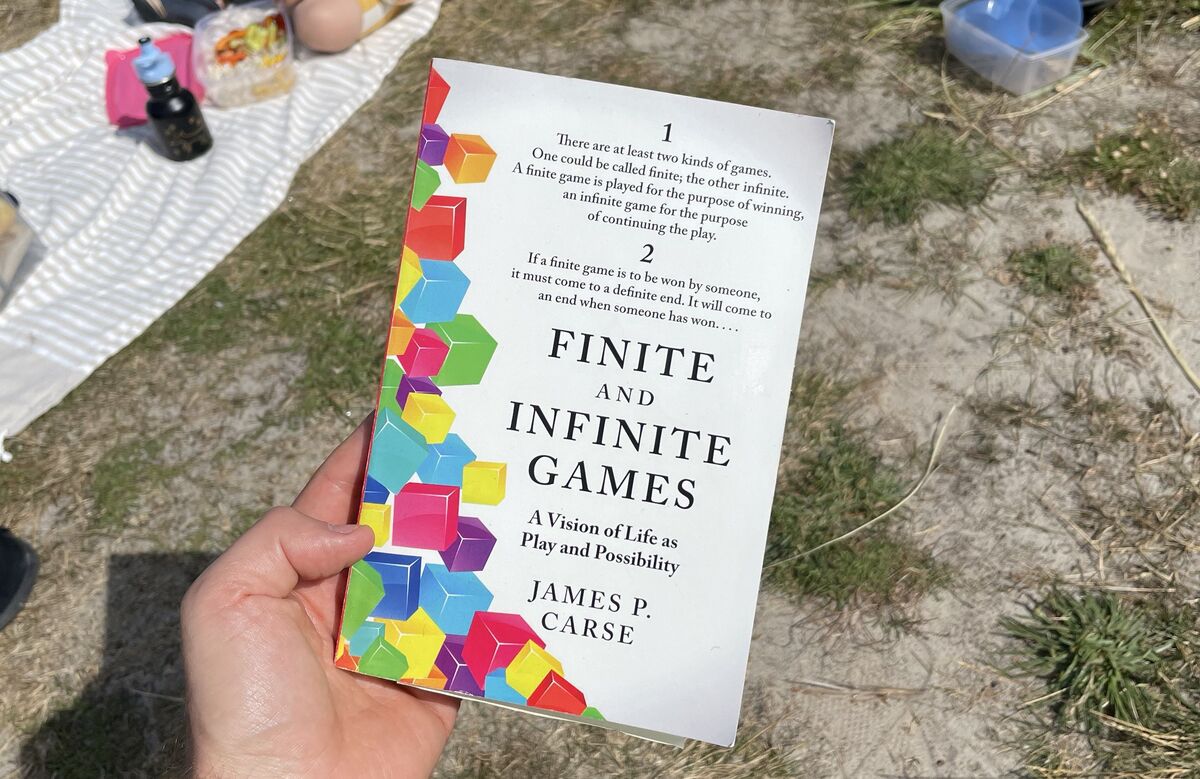
"There are at least two kinds of games. One could be called finite, the other infinite. A finite game is played for the purpose of winning, an infinite game for the purpose of continuing the play."
This is how James Carse defines finite and infinite games in his philosophical book by the same name. If you imagine life as a stage, what role do you take on and what kind of games do you want to play? Are you an infinite player or are you just following ready made scripts based on other peoples expectations?
After reading Carse's book you will be able to see the world in a new light. He shows that finite games may offer a lot in terms of status, power and wealth but there is something even grander to be had being an infinite player. Something sublime.
Two Kinds of Games
Infinite Play Can Contain Finite Play
A career is an infinite game that may contain finite games such as job interviews. There are always finite games within infinite games, but the infinite provides context to the finite games.
If you value being healthy (an infinite game) you can still have specific health goals (finite games) you track progress towards. But even if you don't reach your goal, you still haven't lost the infinite game of health. You probably end up in better shape than when you started.
📺 Video Review
"Evil is the termination of infinite play." The Nazi did not compete with the Jews for a title, but demanded it without completion. Something that could only be achieved by wiping them, along with their culture, off the face of the earth. "Evil is never intended as evil. Indeed, the contradiction inherent in all evil is that it originates in the desire to eliminate evil."
The Perks of Infinite Play
While finite play is about beating the competition and elevating one's status, choosing to focus on infinite plays opens us up to broader perspectives. What if we can elevate the game itself and bring everyone up with us!
💡 Key Takeaway
I'm always grateful when being presented with a new lense through which to see. The dichotomy of finite and infinite games is such a lense. It's been an especially helpful tool when it comes to reviewing my attitude towards certain aspects of life.
It's easy to turn what could be an infinite game into a finite game. This could be by turning the relationship with your children into a finite game with a rigid goal—i.e "my daughter needs to become a doctor.", "My son needs to value what I value before we can have a good relationship."—Instead of having a relationship of infinite play where the rules and goals evolve as we both grow as individuals.
The most common example I've seen of this is when it comes to work. A career is an infinite game with the purpose of continuous play, but I see many people turning it into a finite game of winning a title or status. Finite games are not bad per se, but you can suck a lot of joy out of life by being too outcome-focused.
⚖️ Verdict
The book is quite complex and full of insights. The chapters are made up of short aphorisms. And if you don't feel like reading the full book, I would still recommend you check out the concept of Finite and Infinite games on YouTube/Google since it's a fundamental concept.