A Man in Full
A novel about what happens when life strips everything away — and Stoicism steps in.
What It's About
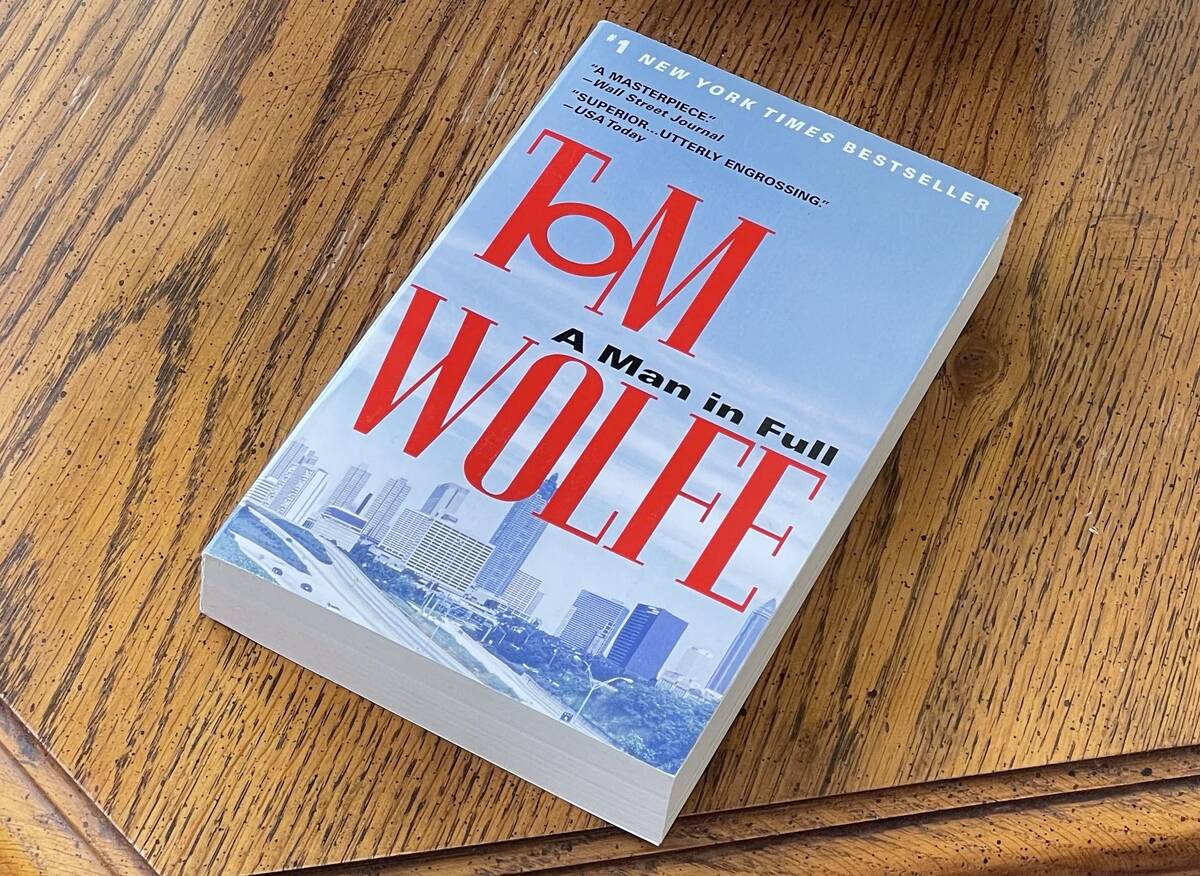
Sometimes here at BookLab we turn to fiction, and when we do we often turn to books that can teach us something about what it means to be human. Tom Wolfe's A Man in Full is such a book.
Published in 1998, the book takes place in Atlanta, Georgia and explores themes of race, class, masculinity, power, and the American dream. We follow the lives of a bunch of characters whose lives are interconnected in various ways — but two stand out.
First we have Charlie Croker, a wealthy 60-year-old real estate mogul, a member of the Atlanta high society, facing financial troubles and a personal crisis. Then we have Conrad Hensley, an idealistic young worker at a frozen goods warehouse run by one of Charlie's subsidiary companies.
Conrad is laid off suddenly due to downsizing efforts that Charlie puts in place to save his business from bankruptcy. He has a really shitty day, ends up in a farcical parking hassle, butts heads with the law — and because he stands up for himself, because he refuses to take a plea bargain, he ends up in jail.
The Stoic Discovery
In prison, Conrad requests a book from the library — something called The Stoic Game, which he thinks is a spy novel. But the books get mixed up, and instead he receives a copy of a book containing texts from Epictetus and other famous Stoic philosophers.
At first Conrad is disappointed. But then he starts reading and realizes that Epictetus had been through hell — tortured and crippled by a slave owner — and yet went on to become one of the most influential philosophers of Imperial Rome. Disappointment turns to excitement.
"Our bodies and possessions are mere trifles, things that are only on loan to us. Zeus has given us the spark of his own divinity in the form of our power of choice. We are mortal and our bodies can easily be conquered — but our will cannot, unless we permit it."
This mindset was incredibly useful for Conrad in prison. But most importantly, Epictetus understood why Conrad refused to compromise — why he wouldn't plead falsely just to avoid jail time. Only Epictetus understood why he refused to lower himself, to disgrace himself, to admit to a crime he didn't commit.
📺 Video Review
Charlie's Transformation
For Charlie Croker, the realization comes through a different kind of crisis. He's a wealthy real estate developer facing numerous legal and financial issues. First he reacts with anger and frustration, even denial. But eventually he comes to see the situation as an opportunity to reassess his values, his priorities, and how he lives his life.
He turns to the writings of the Stoics, particularly Marcus Aurelius, and begins to see that his struggles are just part of a bigger pattern of the human experience. He learns to accept his circumstances and find peace and meaning in the present moment rather than constantly striving for external success and validation.
Both Conrad's and Charlie's realizations about the power of Stoicism come at pivotal moments in their character arcs. Through Stoicism, they find a new source of power and resilience.
🏛️ Want to Explore Stoicism?
Stoicism is one of the most practical philosophies ever created — and it's been a game-changer for me personally. If A Man in Full sparked your interest, I've put together a full guide to the best Stoic books, from ancient texts to modern introductions.
Best Stoicism Books →💡 Key Takeaway
When life strips everything away — wealth, freedom, status — what's left is your will and your character. That's the Stoic message at the heart of this novel: difficulty and adversity are moments of opportunity where we can learn to persevere and practice our resolve. Our will can endure any hardship, as long as we keep our dignity and self-respect.
⚖️ Verdict
Overall, A Man in Full uses Stoic philosophy as a lens through which to explore the lives and experiences of its characters, showing both the challenges and rewards of adopting a Stoic outlook on life. It's a big, sprawling novel — classic Tom Wolfe — and the Stoicism woven into the story makes it stand out from typical fiction. That said, at nearly 700 pages, it can feel bloated in places, and not every subplot earns its page count. The Stoic thread is the strongest part of the book, and it's worth reading for that alone.