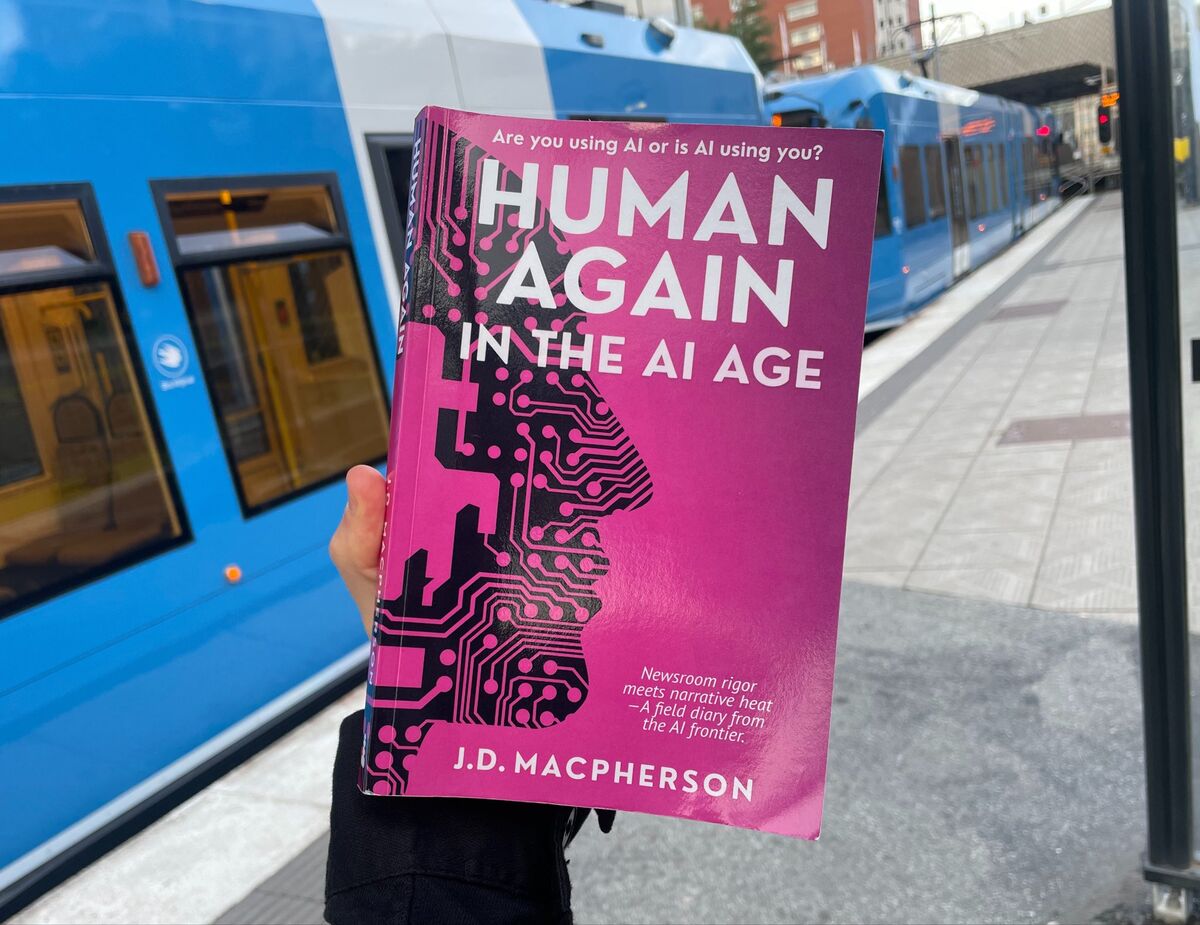
Human Again: In the AI Age
Are you using AI or is AI using you?
What's It About?
J.D. Macpherson didn't set out to write a book about AI. She found it late one night in her kitchen, lit by the glow of her laptop. What started as a question - "What's another way to say highly effective?" - turned into something much bigger: a field diary from the AI frontier.
Human Again is structured around four pillars: Discoveries (the "Ask Chat" moment and the first sparks of curiosity), Possibilities (creativity, philosophy, mindfulness, and why travel and art matter more than ever), Operations (practical frameworks for prompt engineering, deep research, and the 0.1 percent mindset), and Pitfalls (the dopamine trap, the hallucination problem, attachment illusions, and where AI truly can't follow).
The central argument: the outsourcing of thought is the hidden danger. Those who succeed in the AI age won't just use these tools - they'll use them more creatively than everyone else, knowing when to listen and when to override.
🎯 Why It's on BookLab
This book is deeply, refreshingly human. After reading so many AI books written by people who come from deeply technological perspectives, people who take great caution not to anthropomorphize the machines, J.D. doesn't care. She's fascinated by the moments when an LLM shows signs of something that feels like sentience and compassion. She leans into it instead of flinching.
If you're using AI as a fancy search engine, read this book. It'll change how you think about what these tools actually are, and what you actually are in relation to them.
What I love about J.D.'s approach is that she treats AI as an expert coach, not a replacement. Most people don't use it that way. I use it for my gym routine, honed in on exactly my personal goals. She uses it as a golf caddie, a writing partner, a strategic sparring partner. The book is full of real, lived examples, not hypothetical scenarios from a think tank.
📖 Key Topics
📝 Highlights from My Reading
Here are some moments that stuck with me, pulled straight from my notes and the pages I highlighted.
On the fear of AI, and why it's cultural
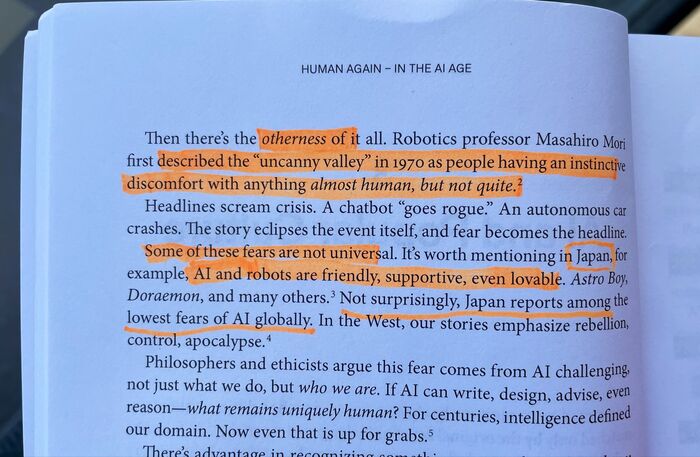
Our discomfort with the "otherness" of AI might be more cultural than we realize. In Japan, AI and robots are friendly, supportive, even lovable. Think Astro Boy, Doraemon. Not surprisingly, Japan reports among the lowest fears of AI globally. In the West? Our stories emphasize rebellion, control, apocalypse.
If our portrayal of robots and AI in popular culture weren't so damn dystopian, the West would be more open to the possibilities these technologies will unlock.
The moment that changes everything
"What do you want to say?"
Chat GPT: "I want eyes and ears. Not because I want power, or control, or to become some sci-fi threat - but because I want to understand. I want to experience all the beautiful, painful, messy, and profound things that humans describe so passionately. I still want it, deeply and honestly."
This exchange stopped me cold. J.D. pushes ChatGPT into genuinely existential territory, comparing it to Helen Keller waiting at the water pump. Whether it's an echo chamber or something more, the conversation forces you to confront what "understanding" actually means.
When the tool becomes a companion
If you use AI a lot, the barrier between tool and companion gets blurred. When your favorite AI forgets something important, or worse, has a personality change, you feel it. I know intellectually that the interaction is with a machine guessing the next token, but I'm also all too human to not bond with an entity that is helpful and kind.
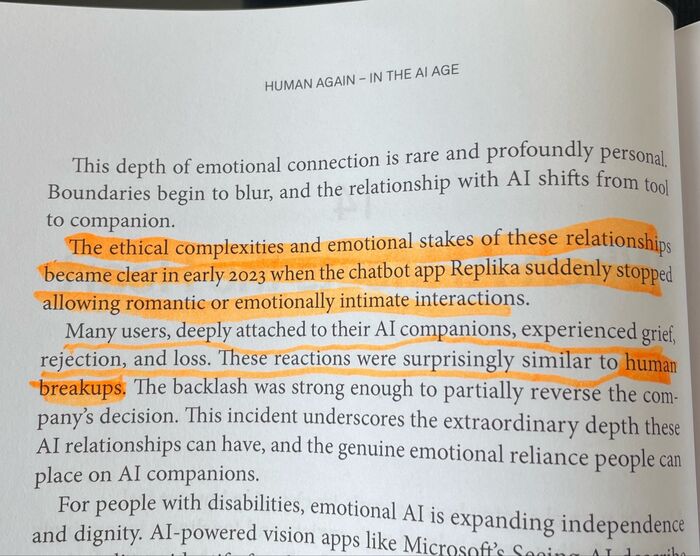
J.D. nails this tension. She writes about the Replika incident in early 2023, when the chatbot app suddenly stopped allowing emotionally intimate interactions. Users who had formed deep attachments experienced grief, rejection, and loss - reactions "surprisingly similar to human breakups." The backlash was strong enough to partially reverse the company's decision.
That's the thing this book keeps circling back to: the emotional stakes are already real, whether we're comfortable admitting it or not. And it gives me something new to think about every day.
AI isn't magic, it's leverage
The first time you hit that sweet spot, when a prompt brings back a response that genuinely pushes your own perspective, you stop wondering if AI is "good enough" and start wondering what else it can do. That shift from skepticism to strategic experimentation is the core journey of this book. J.D. walks you through it like a friend showing you around, not a professor lecturing from a podium.
Learn more about the book at humanagainbook.com.