Behind the Book: Fahrenheit 451
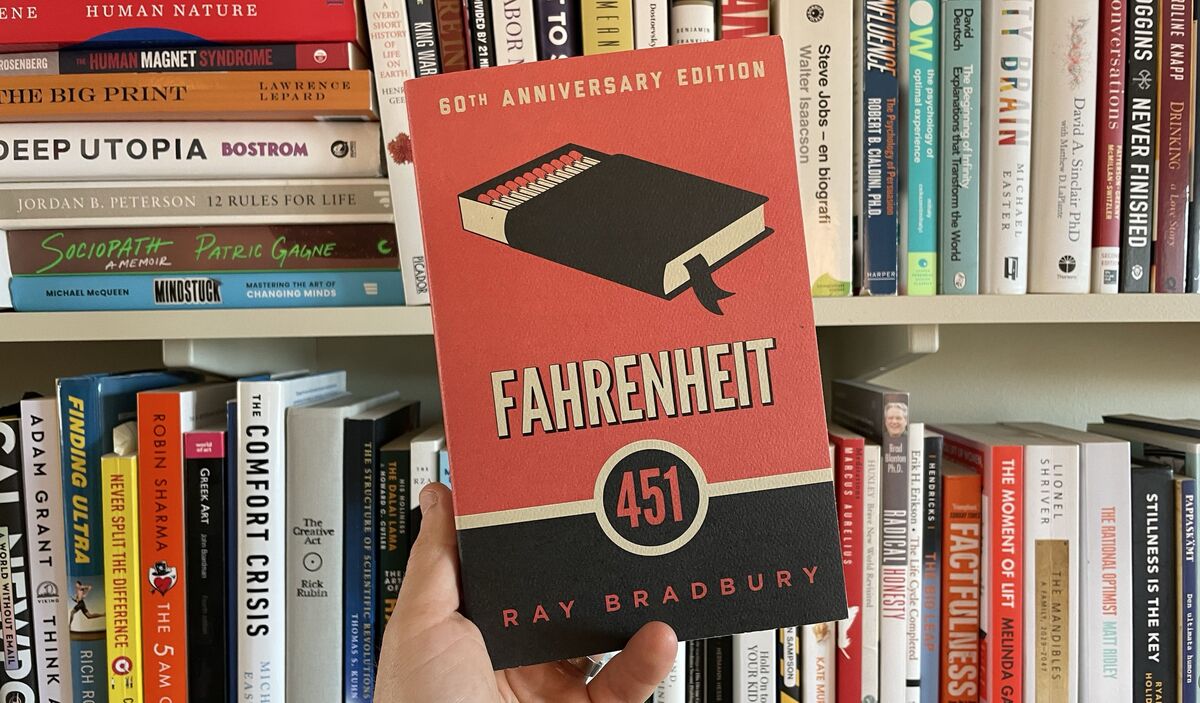
Ray Bradbury wrote Fahrenheit 451 in nine days on a coin-operated typewriter in a library basement. Total cost: $9.80.
A Dime at a Time
The year is 1950. Bradbury is 30 years old. He lives in Venice, California in a small house with his young family. He's been publishing short stories in pulp science fiction magazines, but nothing that really pays. His wife Maggie is the one paying the bills.
He wants to write a novel, but he can't work at home. Small kids, no space, no room to think, no quiet. He's the guy that needs an office, but he can't afford one.
One day he wanders into the Powell Library at UCLA and down in the basement he finds something special: coin-operated typewriters meant for students who just need to write something quickly. You drop a dime in the slot and you get to write for 30 minutes. Then you feed it another dime. You get the idea.
Bradbury does the math. Nine hours of writing comes down to about $1.80. He can afford that.
The Fireman
He starts with a novella he's been circling for years, a short story called The Fireman. He published it in 1951 in Galaxy Science Fiction magazine. It was about a world where firemen didn't put out fires - they started them. They were burning books.
In nine days working in that basement, feeding dimes into the typewriter every half an hour, Bradbury writes his entire first draft. 25,000 words. He calls it Fahrenheit 451 and he got the title from calling up the local fire department and asking what temperature paper catches fire.
The total cost of the book: $9.80.
📺 Watch the Video
Why This Book, Why Then?
It's 1953 and the Cold War is on. Senator McCarthy is naming names, hunting communists in Hollywood, in the State Department, in libraries. Books are being pulled from American library shelves.
Behind Bradbury, two decades in the rearview, are the Nazis burning books - piles of "un-German" literature set on fire in the streets of Berlin. And ahead of him is television arriving in every American home. Bradbury watches his neighbors stop reading, stop talking to each other, and instead sitting in front of a glowing screen night after night.
Ballantine publishes the book in October 1953. Bradbury is 33. It sells modestly at first. And then it keeps going. And it keeps going. It becomes a fixture in American classrooms. Required reading. It sells millions of copies.
The Irony
And here is where the story turns a little strange.
In 1967, Ballantine releases a version of the book called the "school edition." They quietly remove words like hell, damn, and a few passages that might make people upset. They don't tell Bradbury.
For 13 years, that censored version of Fahrenheit 451 is the only edition available in America. A novel about the censoring of books - itself being censored and on sale without the author even knowing about it.
When Bradbury finds out in 1980, he demands that the original text be restored. And it is.
But think about that irony. The book warning about a culture that slowly and quietly edits itself into blandness - is itself becoming bland. And nobody noticed.
💡 Why This Story Matters
This is quite the contrast to Slaughterhouse-Five, which took Vonnegut 23 years to push out. That was a book so hard to write it nearly broke its author. This one was written in nine days for less than ten bucks.
But both share something: they were written by people who felt something urgent about the world around them. Vonnegut needed to process what he saw in Dresden. Bradbury needed to sound the alarm about what he saw happening to ideas, to curiosity, to books themselves.
Sometimes the best books don't take decades of polishing. Sometimes they come out in a rush because the writer simply can't hold it in any longer.