Slaughterhouse-Five
A 22-year-old POW survived the firebombing of Dresden in a meat locker. It took him 24 years to write about it — and what came out wasn't a war memoir.
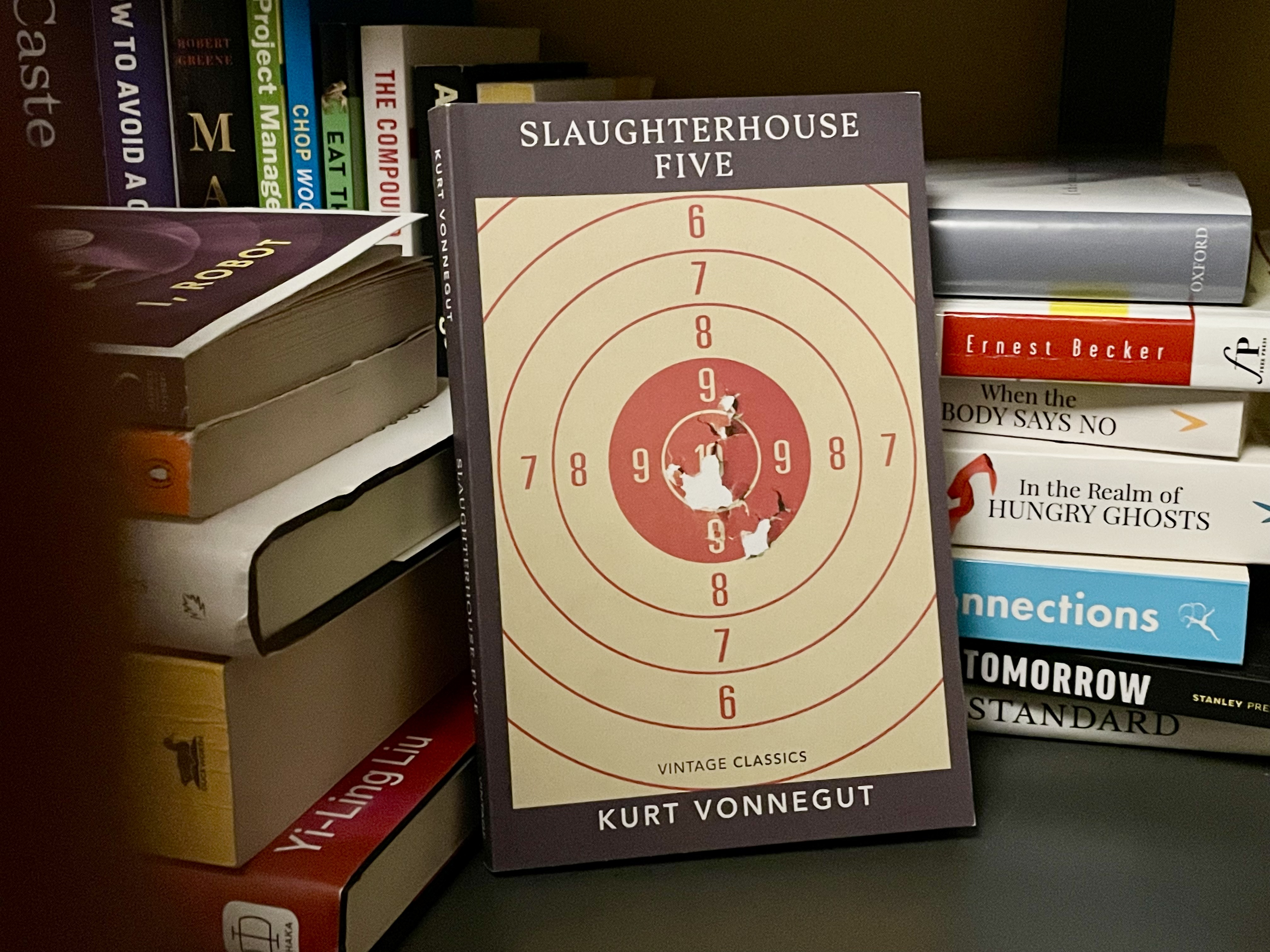
Not a War Story
In 1945, a 22-year-old American prisoner of war hid in the meat locker beneath a slaughterhouse while the city of Dresden above was burned to the ground. He survived. Then he spent 24 years trying to write a book about it. What came out wasn't a war memoir. It was a time-traveling, alien-abducting, genre-defying trip.
Vonnegut tells his story through a fictional character called Billy Pilgrim — a chaplain's assistant, not a fighter. Awkward, passive, completely unprepared for war. Billy gets captured at the Battle of the Bulge and becomes a prisoner of war in Dresden, right before the Allies firebomb the city. He survives because he hides in a meat locker underneath the slaughterhouse. That's where the title comes from.
Little Boys, Not Hollywood Heroes
One of the main takeaways from this book is the massive gap between how soldiers are portrayed by Hollywood — strong, manly, independent men — and the reality. The people actually sent to wars are little boys. Scared, cowardly, timid, immature boys. This is an anti-war book through and through. It shows war as something nasty, shameless, and horrible.
Unstuck in Time
But it's not just anti-war commentary. After the war, something breaks in Billy. He becomes "unstuck in time," moving freely between childhood, old age, and back into the war, seeing the same scenes over and over. He also claims to have been abducted by aliens called the Tralfamadorians. Whether this is real or just the trauma speaking, Vonnegut never tells you.
📺 Video Review
So It Goes
The phrase "so it goes" appears 106 times in this book. Someone is badly hurt — so it goes. Someone is murdered — so it goes. It captures the numbness that comes from young soldiers seeing too much evil and shutting down emotionally.
There's a deeper layer to it. The Tralfamadorians see all moments in time simultaneously — past, present, future. It has already happened. When you know how everything ends, death seems less tragic and starts to feel more inevitable. That apathy isn't just a coping mechanism. It's a philosophy. And Vonnegut never quite tells you whether this is wisdom he found during the war or just damage that happened to him.
"So it goes." — repeated 106 times throughout the book, capturing the numbness of seeing too much.
💡 Key Takeaway
Slaughterhouse-Five blurs the line between coping mechanism and philosophy. When Billy Pilgrim becomes "unstuck in time" and sees all moments at once, death feels less tragic — but also less meaningful. Vonnegut leaves you wondering: is that wisdom, or is it damage?
⚖️ Verdict
It's a strange book — especially the time-traveling parts. The writing style is unique and the mood it creates is unlike anything else. The use of "so it goes" sounds almost comical at first, but as you get deeper into the text, it adds a haunting layer to the whole experience.
That said, Slaughterhouse-Five doesn't quite fit the bill for what BookLab is after. It's a great novel and it's easy to see why it's a classic, but it doesn't add much to the quest for understanding human nature. If you're looking for short classics that really teach you something about the human predicament, try Notes from Underground by Dostoevsky, Demian by Hermann Hesse, or The Death of Ivan Ilyich by Tolstoy instead.