Australian Non Fiction Books: 8 Great Reads by Australian Authors
Australia punches well above its weight in non fiction. It's given the world one of the most influential living moral philosophers, one of the most electrifying critics of modern art, a social researcher who has quietly mapped the country's psyche for sixty years, and the scientist who more than anyone else put climate change on the dinner-table agenda.
This is not the usual convict-history-and-cookbook selection. These are eight Australian non fiction books that sit squarely in the topics I cover at BookLab — big ideas, human nature, psychology, economics, philosophy, and science. The kind of books I'd hand to a curious friend who said: "give me something serious, but worth my time."
A mix of classics that shaped entire fields and newer titles that deserve a spot on any modern reading list. Ordered roughly from biggest-picture to most personal.
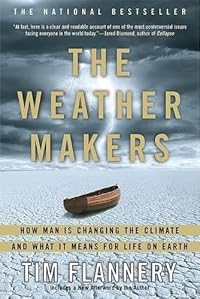
1. The Weather Makers
Science · Big IdeasFlannery is an Australian palaeontologist and explorer who spent five years reading the climate literature before writing this in 2005. It became a global bestseller and is widely credited with shifting the climate conversation from fringe scientific worry to mainstream political issue.
What makes it essential isn't the alarm — plenty of books have that — it's the depth. He writes like a naturalist, not a campaigner. You get the geological history of the atmosphere, mass extinctions, the evolution of the Gaia hypothesis, before landing in the present. By the end you understand not just that the climate is changing, but how a planetary climate actually works.
If you liked Energy and Civilization by Vaclav Smil or Sapiens, this is the Australian equivalent: a scientist zooming out far enough that the present looks small.
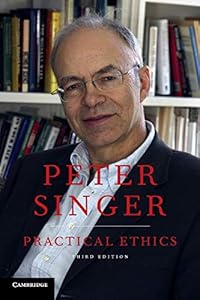
2. Practical Ethics
Philosophy · EthicsPeter Singer, born in Melbourne, is often called the most influential living philosopher. Godfather of the modern animal-rights movement, intellectual founder of effective altruism, and the philosopher most willing to take utilitarianism to its most uncomfortable conclusions.
Practical Ethics is the book that made his reputation. A masterclass in applying a single moral framework — equal consideration of interests — to the hardest questions you can face: abortion, euthanasia, animal welfare, global poverty, climate responsibility. You will disagree with Singer somewhere in this book. That's the point. He makes you show your working.
The book the Stoics would have written if they'd lived long enough to argue about factory farming.
If you've enjoyed the Stoics, Kahneman, or Haidt's The Righteous Mind, Singer belongs on the same shelf — and he's the one most likely to change your behaviour, not just your thinking.
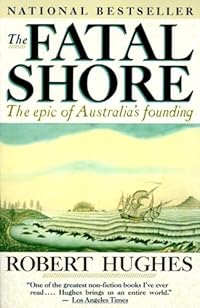
3. The Fatal Shore
HistoryMost people know Robert Hughes as the art critic whose TV series The Shock of the New taught a generation how to look at modern painting. Fewer know he also wrote the definitive one-volume history of Australia's founding — and somehow made a book about convict transportation as gripping as a novel.
The Fatal Shore covers the British decision to empty its overflowing prisons into a continent no European had yet mapped, and what happened to the 160,000 people shipped there. A study in how nations are built on uncomfortable origins, and how punishment, exile, and forgetting shape a national character.
If you've read Gulag Archipelago or The Story of Civilization, this is the same category: a historian who can actually write.
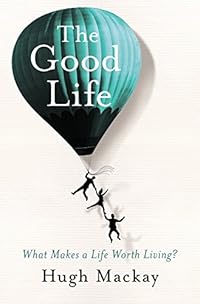
4. The Good Life
Psychology · MeaningHugh Mackay has spent sixty years — literally sixty — interviewing Australians about what they want, what they fear, and what they believe. The country's most patient listener. The Good Life is where all that listening finally turns into a verdict.
His answer: a good life is not a happy life. It's a life lived for others. He argues — closer to the Stoics and to Frankl's Man's Search for Meaning than to any self-help book — that chasing happiness as a destination is precisely what prevents you from having it. Meaning lives in service, relationships, and the humble willingness to be useful.
"Happiness and victory and fulfillment are nice little things that also happen to us, but they don't teach us much. Wholeness is what we ought to be striving for."
If Frankl, Mackay, and Seneca ever had dinner, this is the book Mackay would bring as a gift.
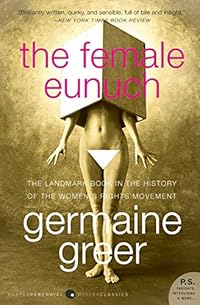
5. The Female Eunuch
Social Philosophy · ClassicLove her or loathe her — and Greer invites both — she's arguably the most famous Australian intellectual export of the 20th century. The Female Eunuch (1970) is one of those books whose influence is impossible to measure because it soaked into the culture and became the water we swim in.
A critique of how post-war consumer society domesticated women into a kind of ornamental passivity. Whether you agree with every argument or not, it's a reminder of how quickly "radical" ideas become common sense, and how much of the contemporary world was argued into existence by books. Greer argues the way you argue when you're not trying to make friends — which is rare, and worth studying on its own.
Pairs well with Fromm's Escape from Freedom (my review) and Eric Hoffer's The True Believer: writers who were unafraid to annoy.
6. Growth Fetish
Economics · CivilizationHamilton wrote this in 2003, before "post-growth" economics became fashionable. His argument is simple and confronting: once a society is rich enough to meet its basic needs, more GDP doesn't make people any happier — yet every political party, left and right, remains religiously committed to maximising it.
He's asking the question Morgan Housel and Ryan Holiday circle around from a psychological angle, but from an economist's desk: what is all this for? If you enjoyed The Psychology of Money or Four Thousand Weeks, Hamilton gives you the macroeconomic version — why the hamster wheel is built the way it is, and what a saner setup might look like.
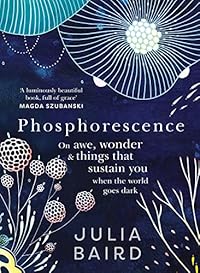
7. Phosphorescence
Psychology · MemoirJulia Baird is an Australian journalist who wrote this while recovering from a cancer the size of a basketball. That fact alone changes what the book is. Not a theory of happiness from a comfortable armchair — field notes from someone who had to find reasons to keep going.
Her answer is phosphorescence: the inner light you cultivate in the good times so it's still there to carry you through the dark ones. She draws on research into awe, wonder, forest bathing, friendship, and ocean swimming — sprinkled with the kind of luminous writing you underline.
"In Australia, the dawn is an arsonist who pours petrol along the horizon, throws a match on it and watches it burn."
If you enjoyed When Breath Becomes Air, Lost Connections (my review), or anything by Gabor Maté (my review), this belongs on your shelf.
8. The Happy Life
Philosophy · EssayDavid Malouf is better known as one of Australia's most decorated novelists, but this slim essay — part of the Quarterly Essay tradition — is a small gem. It asks: why, in the richest, safest, longest-living societies human beings have ever built, does happiness feel so elusive?
Malouf cuts back through history — through the Stoics, through Rousseau, through the Enlightenment — to trace how "the good life" slowly turned into "the happy life," and what got lost in the translation. Short enough to read in an evening. Stays with you for weeks. A good companion to Mackay's book above, and to Irvine's A Guide to the Good Life (my review).
💡 The Takeaway
Australia produces more serious non fiction than most readers realise. What you notice reading these eight authors back-to-back is a shared sensibility — sceptical of fashion, allergic to sentimentality, practical, and willing to ask whether the thing everyone is doing is actually worth doing.
If you only read one: start with Mackay's The Good Life if you want meaning, Flannery's The Weather Makers if you want to understand the century ahead, or Singer's Practical Ethics if you want to be argued with by a master.
Happy reading.