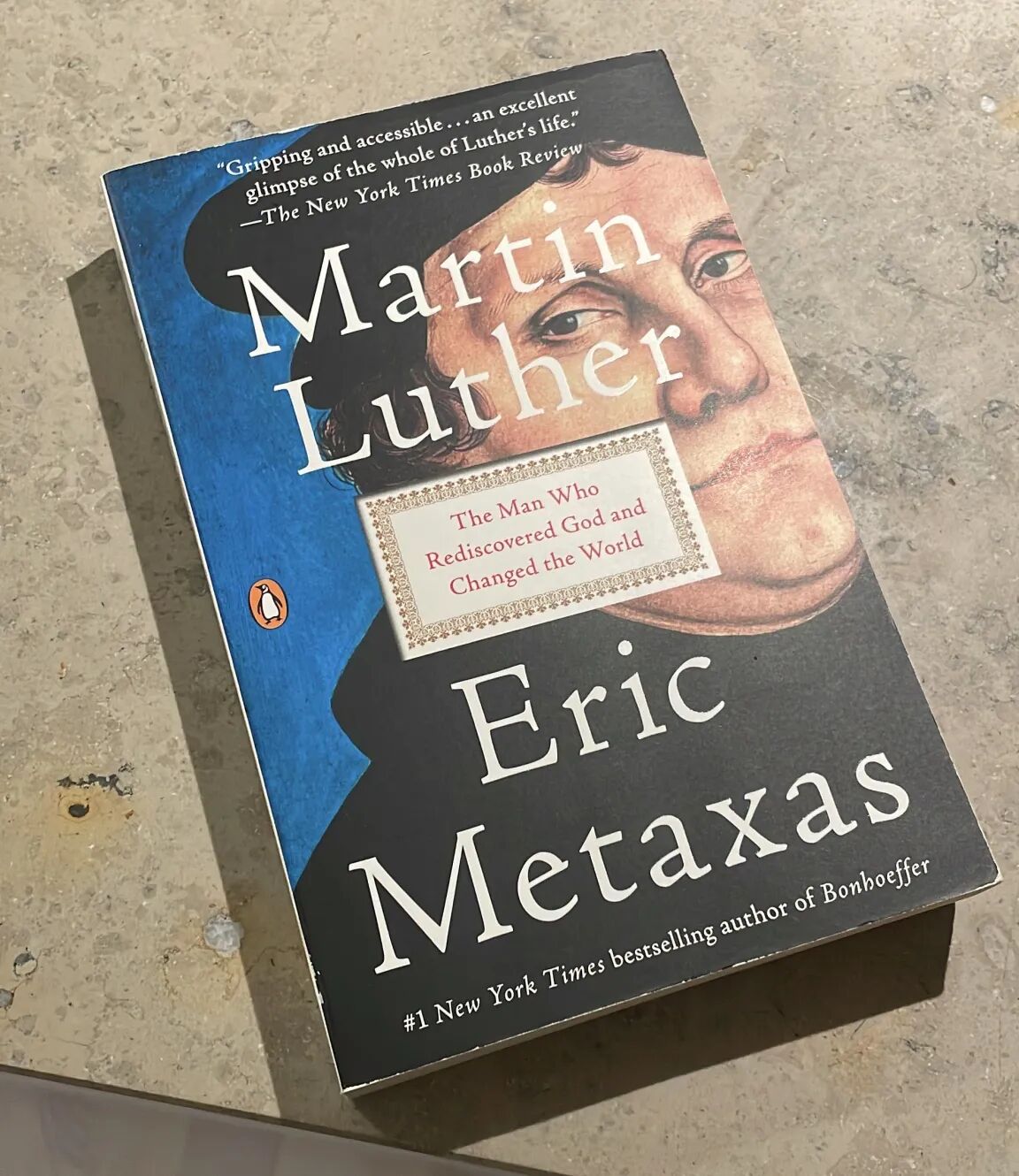
Martin Luther
A German monk takes on the most powerful institution on Earth — and accidentally reshapes the entire Western world.
A Lightning Bolt and a Promise
Martin Luther was about to become a law student when he got caught in a lightning storm. Terrified, he prayed for his life and made a vow: if he survived, he'd become a monk. The storm passed — and Luther kept his word. It's one of those moments in history where you realize just how much can hinge on a single flash of lightning.
I picked this book up because I wanted to fill a gap in my historical education. The Reformation felt like something I should know more about, and honestly, I was expecting a pretty dry read. I was wrong. Metaxas makes Luther come alive — not as some dusty historical figure, but as a volatile, brilliant, deeply flawed man who changed everything.
The Indulgence Racket
At the heart of Luther's rebellion was the practice of selling indulgences. The Catholic Church was essentially selling get-out-of-jail-free cards from purgatory — pay up and you'd burn a little less in hell. Then, in 1476, they expanded the market beyond the living. You could now pay for the sins of the dead. Quite the marketing move, right? Wouldn't you want to pay up for your dead mother so she wouldn't burn in hell?
There's a hilarious story in the book about a nobleman who asks the indulgence preacher Johann Tetzel if he can buy an indulgence for a future sin. Tetzel, who never met a payment he didn't like, says sure. A few days later, as Tetzel is leaving town, the nobleman robs him — and as he runs off with the money, he shouts back: "This was the future sin I was talking about!"
📺 Video Review
The Myth of the Church Door
The famous story about Luther heroically nailing his 95 theses to the church door in Wittenberg? According to Metaxas, it's more fiction than fact. What he actually posted was an invitation to a debate — and nobody showed up. The real revolution happened differently.
Two things fueled the Reformation. First, Luther wrote in German instead of Latin, which was the common practice at the time. This made his ideas accessible to ordinary people. Second, the printing press made those ideas spread like wildfire. It was like a hastily written email to a colleague that accidentally gets forwarded to a massive news corporation. The technology amplified the message beyond anything Luther could have imagined.
💡 Key Takeaway
Great disruptions don't just require a bold individual — they require the right technology at the right moment. Luther had the printing press. Without it, he might have been just another dissenting monk. The lesson: courage matters, but so does distribution.
⚖️ Verdict
I was genuinely surprised by how good this book is. I came in expecting to have to suffer a bit to learn about the Reformation, but it turned out to be super interesting and fun. Metaxas captures Luther not as a saint but as a real human — volatile, stubborn, and brave. It's one of my favorite biographies, and if you have any interest in how the modern world got its shape, this is essential reading. If you're looking for more great biographies, check out our Best Biographies list.