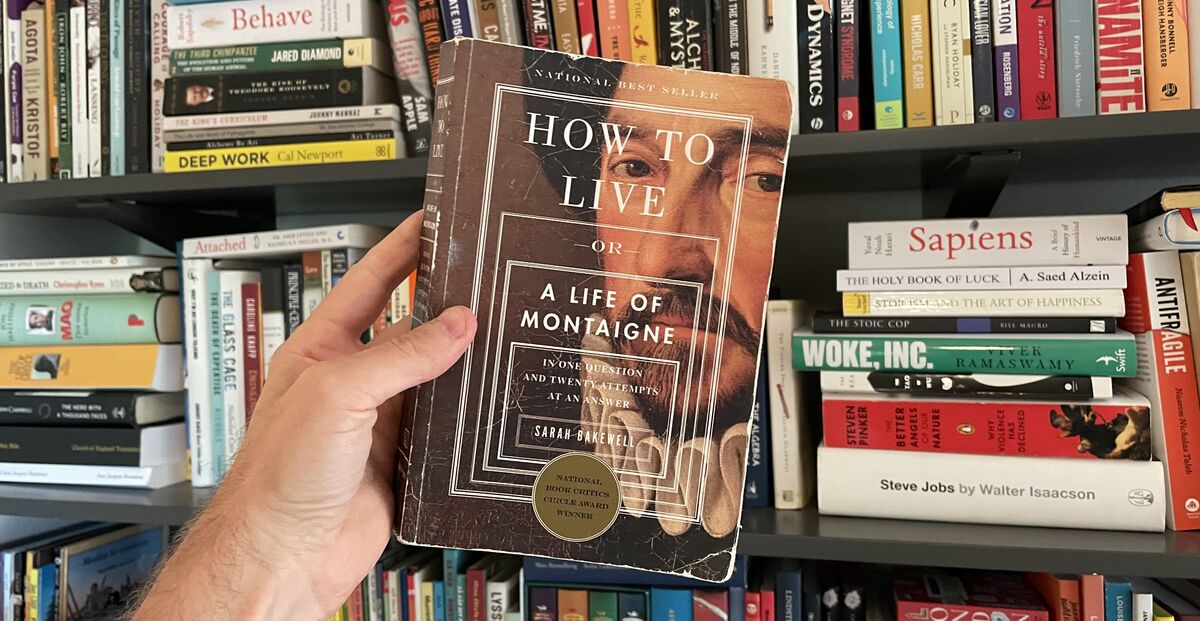
How to Live
Montaigne — the peculiar Frenchman who invented the personal essay by writing about himself, his cripples, and his cannibals.
A Peculiar Historical Man
Montaigne. Now officially added to my list of peculiar historical men that fascinate me to no end — alongside Teddy Roosevelt and Ben Franklin.
He wrote 107 essays with simple titles like Of Friendship, Of Cannibals, Of Names, Of Cripples. He was a great observer of the world, but most of all, he observed and wrote about himself.
An Unusual Upbringing
Montaigne was born into a well-off family, but his parents had some unusual ideas about education. As an infant, he was sent out to be nursed by peasants — a deliberate attempt to create a bond with the commoners he would one day need to help. But that was just the start.
He was raised to be a native Latin speaker, which was a hard plan to pull off considering no one around him actually spoke Latin natively. The rest of the household spoke minimal or no Latin at all. Still, French became his language of choice. His essays gave a wonderfully odd reason for writing in French instead of the classical languages: he thought French wouldn't be around as long as Latin, and he found that idea freeing. If his writing was flawed — which he was convinced it was — then to hell with it, right? It was doomed anyway.
📺 Video Review
The Art of Paying Attention
One of the best lessons from Montaigne: pay attention. And one of the best ways to pay attention is to write about everything. Just trying to describe all the simple and small things we see in the world opens up our eyes for how marvelous they are.
His essays are full of exactly this kind of detailed, sometimes bizarre observation. In his essay On Cripples, he speculates about a rumor he heard about crippled women — the kind of digression that makes Montaigne so uniquely entertaining and honest. Nothing was off-limits.
"A man should touch his wife prudently and soberly, lest if he caresses her too lavishly, the pleasure should transport her outside the bound of reason." — Montaigne, quoting Aristotle
Stoicism & Skepticism
Montaigne was a big fan of Hellenistic philosophy — Stoicism and Skepticism in particular. Stoicism because it preached wise detachment, and Skepticism because the skeptics held themselves back on principle. His motto says it all: "What do I know?"
💡 Key Takeaway
The examined life doesn't require grand philosophy — it starts with paying attention to the ordinary. Montaigne proved that writing honestly about yourself, your flaws, and even the most mundane details of existence is one of the most powerful acts of self-knowledge there is.
⚖️ Verdict
A fascinating biography. Sarah Bakewell does something remarkable here — she makes a 16th-century French essayist feel like someone you'd want to grab a beer with. The book works equally well whether you're already familiar with Montaigne's essays or completely new to him. This was my first encounter with Montaigne, and I totally fell in love with the guy through this book. Highly recommended.