At the Existentialist Café
My first encounter with the modern existentialists — and it left me hungry for more.
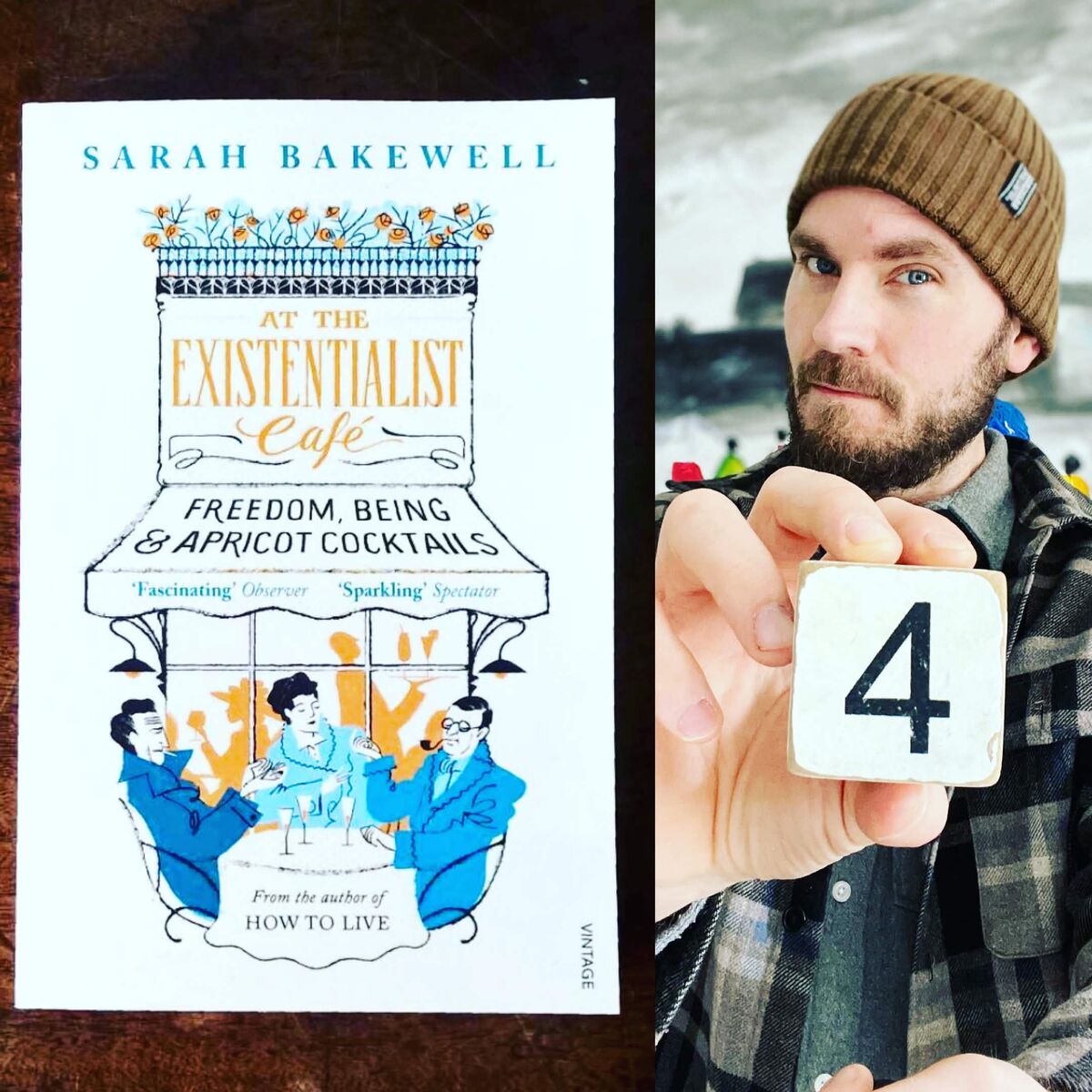
This became my first encounter with the modern existentialists. In the book we get to know primarily Sartre and de Beauvoir — but also Camus, Heidegger, Merleau-Ponty — and familiarize with their concerns about being human, freedom and above all: authenticity.
Existentialism in Everyday Life
One of the things that struck me was how remnants of existentialist ideas still echo through modern culture. Bakewell captures it perfectly:
"The vague longing for a more 'real' way of living leads some people for example to sign up for weekend retreats in which their smartphones are taken away, like toys from children, so that they can spend two days walking in the country landscape and reconnect to each other and their forgotten selves."
Did I mention that I wished for a "silent retreat" for Christmas?! 🤣
Phenomenology: Wine Tasting as Philosophy
The book introduces phenomenology — a philosophy of describing reality in detail, exactly how it's experienced in the moment. An example of phenomenology in action would be wine tasting. It's about paying attention to what's actually there, stripping away assumptions and getting back to the raw experience.
Sartre: The Prolific Minimalist
Sartre wrote a lot. Averaging twenty pages a day during his lifetime. He gave money away as fast as it came — and books after he read them. The only things he kept was his pipe and his pen.
"Nothing was to be kept in place of the money. Just memories."
There's something almost poetic about a philosopher of freedom refusing to be weighed down by possessions.
A Warning from History
On the pre-war rise of the Nazis, Bakewell makes a chilling observation:
"Sometimes the most educated people were the least inclined to take the Nazis seriously, dismissing them as too absurd to last."
A reminder that intellectualism alone doesn't inoculate against complacency.
💡 Key Takeaway
Existentialism isn't just abstract philosophy — it's a lived practice of confronting freedom, authenticity, and the weight of choice. Bakewell brings these ideas to life through the fascinating, messy, deeply human lives of the thinkers who shaped the movement.
⚖️ Verdict
The book is complex, but so are the persons it portrays. It was slow to hook me — but now I'm excited to learn more! I'm already committing to further studies of the existentialists and to embrace the density of existence, its anxiety and contingencies. Since I wrote the original review I have read The Stranger by Camus and Notes from the Underground by Dostoevsky — and I'm planning to continue my existentialist studies!