Learn, Improve, Master
The Atomic Habits of mastery books - to the point, practical, and without fluff.
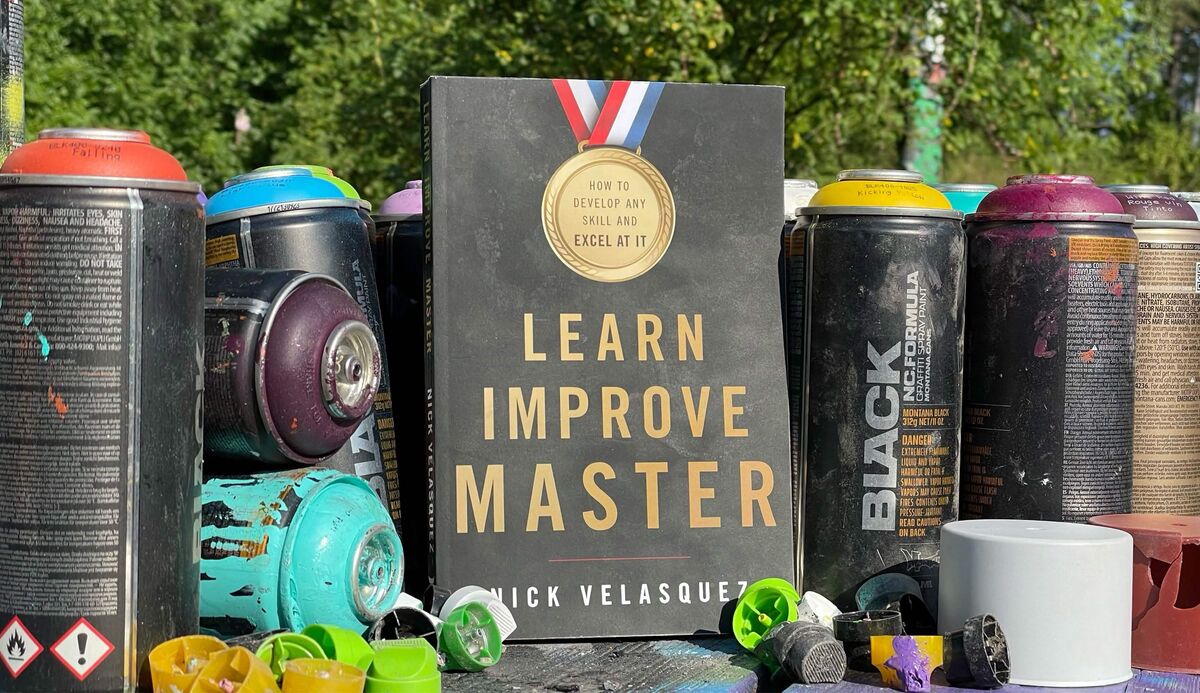
What's It About?
Nick Velasquez breaks down the entire process of skill acquisition into a clear, five-step framework: understand, memorize, practice, bridge, perform. That's it. That's the process for learning anything.
The book covers everything from memory techniques (the Loci system, PAO encoding) and the science behind deliberate practice, to the psychology of fixed vs. growth mindsets and why most people plateau. Velasquez draws on research from Anders Ericsson, Mihaly Csikszentmihalyi, Carol Dweck, and others to build a practical toolkit for getting better at whatever you care about.
It's not about talent. It's about understanding how learning actually works and then doing the work, deliberately, consistently, and in the right order.
🎯 Why It's on BookLab
This feels like the Atomic Habits of mastery books. It's to the point, practical, and without fluff. If you want to become a better learner, whether that's picking up a new craft, improving at your job, or just retaining more from the books you read, this is where to start.
Nick makes a strong case that meta-learning (learning how to learn) should be the skill that precedes all others. Knowing the principles and strategies of effective learning will maximize the time and energy you put into anything else. Hard to argue with that.
What makes the book stick is how practical it is. No hand-waving philosophy, just actionable frameworks backed by research, explained clearly, and ready to use.
📖 Key Topics
- The five-step learning process: understand, memorize, practice, bridge, perform
- Growth vs. fixed mindset: why believing you can improve is half the battle
- Memory techniques: the Loci system, PAO encoding, elaboration, and retrieval practice
- Deliberate practice: why top performers rarely describe practice as fun
- The sweet spot: Csikszentmihalyi's challenge/skill ratio and the 4% stretch rule
- Spacing and forgetting: why moderate forgetting actually strengthens learning
- Material beats method: what you study matters as much as how you study it
- Feedback loops: recording yourself, mirrors, and third-person perspective
- Grit and persistence: from Demosthenes to the danger of copying your own success
📝 Highlights from My Reading
Here are some moments that stuck with me - pulled straight from pages I highlighted while reading.
On why we stopped memorizing
"Unfortunately, today's overwhelming amount of information has tilted the value toward quantity of reading, even if superficial. And our easy access to content makes it feel as if we no longer need to memorize it. We rely instead on noting its location; we dogear book pages, underline paragraphs, bookmark websites, and save videos. Our memory has become an index of knowledge; it shows us where to find what we are looking for, but never holds the knowledge itself."
This one hit close to home. We've all become expert bookmarkers instead of expert thinkers. Not memorizing the information itself limits our use of it.
On the danger of past success
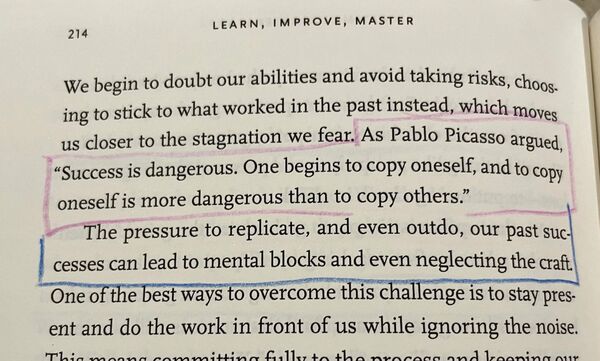
"Success is dangerous. One begins to copy oneself, and to copy oneself is more dangerous than to copy others." - Pablo Picasso
The pressure to replicate and outdo our past successes can lead to mental blocks and neglecting the craft. The antidote? Stay present and do the work in front of you while ignoring the noise.
On recording yourself
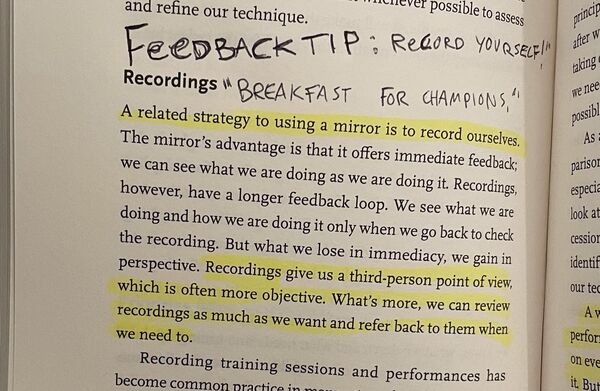
"Recordings give us a third-person point of view, which is often more objective. What's more, we can review recordings as much as we want and refer back to them when we need to."
Mirrors give you immediacy. Recordings give you perspective. What you lose in one, you gain in the other. This is why recording training sessions has become standard practice - and why more of us should do it.
On the process
"Understand, memorize, practice, bridge, perform. That's the process for learning anything."
Simple. Clear. Actionable. The kind of framework you can actually remember and use - which is kind of the whole point of the book.
Learn more about the author at velznick.co.